
Birth
Credit: Kókay Szabolcs · CC BY-SA 3.0
Birth is the moment when a baby leaves its mother's body and starts living on its own. In humans, birth happens at the end of pregnancy, after the baby has grown for about nine months inside a part of the mother's body called the uterus. Almost every animal with a backbone is born or hatched in some way. Mammals, including humans, give birth to live young.
Before birth, a baby gets everything it needs from its mother. Food and oxygen pass through a special organ called the placenta. The placenta connects to the baby through a tube called the umbilical cord. The baby floats in a warm bag of fluid that protects it from bumps. Inside the uterus, the baby does not breathe air. Its lungs are filled with fluid, and it gets oxygen from its mother's blood.
When a baby is ready to be born, the mother's body starts a process called labor. The muscles of the uterus squeeze, then relax, then squeeze again. These squeezes are called contractions. They slowly push the baby down and out through the birth canal. Labor often lasts several hours. For some mothers it takes much longer.
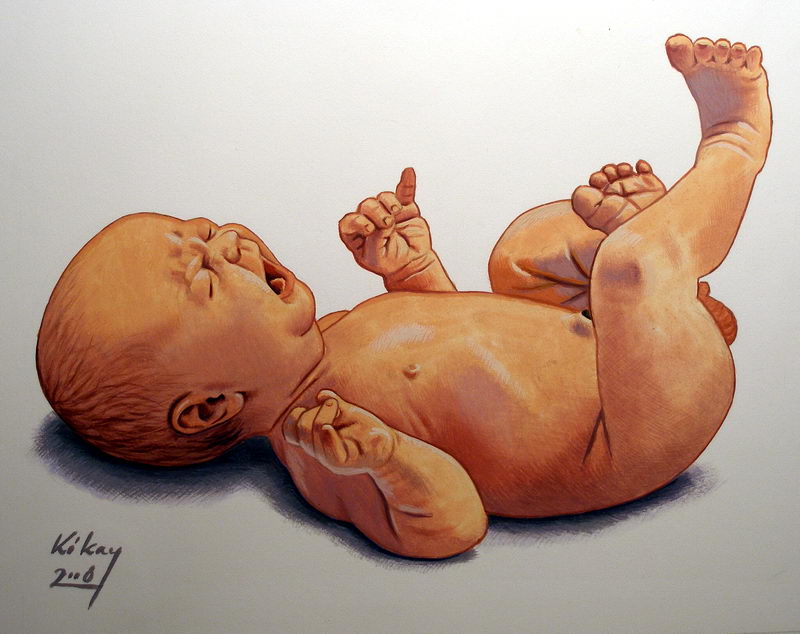
The first thing a newborn baby usually does is cry. That cry is important. It pulls air into the baby's lungs for the first time and pushes out the fluid that was inside them. Within seconds, the baby's heart sends blood through the lungs in a brand new way. A doctor or nurse cuts the umbilical cord, since the baby no longer needs it. The small mark left behind becomes the belly button.
Not every birth happens the same way. Sometimes a doctor performs surgery called a cesarean section, or C-section, to lift the baby out through a cut in the mother's belly. About one in three babies in the United States is born this way. Some babies are born early, before nine months are finished. These babies are called premature, and they often need special care in a hospital.
Human babies are born more helpless than the babies of most other mammals. A baby horse can stand up and walk within an hour. A human baby cannot lift its own head for months. Scientists think this is partly because human brains are so big that babies have to be born early, while their heads can still fit through the birth canal. The rest of the growing happens on the outside.
Related
Last updated 2026-04-25