
Lungs
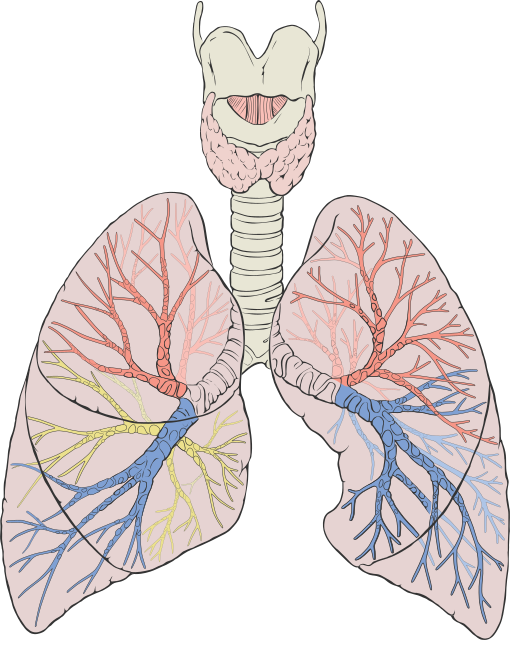
Credit: Patrick J. Lynch, medical illustrator · CC BY 2.5
The lungs are a pair of soft, spongy organs in your chest that pull oxygen into the body and push out a waste gas called carbon dioxide. You have two lungs, one on each side of your heart. The right lung is a little bigger than the left. The left one is smaller because it shares space with the heart.
Lungs do not have muscles of their own. A big dome-shaped muscle below them, called the diaphragm, does the work. When the diaphragm tightens and pulls down, your chest grows bigger and air rushes in. When it relaxes, air pushes back out. You do this about 20,000 times a day without thinking about it.
Air enters through your nose or mouth, then travels down a tube called the trachea, or windpipe. The trachea splits into two smaller tubes called bronchi. One bronchus goes to each lung. Inside the lungs, the tubes branch again and again, like the limbs of an upside-down tree. The smallest branches end in tiny round sacs called alveoli.
Alveoli are where the real work happens. Each lung holds about 300 million of these little sacs. They are so thin that oxygen can pass straight through their walls into nearby blood vessels. At the same time, carbon dioxide passes from the blood back into the alveoli, ready to be breathed out. This swap happens with every breath.
The lungs work closely with the heart. The heart pumps blood into the lungs to pick up oxygen, then sends that fresh blood out to the rest of the body. Without lungs, the heart would have nothing useful to pump. Without the heart, lung air would never reach the muscles and brain.
Lungs grow with you. A newborn baby's lungs are tiny and not fully ready. Lungs keep developing until your early twenties. Healthy lungs are pink. Things like smoke, wildfire ash, and air pollution can damage them and turn the tissue gray or black over time. The damage often cannot be undone.
You can feel your lungs at work right now. Take a deep breath and hold it. Your chest rises, your shoulders lift a little, and your belly pushes out as the diaphragm drops. Now let the air go. That quiet rhythm has been running since the moment you were born, and it will keep running every minute for the rest of your life.
Related
Last updated 2026-04-25