
Diabetes
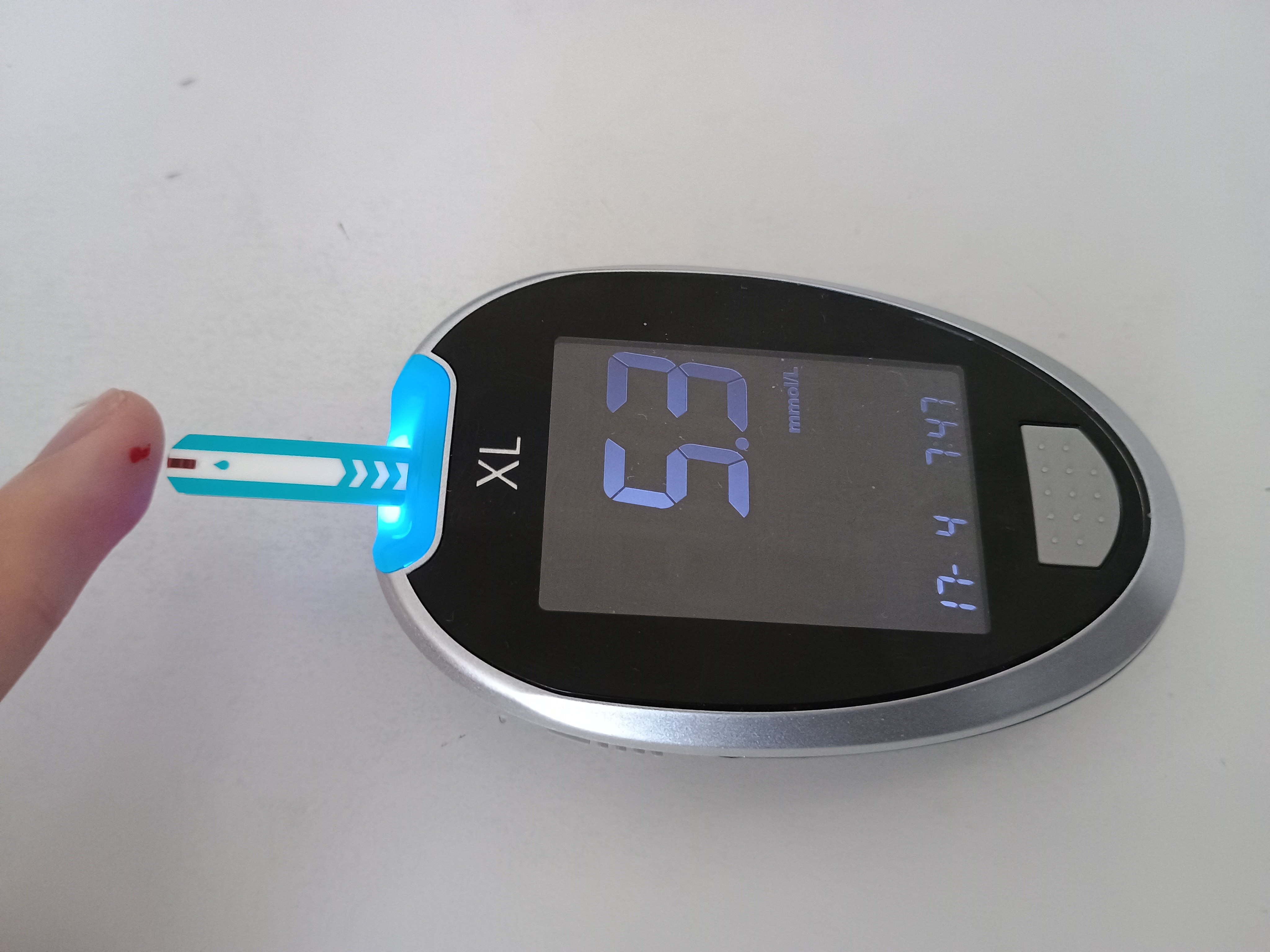
Credit: Roy Zuo · CC BY-SA 4.0
Diabetes is a disease that makes it hard for the body to control the amount of sugar in the blood. The sugar is called glucose, and it comes from the food you eat. Glucose is the main fuel that powers your cells. People with diabetes either cannot make enough of a hormone called insulin, or their bodies stop using insulin the right way. Without insulin doing its job, sugar builds up in the blood instead of feeding the cells.
Insulin is made by an organ called the pancreas, which sits behind the stomach. Think of insulin as a key. When you eat, sugar enters your blood. Insulin unlocks your cells so the sugar can move inside and be used for energy. In a person with diabetes, the keys are missing or broken. The cells stay locked, and sugar piles up in the blood.
There are two main kinds of diabetes. In type 1 diabetes, the body's own immune system attacks the pancreas and stops it from making insulin. Type 1 often starts in childhood, and nobody is sure exactly why it happens. People with type 1 must take insulin every day for the rest of their lives. In type 2 diabetes, the pancreas still makes insulin, but the body stops responding to it well. Type 2 usually starts in adults, but more kids get it now than in the past. It is linked to weight, diet, and how active a person is.
High blood sugar over time can hurt the body in serious ways. It can damage the eyes, the kidneys, the nerves, and the blood vessels. People with diabetes often check their blood sugar by pricking a finger and putting a drop of blood on a small machine. Many also wear tiny sensors that read blood sugar all day long. They use the numbers to decide how much insulin to take or what to eat.
Around 537 million adults around the world have diabetes today. That is more people than live in the entire United States. Doctors cannot cure type 1 yet, but research is moving fast. Scientists are testing pancreas cell transplants and tiny machines that act like an artificial pancreas. They are also studying why type 1 happens at all, which is still an open question. For type 2, eating well, moving the body, and getting checkups can sometimes stop the disease before it starts.
Related
Last updated 2026-04-25