
Endocrine System
Credit: Wikimedia Commons · Public domain
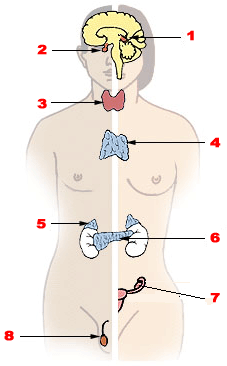
The endocrine system is a group of glands in your body that make chemical messengers called hormones. Glands are small organs that release these chemicals into your blood. The blood then carries the hormones all over your body. Hormones tell different parts of your body what to do and when to do it.
The endocrine system works a lot like the nervous system, but slower. The nervous system sends fast signals through nerves, like an instant text message. The endocrine system sends slower signals through the blood, more like a letter in the mail. Both systems work together to keep your body running smoothly.
You have about a dozen main endocrine glands. The pituitary gland sits at the base of your brain. It is only the size of a pea, but it controls many of the other glands. Doctors sometimes call it the "master gland." The thyroid is in your neck and controls how fast your body uses energy. The adrenal glands sit on top of your kidneys. They make adrenaline, the rush you feel when you are scared or excited. The pancreas, behind your stomach, makes insulin to control sugar in your blood.
Hormones do an amazing number of jobs. They tell your body when to grow taller. They start the changes of puberty. They tell you when to feel hungry, sleepy, or thirsty. They help your body fight stress. They even change how you feel. The hormone melatonin helps you fall asleep at night. The hormone cortisol helps wake you up in the morning.
When the endocrine system stops working right, it can cause real problems. In type 1 diabetes, the pancreas cannot make enough insulin. Sugar then builds up in the blood instead of feeding the body's cells. People with diabetes manage this with medicine, food choices, and sometimes insulin shots. About 38 million people in the United States have some form of diabetes.
Scientists are still learning how hormones work. They have found more than 50 different hormones in the human body, and they keep finding new ones. Some hormones do jobs no one expected. For example, your bones release a hormone that affects memory and how your body handles sugar. Your body is full of these tiny chemical messages, working in the background every second of your life.
Last updated 2026-04-25