
Asthma
Credit: BruceBlaus · CC BY-SA 4.0
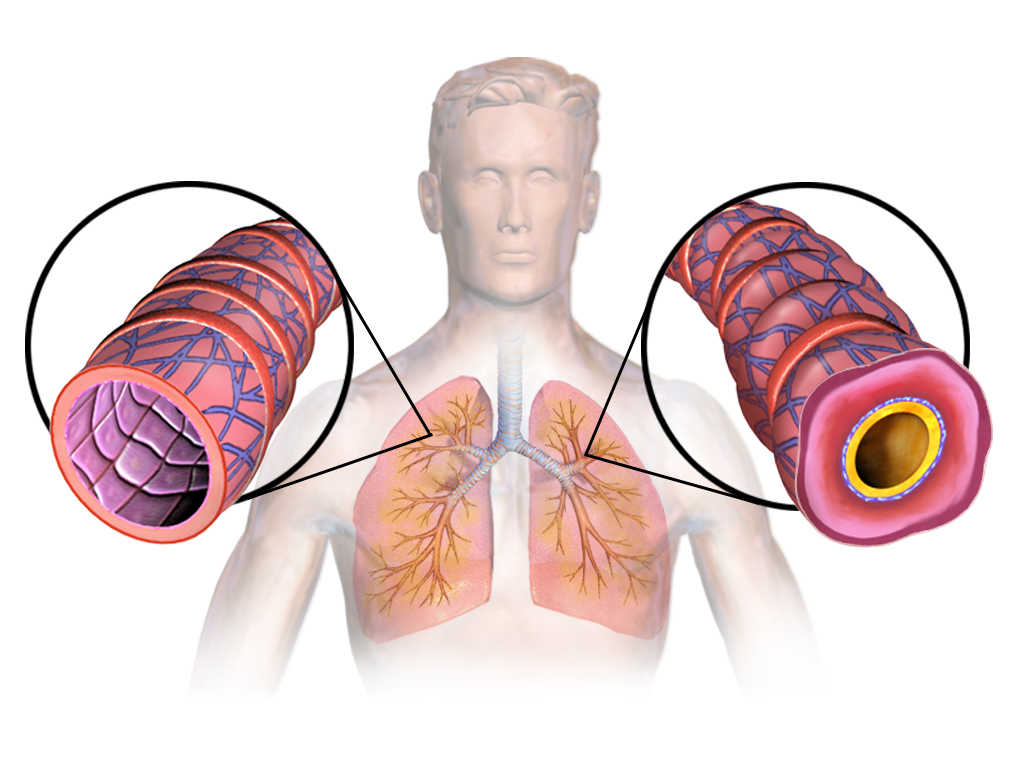
Asthma is a long-term illness that affects the airways inside the lungs. The airways are the small tubes that carry air in and out when you breathe. In a person with asthma, these tubes get extra sensitive. They can swell up, fill with sticky mucus, and tighten, which makes breathing hard. About 25 million people in the United States have asthma, including more than 4 million kids.
When the airways tighten suddenly, doctors call it an asthma attack. During an attack, a person might cough, wheeze, feel tight in the chest, or struggle to catch their breath. Wheezing is a high whistling sound made when air squeezes through narrow tubes. A bad attack can be scary and even dangerous, but most attacks can be stopped with medicine.
Many things can trigger an asthma attack. Common triggers include pollen, dust, pet hair, mold, smoke, cold air, strong smells, colds and the flu, and hard exercise. Triggers are different for every person. One kid might wheeze around cats but be fine on a winter run. Another might be the opposite. Part of living with asthma is figuring out your own triggers and learning to avoid them when you can.
Doctors do not fully know why some people get asthma and others do not. Genes play a part, since asthma often runs in families. The world around a person matters too. Air pollution, secondhand smoke, and certain illnesses in early childhood can raise the chances. Scientists are still studying why asthma rates have grown a lot over the last 50 years. Cleaner homes, more time indoors, and changes in air quality may all play a role, but the full answer is not settled.
There is no cure for asthma yet. There are very good ways to control it. Most people use a small device called an inhaler. An inhaler sends medicine straight into the lungs as a fine mist. Some inhalers are taken every day to keep the airways calm. Others, called rescue inhalers, are used during an attack to open the airways fast. Doctors often help families build an "asthma action plan" that lists triggers, daily medicines, and what to do in an emergency.
With the right plan, kids with asthma can run, swim, play sports, and do almost anything other kids do. Several Olympic gold medalists have had asthma, including swimmers and runners. The illness shapes daily life, but it does not have to shrink it.
Related
Last updated 2026-04-25