
Neuron
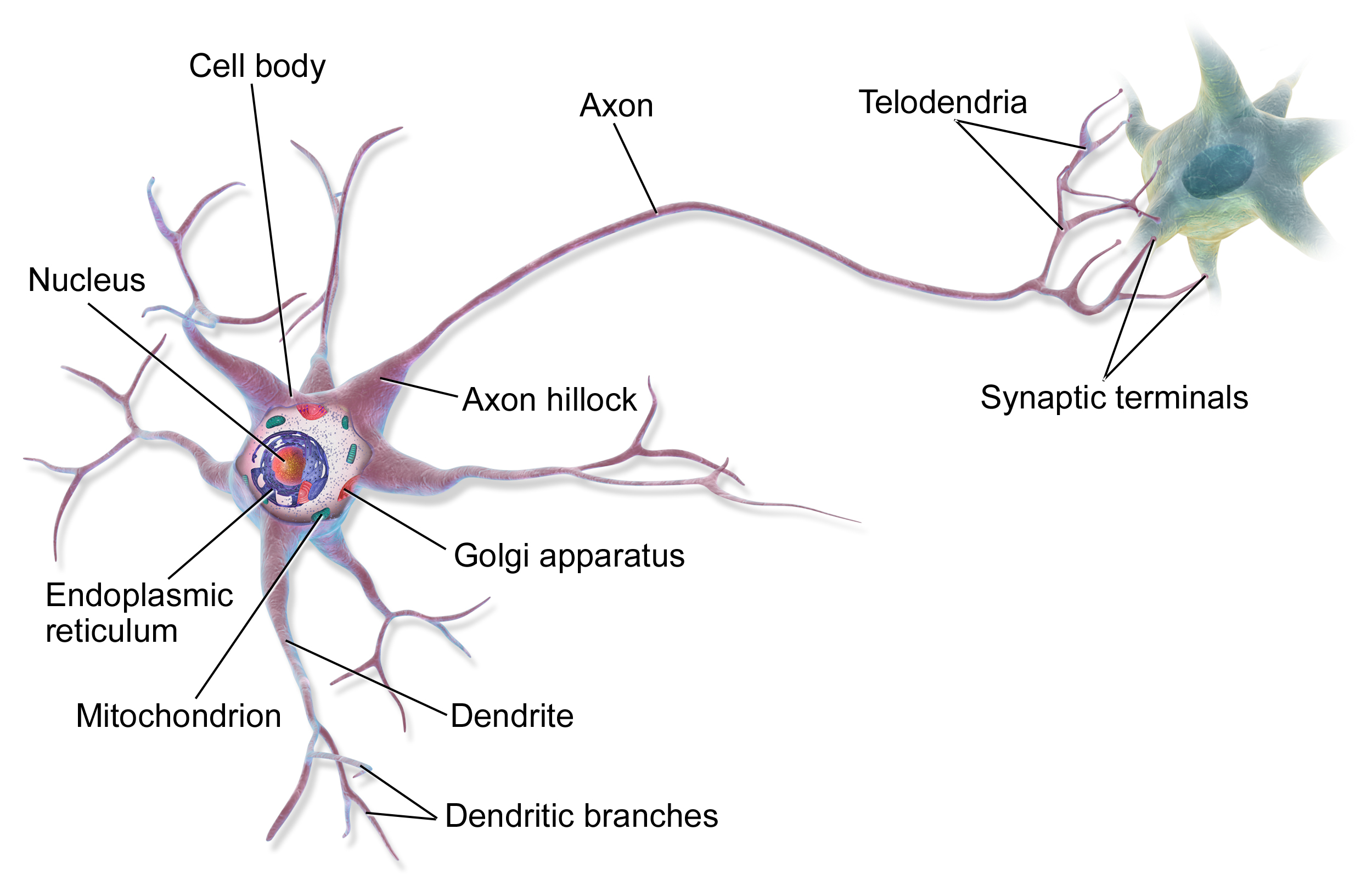
Credit: BruceBlaus · CC BY 3.0
A neuron is a special cell that carries messages through your body. Neurons are the main building blocks of the nervous system, which includes your brain, spinal cord, and nerves. Every thought you have, every move you make, and every feeling you notice depends on neurons sending signals to each other. The human brain alone holds about 86 billion of them.
Neurons look different from most other cells. A typical neuron has three main parts. The cell body holds the nucleus and keeps the cell alive. Branching out from the cell body are short, bushy fibers called dendrites. Dendrites pick up signals from other neurons. A long fiber called the axon carries signals away from the cell body to the next neuron. Some axons are short. Others are very long, like the ones running down your leg.
Neurons send messages using both electricity and chemistry. When a neuron gets a strong enough signal, a tiny electrical pulse zips down its axon. The pulse can travel up to 250 miles per hour, faster than a race car. At the end of the axon, the pulse triggers the release of chemicals called neurotransmitters. These chemicals jump across a small gap called a synapse and land on the next neuron, passing the message along.
Different neurons do different jobs. Sensory neurons carry information from your eyes, ears, skin, nose, and tongue to your brain. Motor neurons carry orders from your brain to your muscles, telling them when to move. In between are interneurons, which connect everything together inside the brain and spinal cord. When you touch a hot stove and yank your hand back, all three types work together in less than a second.
Neurons also have an unusual rule. Most cells in your body get replaced when they wear out. For a long time, scientists thought neurons never grew back at all. We now know that a few small areas of the adult brain can grow new neurons, especially the part that helps with memory. But most of your neurons stay with you for life. The brain cells you have as a teenager are mostly the same ones you will have at age 80.
Scientists are still learning how neurons work together to create thoughts, memories, and feelings. We can map single neurons in detail, but we do not fully understand how billions of them firing at once produce a mind. It is one of the biggest open questions in science.
Related
Last updated 2026-04-25