
Organ (biology)
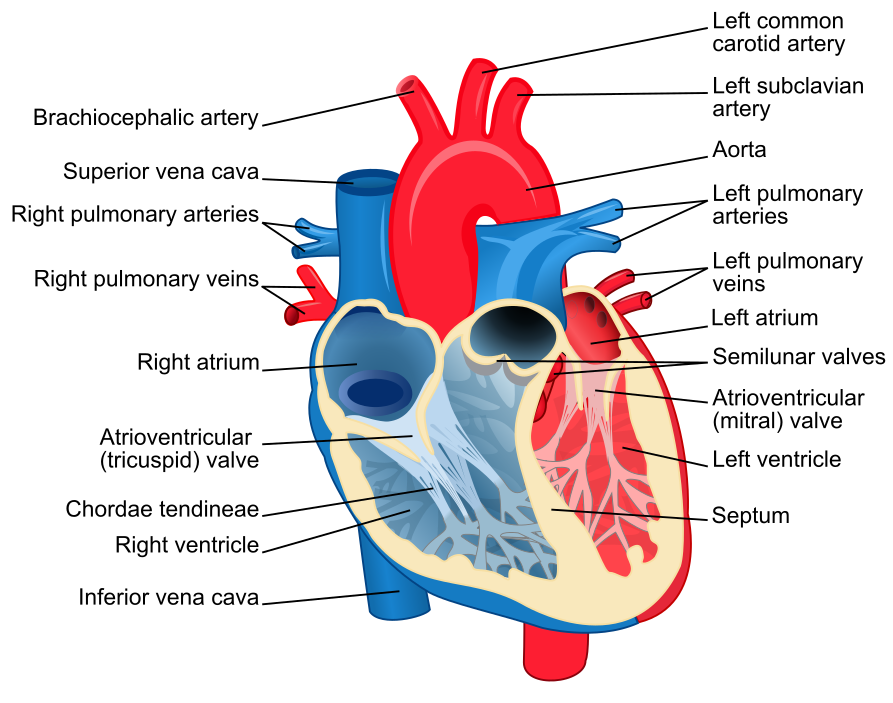
Credit: ZooFari · CC BY-SA 3.0
An organ is a body part made of different tissues that work together to do a specific job. Organs are found in nearly all animals and in plants too. The heart, lungs, brain, stomach, and skin are all organs in your body. A leaf is an organ in a plant. Each organ has its own shape, its own location, and its own task.
To understand organs, it helps to start small. The smallest living unit in your body is the cell. Groups of similar cells form a tissue. For example, muscle cells make up muscle tissue. When several different tissues come together to do one job, you have an organ. Your heart, for instance, is made of muscle tissue, nerve tissue, and tissues that line its chambers. All of them work together to pump blood.
Most organs do not work alone. They team up to form an organ system. Your stomach is part of the digestive system, along with your mouth, intestines, liver, and pancreas. Your lungs are part of the respiratory system. Scientists count about a dozen organ systems in the human body, depending on how they group them.
People sometimes split organs into two types. Vital organs are the ones you cannot live without. The brain, heart, lungs, liver, and kidneys are vital. You can live without some other organs, like your appendix, gallbladder, or even one of your two kidneys.
Organs come in surprising sizes. The skin is the biggest organ in your body, even though most people picture it as just a covering. The smallest organ is the pineal gland deep inside your brain. It is about the size of a grain of rice, and it helps control when you sleep.
Plants have organs too, though they look very different. A leaf is an organ that catches sunlight and makes food. A root is an organ that pulls water out of the soil. A flower is an organ for making seeds.
Doctors can sometimes move an organ from one person to another. This is called an organ transplant. The first successful kidney transplant happened in 1954, between identical twin brothers. Today, surgeons can transplant hearts, lungs, livers, and other organs. There are not enough donated organs for everyone who needs one, so the wait can take years. One organ donor can save up to eight lives.
Related
Last updated 2026-04-25