
Tongue
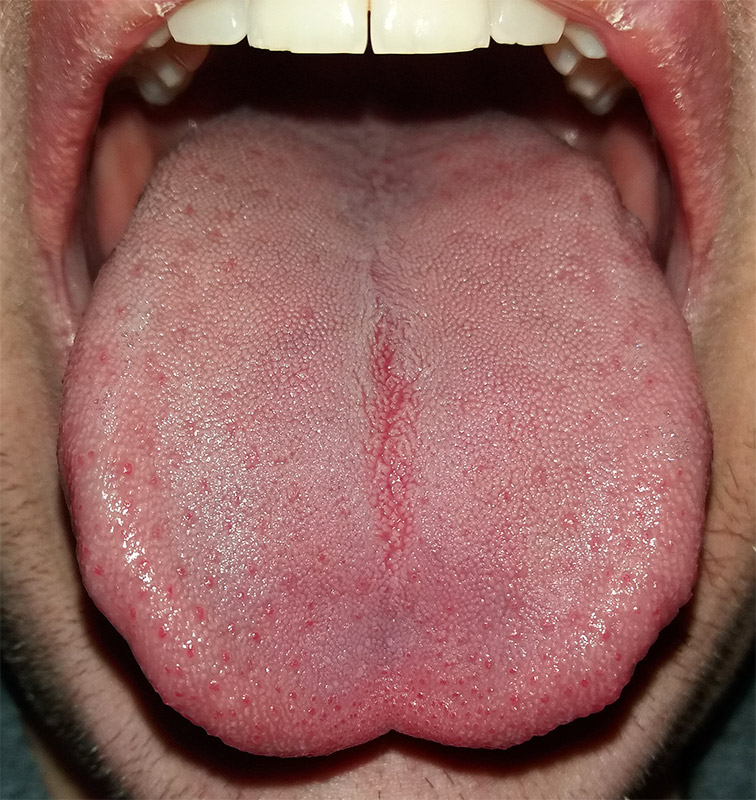
Credit: Mahdiabbasinv · CC BY-SA 4.0
The tongue is a strong, flexible muscle inside the mouth. It helps you taste food, chew, swallow, and speak. The tongue is one of the busiest parts of your body. You use it almost every minute you are awake, and even some of the time you are asleep.
The tongue is not just one muscle. It is made of eight different muscles working together. Four of them are anchored to bones in your skull and jaw. The other four are inside the tongue itself. This is why your tongue can move in so many directions. It can curl, stretch, flatten, and twist in ways that most other muscles cannot.
The top of your tongue feels rough because it is covered with tiny bumps called papillae. Most papillae are there to grip food. But some of them hold your taste buds. A grown-up has about 2,000 to 4,000 taste buds, and most of them sit on the tongue. Taste buds let you sense five basic flavors: sweet, sour, salty, bitter, and umami, which is a savory taste found in foods like cheese and broth.
You may have heard that different parts of the tongue taste different flavors, like sweet at the tip and bitter at the back. That idea came from a misread science paper from 1901. Scientists later proved it wrong. Every part of your tongue can taste every flavor. The map you may have seen in old textbooks was never true.
Taste and smell work as a team. When you chew, smells from your food drift up the back of your mouth into your nose. Your brain mixes the smell with the taste, and that combination is what we call flavor. This is why food tastes boring when you have a stuffy nose.
Your tongue is also the key to speaking. When you say words like "th," "l," or "t," your tongue is touching your teeth or the roof of your mouth in a precise spot. Try saying "little turtle" without moving your tongue. You cannot do it.
The tongue heals faster than almost any other part of your body. A small cut on your tongue often closes up in just a few days. Doctors think this happens because your saliva contains proteins that help wounds heal, and because the tongue has a huge supply of blood.
Related
Last updated 2026-04-25