
Nose and Smell
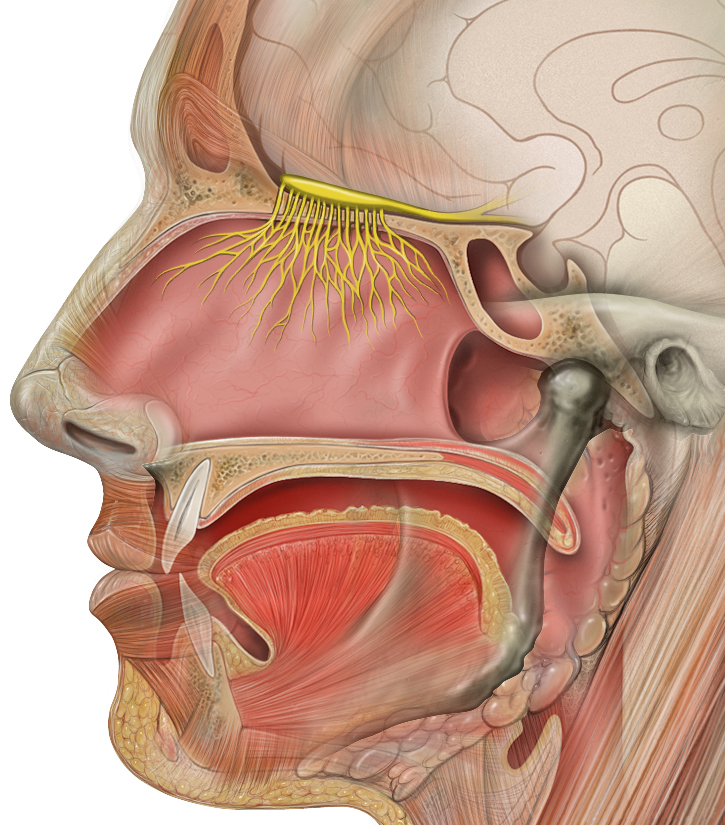
Credit: Patrick J. Lynch, medical illustrator · CC BY 2.5
The nose is the body part you use to breathe and to smell. It sits in the middle of your face, with two openings called nostrils. Air, scents, and tiny floating particles all enter your body through the nose. The sense of smell is called olfaction. It is one of the five main senses, along with sight, hearing, taste, and touch.
The inside of your nose is hollow and lined with sticky mucus. Mucus traps dust, pollen, and germs before they reach your lungs. Tiny hairs called cilia sweep this trapped material toward the back of your throat, where you swallow it without noticing. Your nose also warms and wets the air on its way down. Cold, dry air can hurt your lungs, so the nose acts like a built-in heater and humidifier.
Smell starts when tiny molecules float into your nose. These molecules drift up to a small patch high inside the nose called the olfactory epithelium. The patch is about the size of a postage stamp. It holds millions of special nerve cells that connect straight to your brain. When a molecule lands on one of these cells, the cell sends a signal up through the skull to a part of the brain called the olfactory bulb. The brain then figures out what you are smelling.
Humans can tell apart at least one trillion different smells, according to one famous study. That number is bigger than the total number of seconds in 30,000 years. Even so, our noses are not the strongest. A dog's sense of smell is about 10,000 to 100,000 times sharper than yours. A bear's may be even better. Sharks can smell a single drop of blood mixed into a swimming pool of water.
Smell and memory are tied together inside the brain. The olfactory bulb sits right next to areas that handle memory and emotion. That is why a single whiff of cookies, sunscreen, or an old book can pull up a strong memory from years ago. Scientists call this the Proust effect, named after a French writer who described it in a famous novel.
Smell also protects you. The nose can warn you about smoke, spoiled food, and gas leaks before your other senses notice anything wrong. People who lose their sense of smell, a condition called anosmia, often say food becomes boring and the world feels strangely empty. Many people lost their sense of smell for weeks or months after catching COVID-19, which taught scientists a lot about how this hidden sense actually works.
Related
Last updated 2026-04-25