
White Blood Cell
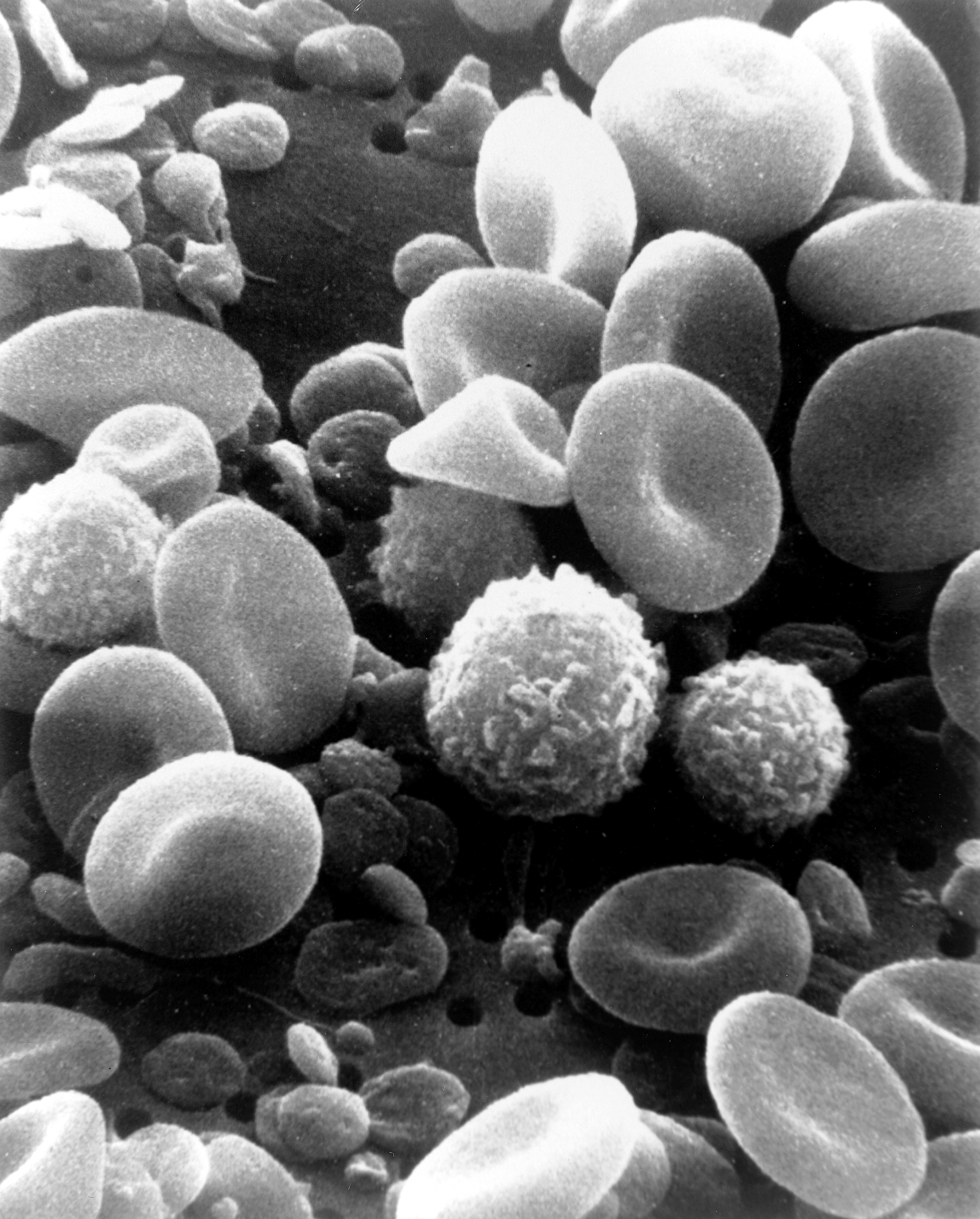
Credit: Bruce Wetzel (photographer). Harry Schaefer (photographer) · Public domain
A white blood cell is a tiny cell in your blood that fights germs. White blood cells are part of your immune system, the body's defense team against viruses, bacteria, and other things that can make you sick. They are made in your bone marrow, the soft tissue inside your bones. From there they travel through your blood and into nearly every part of your body.
White blood cells are much rarer than red blood cells. For every white blood cell in your body, there are about 700 red blood cells. But white blood cells are bigger, and they can do something red blood cells cannot: they can squeeze out of blood vessels and crawl through tissue to reach trouble.
There are several kinds of white blood cells, and each kind has its own job. Neutrophils are the first to arrive when you get a cut or scrape. They swallow bacteria whole, like little eating machines. Macrophages are bigger cells that gobble up germs and dead cells, then clean up the mess. Lymphocytes are the smart ones. Some lymphocytes, called B cells, make antibodies. Antibodies are special proteins that stick to germs and mark them for destruction. Other lymphocytes, called T cells, hunt down body cells that have been taken over by viruses.
When you get sick, your body makes more white blood cells to handle the extra work. That is why doctors often check your white blood cell count with a blood test. A high number can mean your body is fighting an infection. A low number can mean something is wrong with the bone marrow or immune system.
White blood cells also remember. After they beat a germ once, some lymphocytes save a kind of memory of it. The next time that same germ shows up, your body recognizes it and crushes it before you even feel sick. This is why you usually only get chickenpox once. It is also how vaccines work. A vaccine teaches your white blood cells what a dangerous germ looks like, without making you sick, so they are ready if the real germ ever shows up.
Sometimes the system makes mistakes. In allergies, white blood cells attack harmless things like pollen or peanuts. In autoimmune diseases, they attack the body's own cells. Scientists are still learning why this happens, and how to teach the immune system to tell friend from foe.
Related
Last updated 2026-04-25