
Soybean
Credit: Wikimedia Commons · Public domain
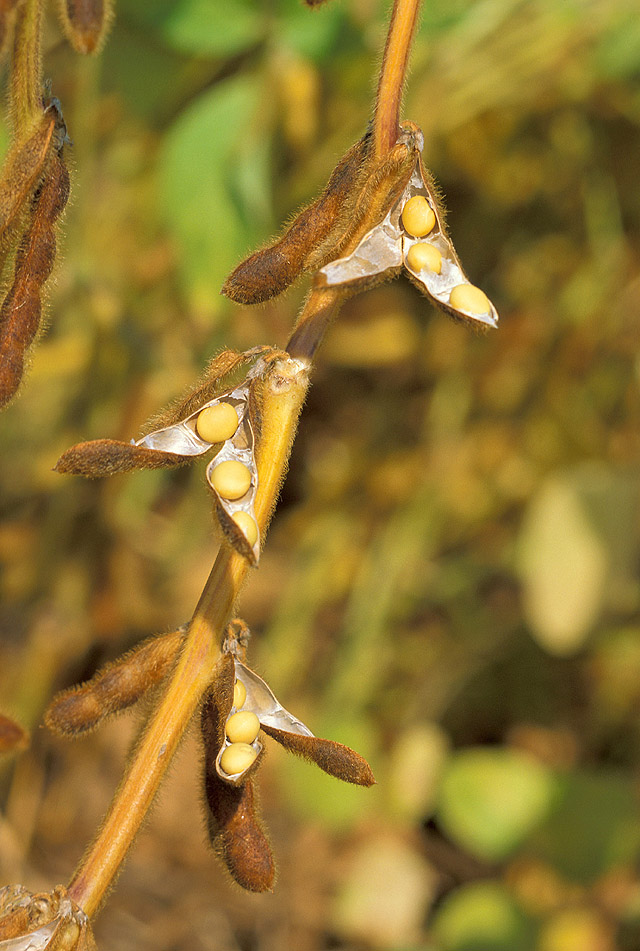
The soybean is a small bean that grows on a bushy plant in the pea family. It is one of the most important crops in the world. Farmers grow it for food, for animal feed, and for oil. The plant grows about three feet tall. It produces fuzzy green pods, and each pod holds two or three round beans inside.
Soybeans came from East Asia. People in ancient China began farming them more than 3,000 years ago. The bean spread to Korea, Japan, and Southeast Asia long before it reached the rest of the world. American farmers did not start growing soybeans in large amounts until the early 1900s. Today the United States and Brazil grow the most soybeans on Earth, followed by Argentina and China.
What makes the soybean special is what is inside it. About 40 percent of a dry soybean is protein. That is more protein than any other common crop, and more than most kinds of meat by weight. Soybeans are also rich in oil, healthy fats, and fiber. For people who do not eat meat, soybeans are one of the best sources of protein in the world.
Soybeans show up in foods you might already know. Tofu is made by grinding soybeans, mixing them with water, and pressing the liquid into soft white blocks. Soy sauce is made by letting soybeans ferment with wheat and salt for months. Edamame is just young soybeans, picked while the pods are still green and boiled in salty water. Soy milk, miso soup, and tempeh all start with the same little bean.
Most soybeans grown today never end up on a human plate. They are crushed into meal and fed to farm animals. The chicken in a sandwich, the eggs in your breakfast, and the milk in your cereal mostly come from animals that ate soybeans. The leftover oil from the crushing is used to fry foods, make salad dressing, and even power some trucks as biodiesel fuel.
Soybeans help the soil too. Like other plants in the pea family, they have tiny bumps on their roots filled with helpful bacteria. The bacteria pull nitrogen out of the air and turn it into food the plant can use. When farmers plant soybeans one year and corn the next, the soil ends up richer for the corn. This trick has been used by farmers for thousands of years, long before anyone knew bacteria were doing the work.
Last updated 2026-04-25