
Venus Flytrap
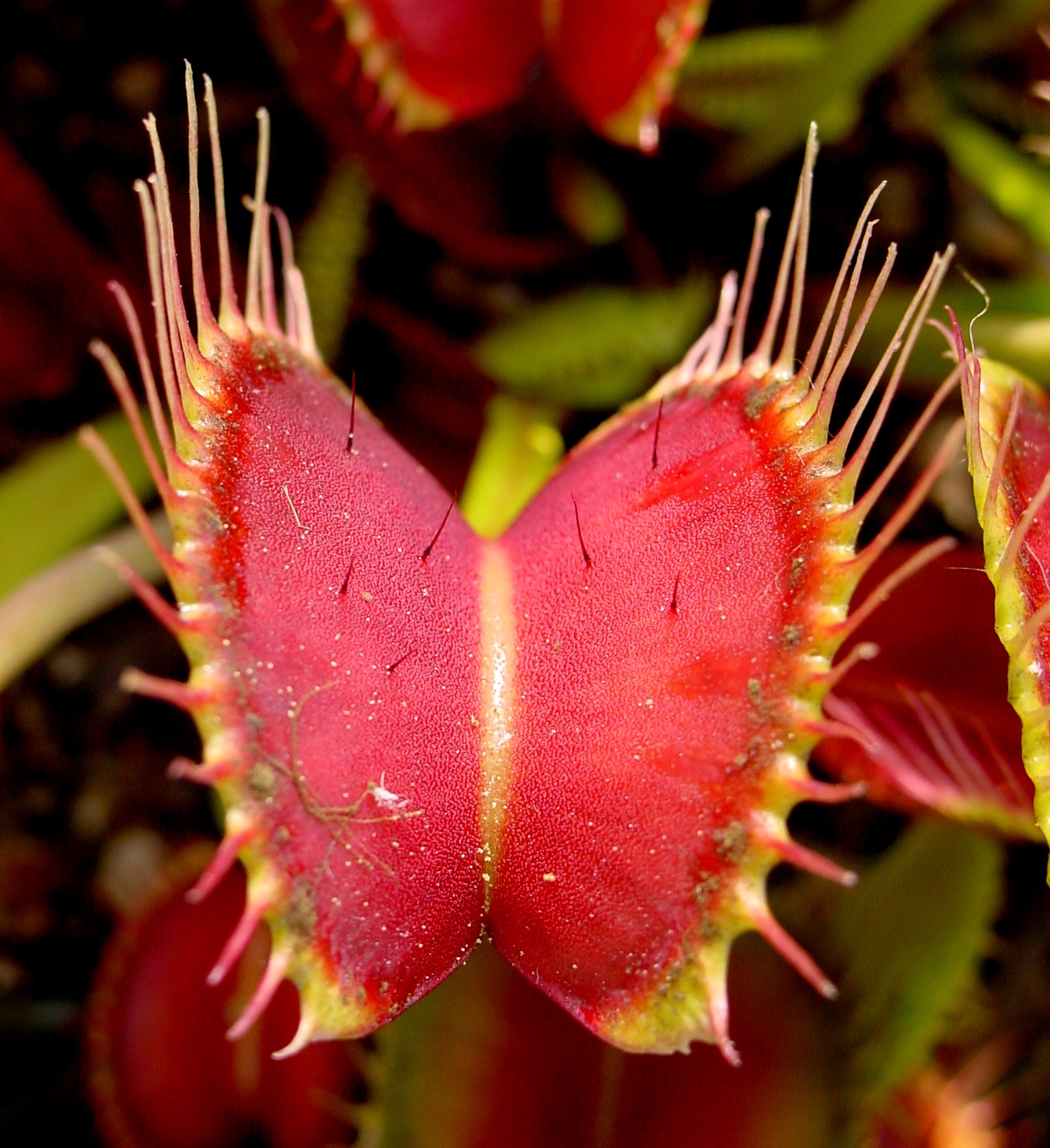
Credit: Noah Elhardt · CC BY-SA 2.5
The Venus flytrap is a small plant that catches and eats insects. It grows wild in only one place on Earth: the wet, sandy bogs of North and South Carolina. Most plants make all their food from sunlight, water, and air. The Venus flytrap does that too, but the soil where it lives is very poor. To get the nutrients it needs, especially nitrogen, the plant traps small animals.
A Venus flytrap is only about five inches across when fully grown. Its leaves end in two green or reddish lobes that look like a small open mouth. Along the edges of each lobe are stiff bristles that look like teeth. Inside each lobe are tiny stiff hairs called trigger hairs. These are the keys to how the trap works.
The plant does not snap shut at every touch. If it did, it would waste energy on raindrops and falling leaves. Instead, the trap waits for two touches. When an insect bumps a trigger hair, a timer starts. If the bug touches the same hair or another one within about 20 seconds, the trap snaps shut in less than a second. The bristles cross like the bars of a tiny cage, holding the bug inside.
Then digestion begins. The plant seals the trap tight and floods the inside with juices that slowly dissolve the soft parts of the insect. About a week later, the trap opens again. The dry shell of the bug blows away in the wind, and the trap is ready to hunt once more. Each trap can usually only catch and digest about three or four meals before it stops working and the plant grows a new one.
Charles Darwin studied Venus flytraps closely in the 1860s. He called the plant "one of the most wonderful in the world." Scientists are still working out exactly how the trap moves so fast without muscles or nerves. The current best idea is that the leaves store energy like a bent spring, and a quick change in water pressure inside the cells lets the spring snap.
Venus flytraps are in trouble in the wild. Their tiny home range has shrunk because of building, draining of bogs, and people digging up plants to sell. They are now protected by law in North Carolina, where taking one from the wild is a crime. Almost every Venus flytrap sold in stores today is grown from seed in a greenhouse, far from the small patch of Carolina ground where the species began.
Last updated 2026-04-25