
Ears and Hearing
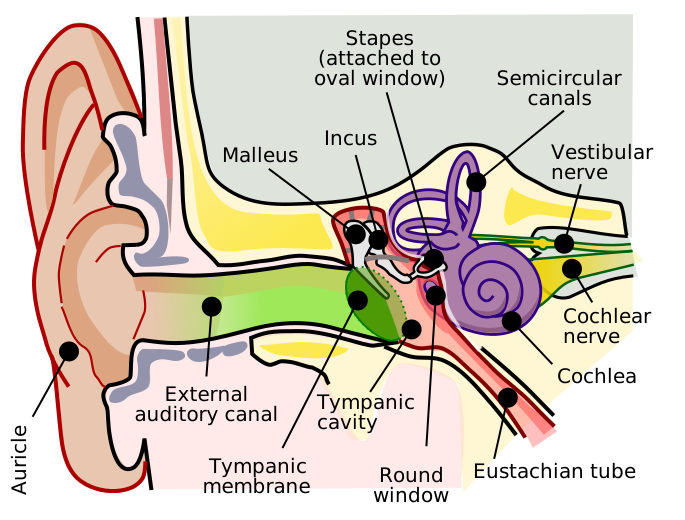
Credit: Lars Chittka; Axel Brockmann · CC BY 2.5
The ear is the body part that lets you hear sound. Hearing is one of the five main senses. Each ear has three parts: the outer ear, the middle ear, and the inner ear. Together, these parts catch sound waves from the air and turn them into signals your brain can understand.
Sound travels in invisible waves. When a friend speaks, their voice pushes the air in tiny ripples. Those ripples spread out and bump into your ears.
The outer ear is the part you can see, plus the canal that leads inside your head. The curvy shape of the outer ear acts like a funnel. It catches sound waves and guides them down the canal toward the eardrum. The eardrum is a thin piece of skin stretched tight, like the top of a real drum. When sound waves hit it, the eardrum vibrates.
Behind the eardrum is the middle ear. Three tiny bones sit inside it. They are called the hammer, the anvil, and the stirrup, named for their shapes. These three bones are the smallest bones in the human body. When the eardrum vibrates, the bones vibrate too. They pass the shaking deeper into your head.
The inner ear holds a curled tube called the cochlea. The cochlea is shaped like a snail shell and is filled with fluid. Inside it are thousands of tiny hairs. When the bones shake the fluid, the hairs bend. Each hair is connected to a nerve. The nerves carry electric signals to your brain. Your brain then turns those signals into the sounds you recognize: a voice, a song, a barking dog.
Ears do more than just hear. The inner ear also helps you keep your balance. Three loops behind the cochlea, called the semicircular canals, are filled with fluid. When you turn your head, the fluid sloshes. Your brain uses that motion to know which way is up. This is why spinning fast can make you dizzy.
Loud sounds can damage the tiny hairs in your inner ear, and once those hairs are hurt, they do not grow back. A normal talking voice measures about 60 decibels. A rock concert can reach 110 decibels, which is loud enough to cause damage in just a few minutes. Wearing earplugs at loud events helps protect your hearing for the rest of your life.
Some people are born deaf, and others lose hearing as they age. Many deaf people use sign language, which lets them have full conversations using their hands and faces instead of sound.
Related
Last updated 2026-04-25