
Scientific Method
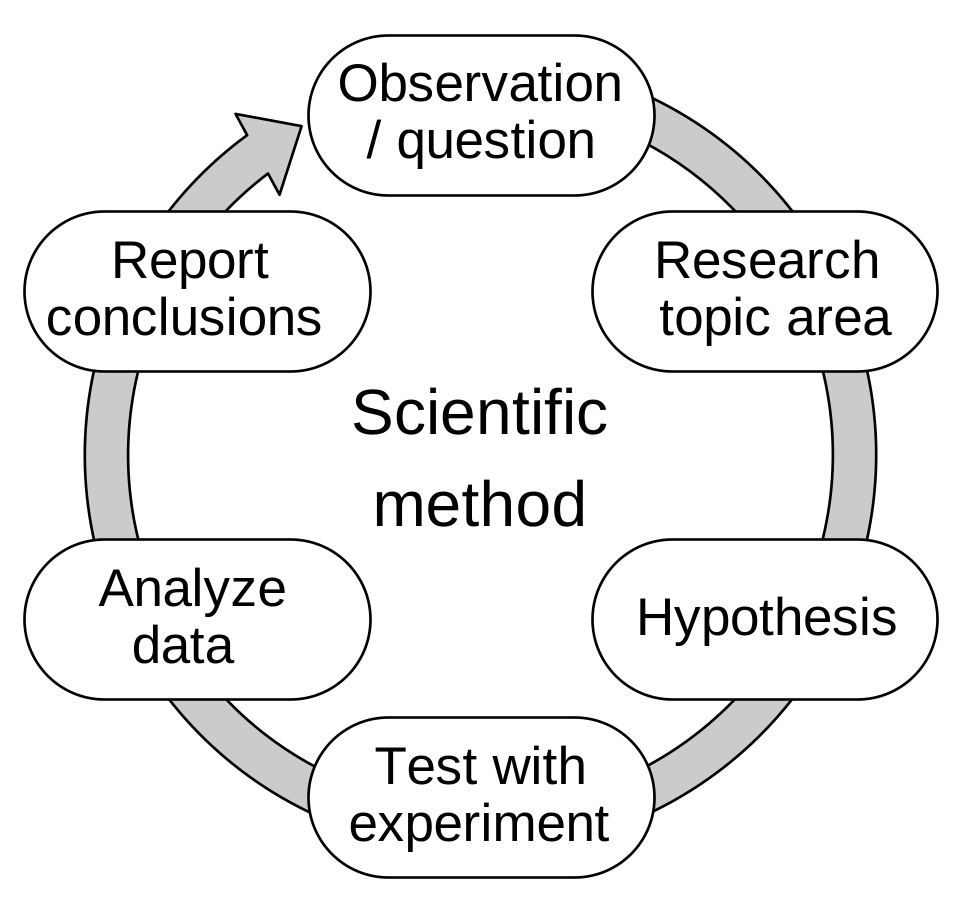
Credit: Efbrazil · CC BY-SA 4.0
The scientific method is a step-by-step way of asking questions about the world and finding answers. Scientists use it to make sure their answers are based on real evidence, not just on what they hope is true. People have used pieces of this method for thousands of years, but it took its modern shape in Europe during the 1500s and 1600s.
The method usually has five steps. First, a scientist asks a question about something they notice. Second, they do some background research to learn what other people already know. Third, they make a hypothesis, which is a careful guess about the answer. Fourth, they test the hypothesis with an experiment. Fifth, they look at the results and decide what the evidence shows.
A good hypothesis has to be testable. "Plants grow better with music" is testable. "Plants have feelings deep in their souls" is not, because there is no way to measure a plant's soul. If you cannot test an idea, science cannot answer it.
Experiments need to be fair. Scientists change one thing at a time and keep everything else the same. If you want to know whether sunlight helps bean plants grow, you give two plants the same water, the same soil, and the same pot. The only difference is that one plant sits in sunlight and the other sits in a closet. The thing you change is called the variable.
One step often gets left out when people describe the method: repeating the experiment. A result only counts when other scientists can do the same experiment and get the same answer. If nobody else can get your result, something was probably wrong with your test. This is why big discoveries are checked by many labs before people trust them.
The scientific method also allows for being wrong. If the evidence does not match the hypothesis, the hypothesis has to change. Albert Einstein once said that no amount of experiments can prove him right, but a single experiment can prove him wrong. Getting a surprising or disappointing result is not a failure. It is how science moves forward.
The method is not only for lab coats and microscopes. You use it when you figure out why your bike tire keeps going flat, or why your cookies turned out hard. You notice something, guess a reason, test it, and check. Almost everything humans have learned about the universe, from gravity to germs to black holes, was found this way.
Related
Last updated 2026-04-23