
Astronaut
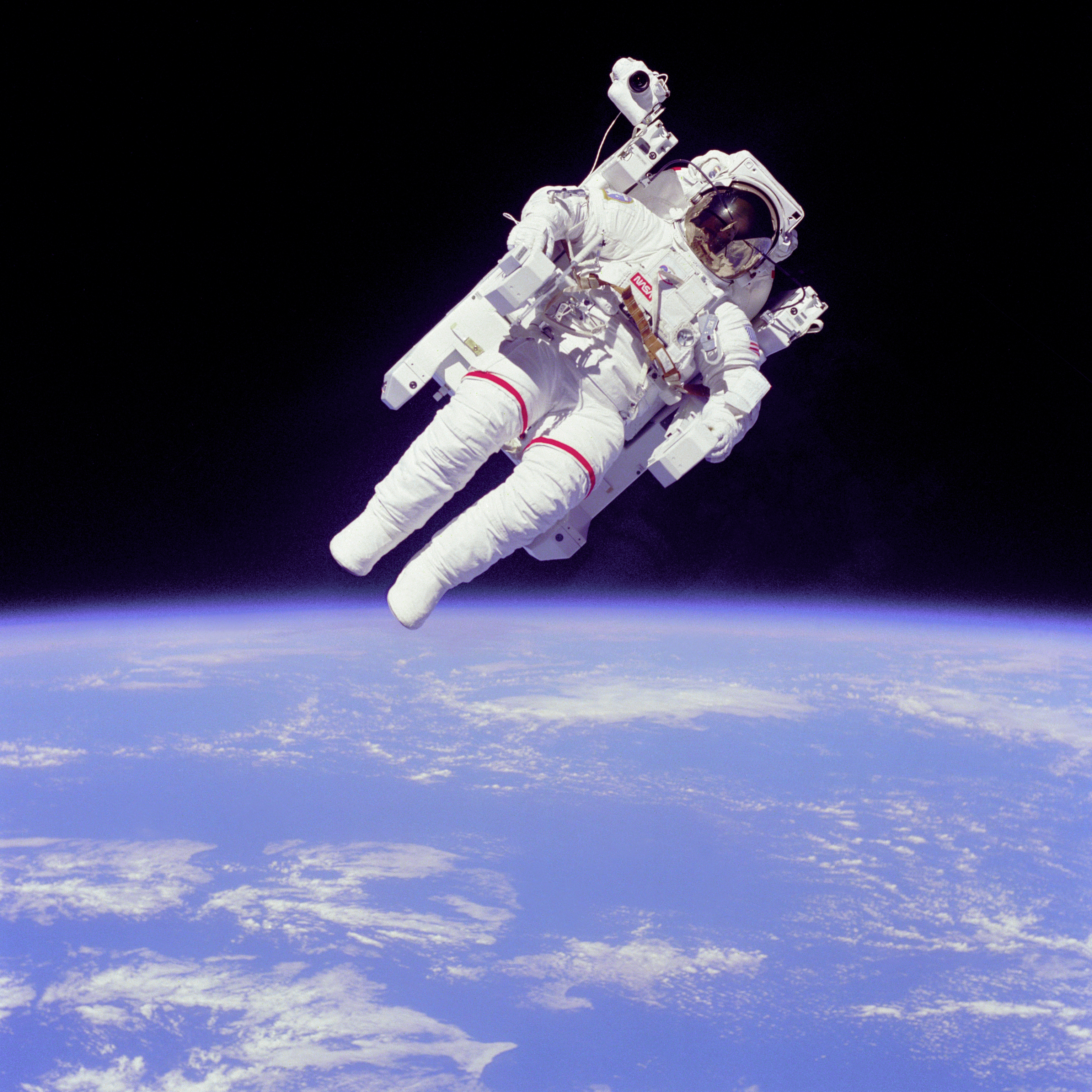
Credit: NASA · Public domain
An astronaut is a person trained to travel and work in space. The word comes from two Greek words that together mean "star sailor." Russia uses the word "cosmonaut" for the same job. China uses "taikonaut." The first human to reach space was a Soviet cosmonaut named Yuri Gagarin, who orbited Earth once in 1961.
Getting into space is hard. A rocket has to push an astronaut straight up fast enough to escape Earth's gravity. That means going about 17,500 miles per hour, which is more than twenty times faster than a passenger jet. During launch, the force pressing on an astronaut's body is about three times normal gravity. It feels like two other people are sitting on top of you.
Once they reach orbit, astronauts float. This is often called "zero gravity," but that name is a little misleading. Earth's gravity is still pulling on them. They just happen to be falling around the planet at the same speed they are moving forward, so they never hit the ground. The result is weightlessness, and it changes almost everything about daily life.
Simple things get strange. Astronauts sleep in sleeping bags strapped to the wall so they do not drift into equipment. They drink water and juice through straws from sealed pouches. Salt and pepper come as liquids, because loose grains would float into someone's eye or into a machine. Toilets use air suction instead of water. Showers are not practical, so astronauts clean themselves with wet wipes and rinse-free shampoo.
Space is also dangerous in ways Earth is not. There is no air to breathe, the temperature swings from boiling to freezing in minutes, and the sun's radiation is much stronger without the atmosphere to block it. Astronauts wear spacesuits during spacewalks. A modern suit is basically a tiny spacecraft built for one person, with its own oxygen, heating, cooling, and pressure.
Living in space also changes the human body. Muscles get weaker because they do not have to fight gravity. Bones lose some of their density. To slow this down, astronauts on the International Space Station exercise about two hours every day on special machines. Scientists study these changes carefully. What they learn helps future missions, and it also teaches doctors more about the bodies of people back on Earth.
Related
Last updated 2026-04-22