
Radio (Technology)
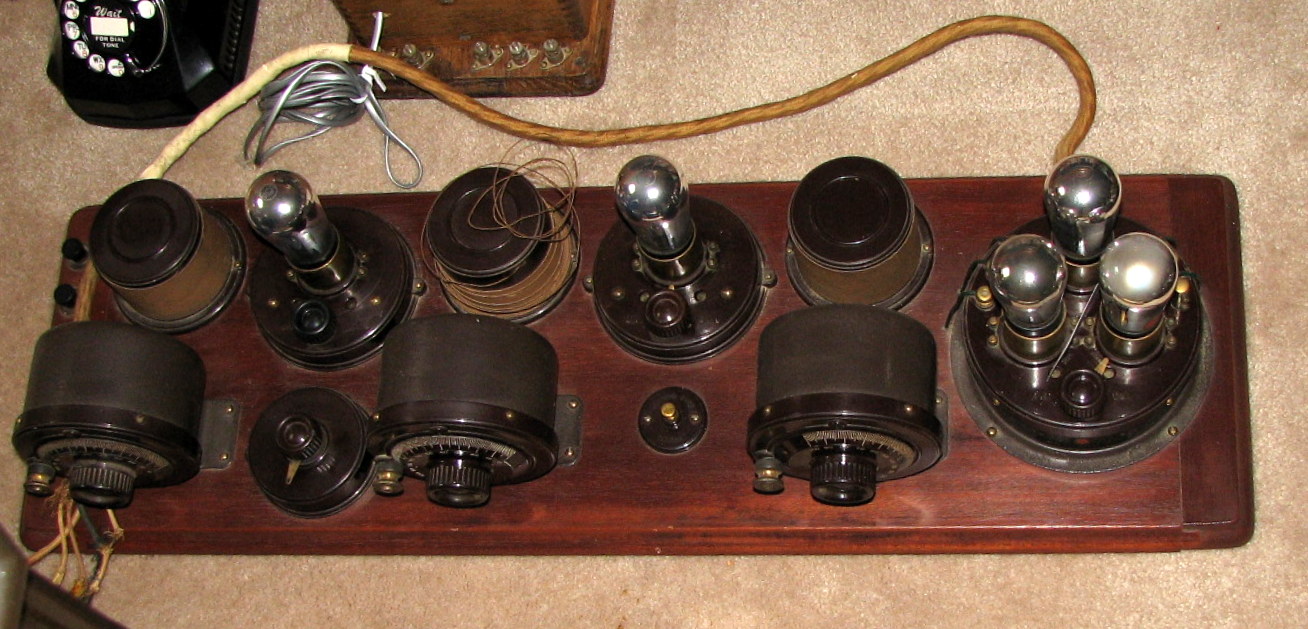
Credit: Joe Haupt from USA · CC BY-SA 2.0
Radio is a way of sending sounds and other information through the air without wires. It uses invisible waves of energy called radio waves. A radio transmitter turns sound into these waves and sends them out from a tall antenna. A radio receiver picks up the waves and turns them back into sound. Radio was the first technology that let people send messages instantly across oceans and continents.
Radio waves are a kind of light, but our eyes cannot see them. They travel at the speed of light, about 186,000 miles per second. That means a radio signal can cross the United States in less than a fiftieth of a second. Radio waves can pass through walls, clouds, and even some kinds of rock. That is why a radio still works inside your house.
The story of radio begins in the 1880s. A German scientist named Heinrich Hertz proved that radio waves were real. In the 1890s, an Italian inventor named Guglielmo Marconi figured out how to send a signal across long distances. By 1901, he sent the letter "S" in Morse code from England to Canada. Many other inventors helped along the way, including Nikola Tesla. Today, courts and historians still argue about who deserves the most credit.
At first, radio was used to send dots and dashes, not voices. Ships used it to call for help at sea. The sinking Titanic sent radio distress messages in 1912, and rescue ships came because of them. By the 1920s, people could send voices and music. Families gathered around big wooden radios to hear news, sports games, and shows. Radio became the first form of mass entertainment in homes.
Radio is not just music stations. The same kind of waves carry many other things. Walkie-talkies, baby monitors, garage door openers, and car key fobs all use radio waves. So do cell phones, Wi-Fi, GPS satellites, and Bluetooth headphones. Even the microwave oven in your kitchen heats food using a kind of radio wave.
Radio also reaches into space. NASA uses powerful antennas to talk with rovers on Mars and with spacecraft billions of miles away. The signals are very weak by the time they arrive, but huge dish antennas on Earth can still hear them. Astronomers point similar dishes at the sky to listen for natural radio waves coming from stars, galaxies, and black holes.
Related
Last updated 2026-04-25