
Solar Panel
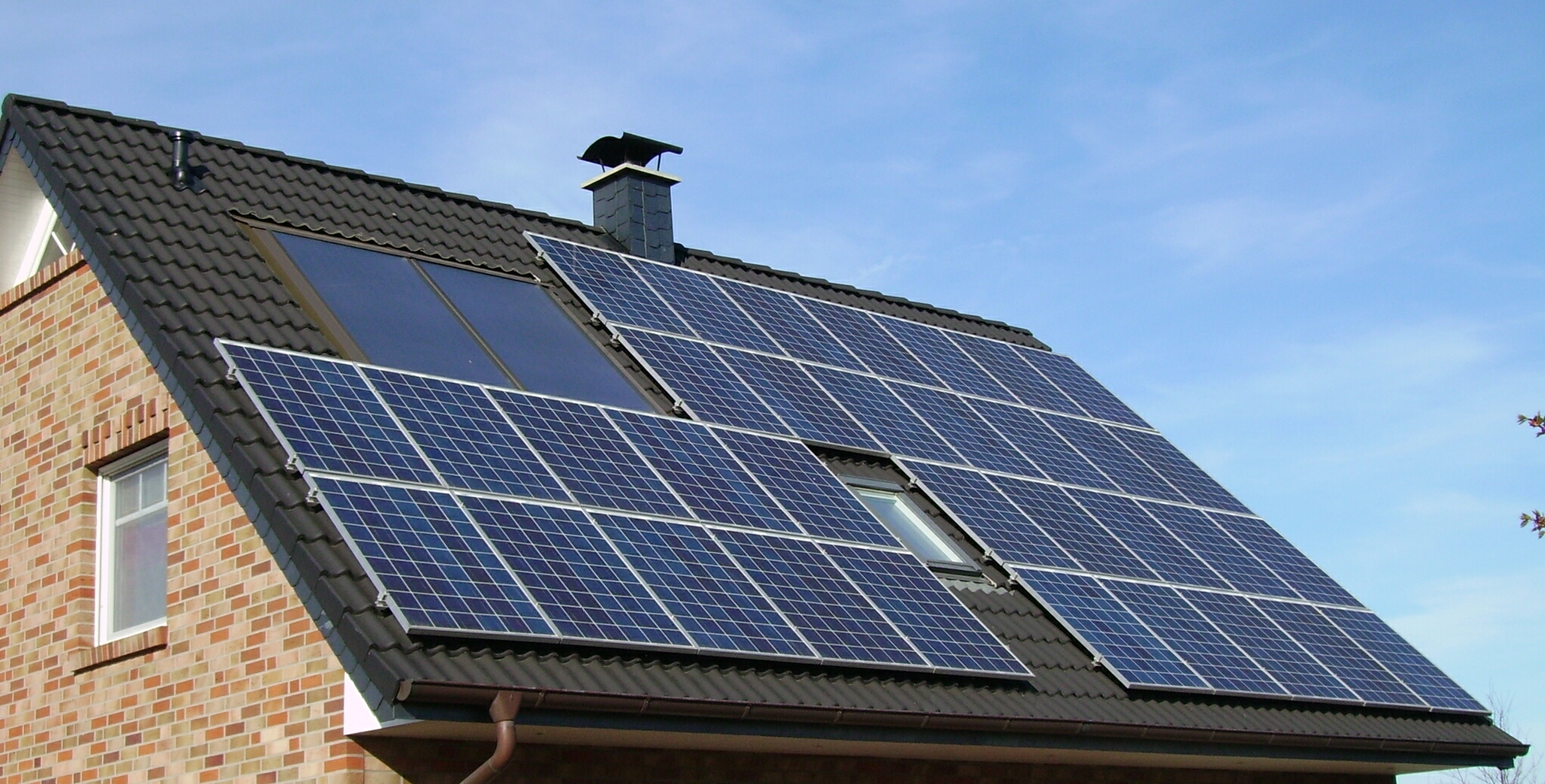
Credit: Pujanak · Public domain
A solar panel is a flat device that turns sunlight into electricity. Solar panels are usually mounted on rooftops, in open fields, or on satellites in space. They are one of the main tools people use to make clean energy, which is energy that does not pollute the air.
The science behind a solar panel was discovered in 1839 by a 19-year-old French scientist named Edmond Becquerel. He noticed that certain materials made a small electric current when sunlight hit them. This is called the photovoltaic effect. The word "photovoltaic" mixes the Greek word for light with the word "voltaic," which means electric.
A solar panel is built from many smaller pieces called solar cells. Most cells are made of thin slices of silicon, the same material found in beach sand and computer chips. When sunlight hits a silicon cell, the energy in the light knocks tiny particles called electrons loose. The moving electrons make an electric current. Wires inside the panel collect the current and send it out to power lights, fridges, phones, or anything else that runs on electricity.
A single solar cell makes only a small amount of power. So panels link many cells together. A typical home rooftop panel makes about 400 watts of power on a sunny day. That is enough to run a few light bulbs and charge a laptop.
Solar panels have one obvious problem: they do not work at night, and they make less power on cloudy days. To solve this, many homes and solar farms also use big batteries. The batteries store extra electricity made during the day so people can use it after the sun goes down.
Solar power has grown faster than almost any other kind of energy. In 2010, solar panels made less than one percent of the world's electricity. By 2024, that number had passed six percent and is still climbing fast. The price of solar panels has dropped by about 90 percent since 2010, which is why so many more roofs and fields are covered with them now.
Solar panels also work in places no power line could reach. They run weather stations on mountain peaks, water pumps in remote villages, and the rovers exploring Mars. As long as a star is shining nearby, a solar panel can turn its light into useful power.
Related
Last updated 2026-04-25