
Sun
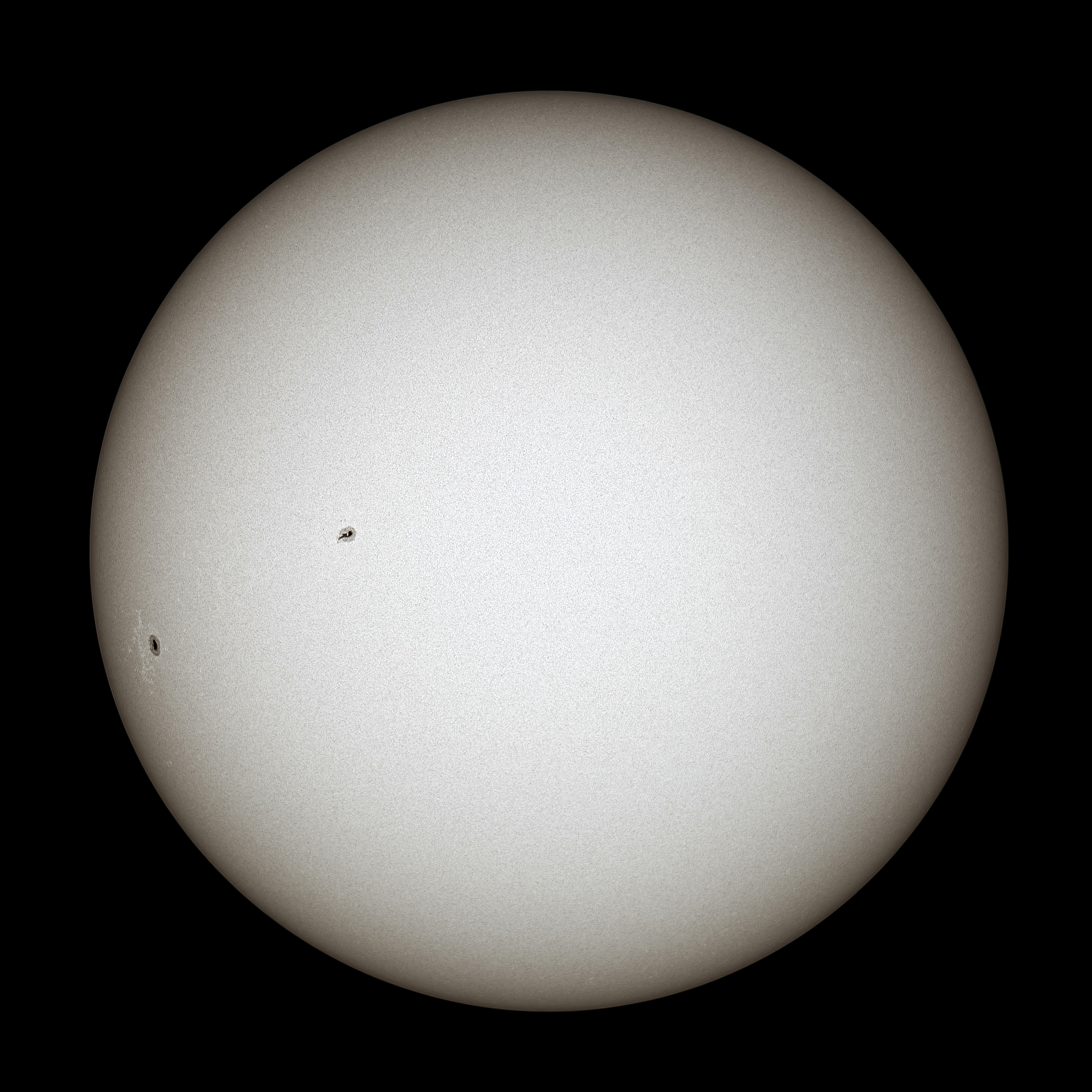
Credit: Matúš Motlo · CC BY-SA 4.0
The Sun is the star at the center of our solar system. It is a huge ball of hot, glowing gas, mostly hydrogen and helium. Every planet, moon, asteroid, and comet in the solar system orbits around the Sun. Its light and heat make life on Earth possible.
The Sun is about 93 million miles away from Earth. That sounds far, but it is close compared to other stars. The next closest star to us, Proxima Centauri, is about 270,000 times farther away. Light from the Sun takes only about 8 minutes to reach Earth. Light from Proxima Centauri takes more than four years.
The Sun is also enormous. It is about 865,000 miles across, which is more than 100 times wider than Earth. If the Sun were a hollow ball, you could fit about 1.3 million Earths inside it. The Sun holds more than 99 percent of all the matter in the solar system. Everything else, including all the planets combined, makes up less than 1 percent.
The Sun makes its energy through a process called nuclear fusion. Deep in its core, the temperature reaches about 27 million degrees Fahrenheit. The pressure is so strong that hydrogen atoms smash together and turn into helium. This releases huge amounts of energy. That energy travels out as light and heat.
The surface of the Sun is not smooth or still. It has darker, cooler spots called sunspots. It also shoots out bursts of energy called solar flares. Sometimes it blasts clouds of charged particles into space. When those particles reach Earth, they can light up the sky near the poles. We see them as auroras, also called the northern and southern lights.
The Sun is about 4.6 billion years old. Scientists believe it is about halfway through its life. In roughly 5 billion years, it will run out of hydrogen in its core. It will swell into a huge red giant star, probably swallowing Mercury and Venus. After that, it will shrink into a small, dim white dwarf.
People have watched the Sun for thousands of years. Ancient Egyptians worshipped a sun god named Ra. The Aztecs and Incas built temples to honor the Sun. Today, scientists study it with special telescopes on Earth and with spacecraft. NASA's Parker Solar Probe has flown closer to the Sun than any human-made object ever has. It is helping answer one of the Sun's biggest mysteries: why the Sun's outer layer, the corona, is hundreds of times hotter than its surface.
Last updated 2026-04-22