
Wheel (Invention)
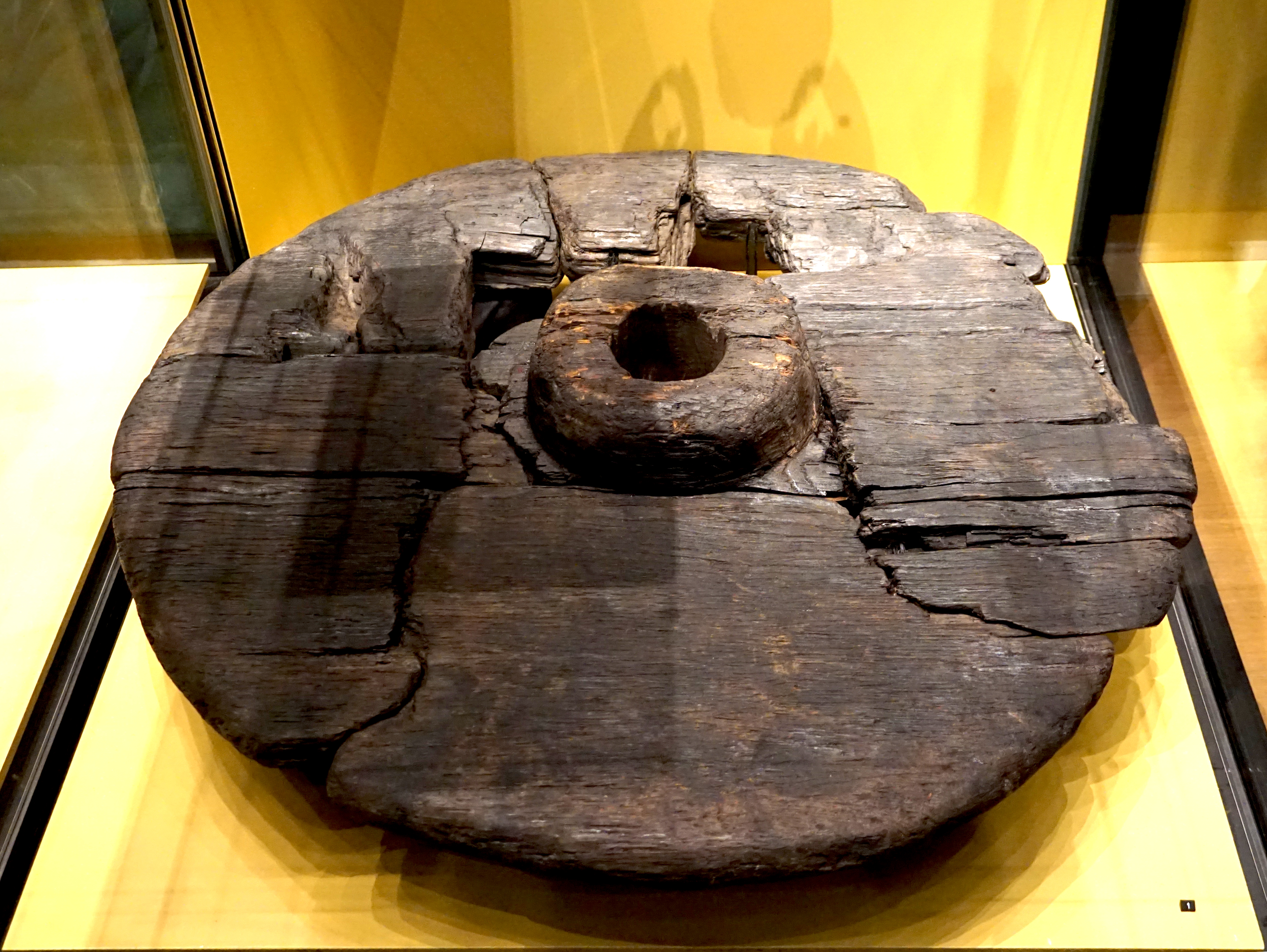
Credit: Arjuno3 · CC BY-SA 4.0
The wheel is a round object that turns around a center point, called an axle. It is one of the most important inventions in human history. Wheels are used to move heavy loads, to spin pottery, to grind grain, and to power machines. Almost every car, train, bicycle, and clock you see depends on a wheel of some kind.
The wheel was invented later than many people think. The first wheels were not used for transportation. They were used by potters to shape clay. Potter's wheels appear in Mesopotamia, in what is now Iraq, around 3500 BCE. Wheels for carts and wagons came a few hundred years later.
Why did it take so long? Wheels themselves are not the hard part. The hard part is the axle. A wheel needs a smooth, strong rod through its center, and the rod must fit just right. Too tight and the wheel cannot turn. Too loose and it wobbles off. Builders also needed metal tools to shape wood that precisely. That is why the wheel arrived around the same time as the Bronze Age.
The oldest wooden wheel ever found is more than 5,000 years old. It was discovered in a swamp near Ljubljana, in the country of Slovenia. The wheel is made of ash and oak, and it still has its axle. Around the same time, people in Mesopotamia, Europe, and the steppes of Central Asia all seem to have been building wheeled carts. Historians still argue about whether the wheel was invented in one place and spread, or whether different groups invented it on their own.
Early wheels were solid disks of wood, heavy and slow. A big jump came around 2000 BCE, when people invented the spoked wheel. Spokes are thin rods that connect the rim to the center. A spoked wheel is much lighter, which means it can move faster. Chariots with spoked wheels changed how armies fought.
Some places never used the wheel for transportation. The Aztec, Maya, and Inca civilizations of the Americas built huge cities and pyramids without wagons. They knew about wheels. Archaeologists have found small wheeled toys in Mexico. But the Americas had no horses or oxen to pull a cart, and the land was often too steep or forested for wagons. Llamas and human porters did the work instead.
Today, wheels are everywhere. They are inside hard drives, jet engines, and roller skates. The shape is so useful that, after 5,000 years, no one has come up with a better one.
Related
Last updated 2026-04-25