
New Deal
Credit: LordHarris at English Wikipedia · Public domain
The New Deal was a set of programs and laws passed in the United States during the 1930s. President Franklin D. Roosevelt created it to help the country recover from the Great Depression. The Depression had begun in 1929. By 1933, about one in four American workers had no job. Banks were failing, farms were being lost, and many families could not afford food.
Roosevelt promised Americans "a new deal" when he ran for president in 1932. He won in a landslide. In his first 100 days in office, he pushed Congress to pass an enormous number of new laws. This burst of action set the pattern for the rest of his presidency.
The New Deal had three main goals. People at the time called them the "three Rs." Relief meant helping people who were suffering right away. Recovery meant getting the economy moving again. Reform meant fixing the problems that had caused the crash so it would not happen again.
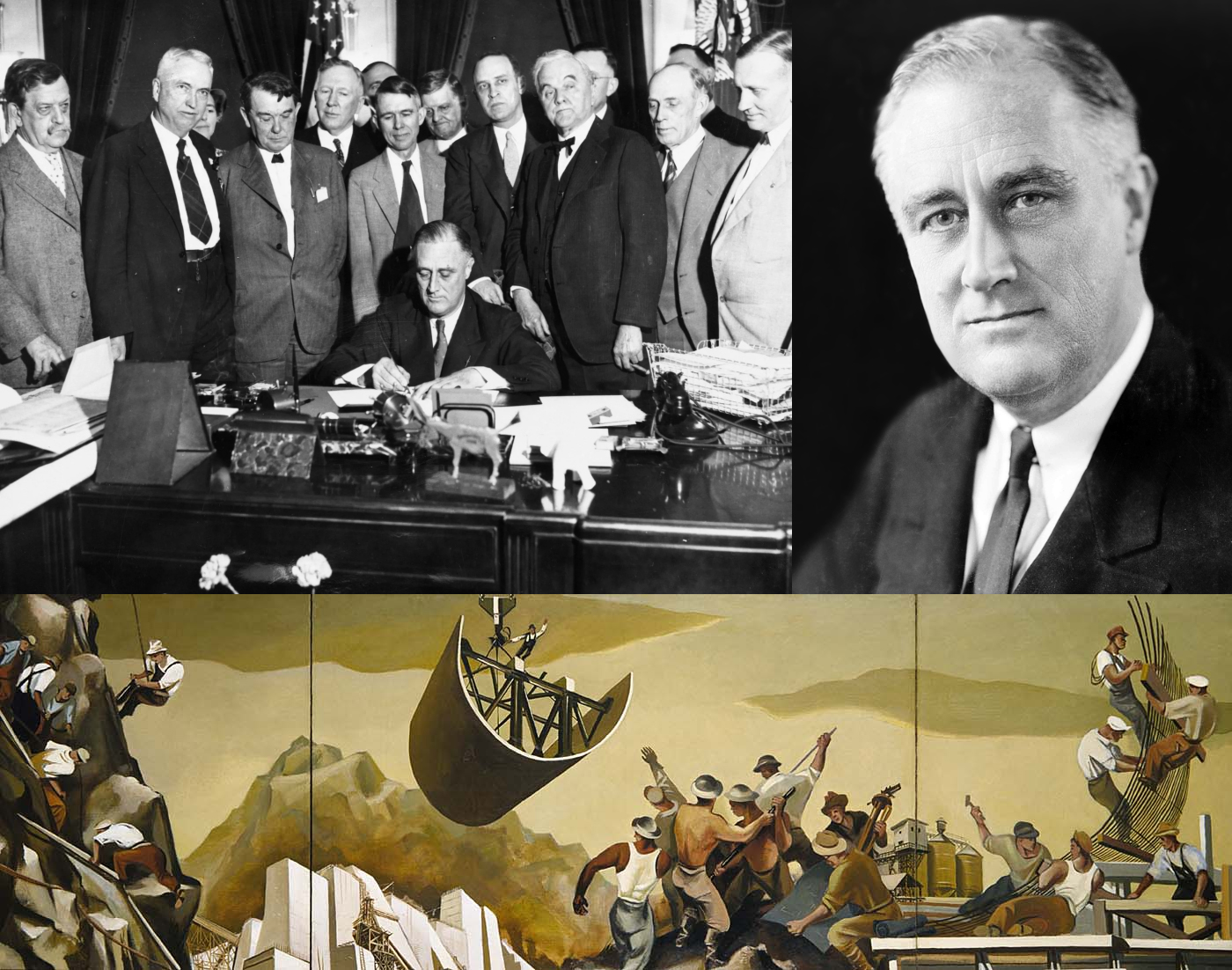
Many famous programs came out of the New Deal. The Civilian Conservation Corps put young men to work planting trees, building trails, and fighting forest fires. The Works Progress Administration paid millions of people to build roads, bridges, schools, and parks. It also hired artists, writers, and musicians. The Tennessee Valley Authority built dams that brought electricity to poor rural areas for the first time.
Two New Deal programs still affect daily life in America. Social Security, passed in 1935, gives money to older people after they stop working. The Federal Deposit Insurance Corporation protects the money people keep in banks. If a bank fails today, the government pays customers back.
The New Deal was popular, but it had critics. Some people thought the government was getting too big and spending too much. Others thought it did not go far enough to help the poor. Many programs left out Black Americans, women, and farm workers, often on purpose. Historians still argue about how much the New Deal actually ended the Depression. Most agree that World War II, which started soon after, did more to bring the economy back than any single program.
Even so, the New Deal changed America for good. Before it, most people did not expect the federal government to help when times got hard. After it, they did. Programs from the 1930s still send checks, insure savings, and keep the lights on in homes across the country.
Related
Last updated 2026-04-26