
Women's Suffrage Movement
Credit: Unknown author · Public domain
The Women's Suffrage Movement was a long campaign in the United States to win women the right to vote. The word "suffrage" means the right to vote in public elections. The movement began in the 1840s and lasted more than 70 years. It ended in 1920, when the 19th Amendment to the Constitution finally gave American women that right.
For most of American history, only men could vote. When the country was founded in the 1700s, lawmakers wrote rules that left women out. Many people at the time believed women should focus on home and family, not politics. Women could not serve on juries, and in many states they could not own property after they married.
The movement officially began in 1848 in Seneca Falls, New York. About 300 people came to a meeting organized by Elizabeth Cady Stanton and Lucretia Mott. They wrote a document called the Declaration of Sentiments. It copied the style of the Declaration of Independence and demanded equal rights for women, including the vote. Most newspapers made fun of the meeting. The activists kept going anyway.
Many women led the movement over the years. Susan B. Anthony traveled the country giving speeches and was arrested in 1872 for voting illegally. Sojourner Truth, a formerly enslaved woman, gave a famous speech asking, "Ain't I a woman?" She pushed for both the end of slavery and rights for Black women. Later leaders like Alice Paul organized big public protests in the 1910s.
The movement was not always united. Some white leaders pushed Black suffragists to the back of marches to avoid losing southern support. Black women like Ida B. Wells and Mary Church Terrell fought for voting rights anyway, often within their own organizations. This split is a painful part of the movement's history.
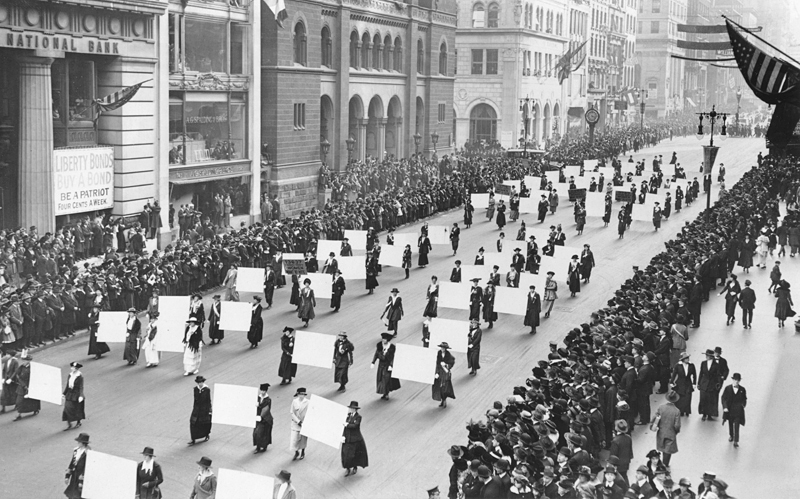
Tactics changed over time. Early activists wrote books and gave speeches. Later activists marched, picketed the White House, and went on hunger strikes when arrested. In 1913, more than 5,000 women paraded down Pennsylvania Avenue in Washington, D.C., the day before President Woodrow Wilson's swearing-in. The march drew huge crowds and turned into a national news story.
Some western states gave women the vote first. Wyoming let women vote starting in 1869, more than 50 years before the rest of the country. After years of pressure and the work women did during World War I, Congress finally passed the 19th Amendment. The states approved it in August 1920.
The amendment did not end the fight. Many Black women in southern states were blocked from voting until the Voting Rights Act of 1965, almost 50 years later.
Related
Last updated 2026-04-26