
Age of Exploration
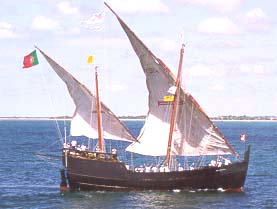
Credit: Brazillian Navy · Attribution
The Age of Exploration was a period when European sailors traveled across the world's oceans for the first time. It lasted roughly from the early 1400s to the early 1600s. During these 200 years, Europeans mapped coasts they had never seen, set up trade routes between continents, and built empires far from home. The voyages changed life for people on every continent, often in terrible ways.
Why did Europeans start sailing so far? The biggest reason was trade. Spices like pepper, cinnamon, and cloves came from Asia and were worth huge amounts of money in Europe. The land routes ran through many countries that charged taxes along the way. Kings and merchants wanted a sea route straight to Asia so they could keep more of the profit.
Better technology made the voyages possible. Sailors used the magnetic compass to find direction. They used a tool called an astrolabe to measure their position by the stars. The Portuguese built a new kind of ship called the caravel. It was small, fast, and could sail against the wind.
Portugal led the way. Portuguese captains sailed down the coast of Africa and around its southern tip. In 1498, Vasco da Gama reached India by sea. Spain went a different direction. In 1492, Christopher Columbus sailed west hoping to reach Asia. Instead he landed in the Caribbean, on islands Europeans had never visited. From 1519 to 1522, a crew that started under Ferdinand Magellan sailed all the way around the world. It took them three years.
The voyages connected continents that had been separate for thousands of years. Foods, animals, plants, and diseases moved in both directions. This huge swap is called the Columbian Exchange. Tomatoes, potatoes, corn, and chocolate traveled from the Americas to the rest of the world. Horses, wheat, and cattle traveled the other way.
The cost was enormous. Diseases like smallpox came over with the Europeans. Native Americans had no immunity to these illnesses. In some regions, more than 90 percent of the Indigenous population died within a century. Spanish forces conquered the Aztec and Inca empires. European countries claimed huge stretches of land that already belonged to other people. The trans-Atlantic slave trade also began during this era. It would force more than 12 million Africans across the ocean over the next 400 years.
Historians argue about how to weigh all this. The voyages produced amazing maps, new foods, and a connected world. They also caused mass death, slavery, and the destruction of whole civilizations. Most historians today try to tell both sides of the story, instead of treating the era as a simple adventure.
Related
Last updated 2026-04-26