
Columbus Voyages
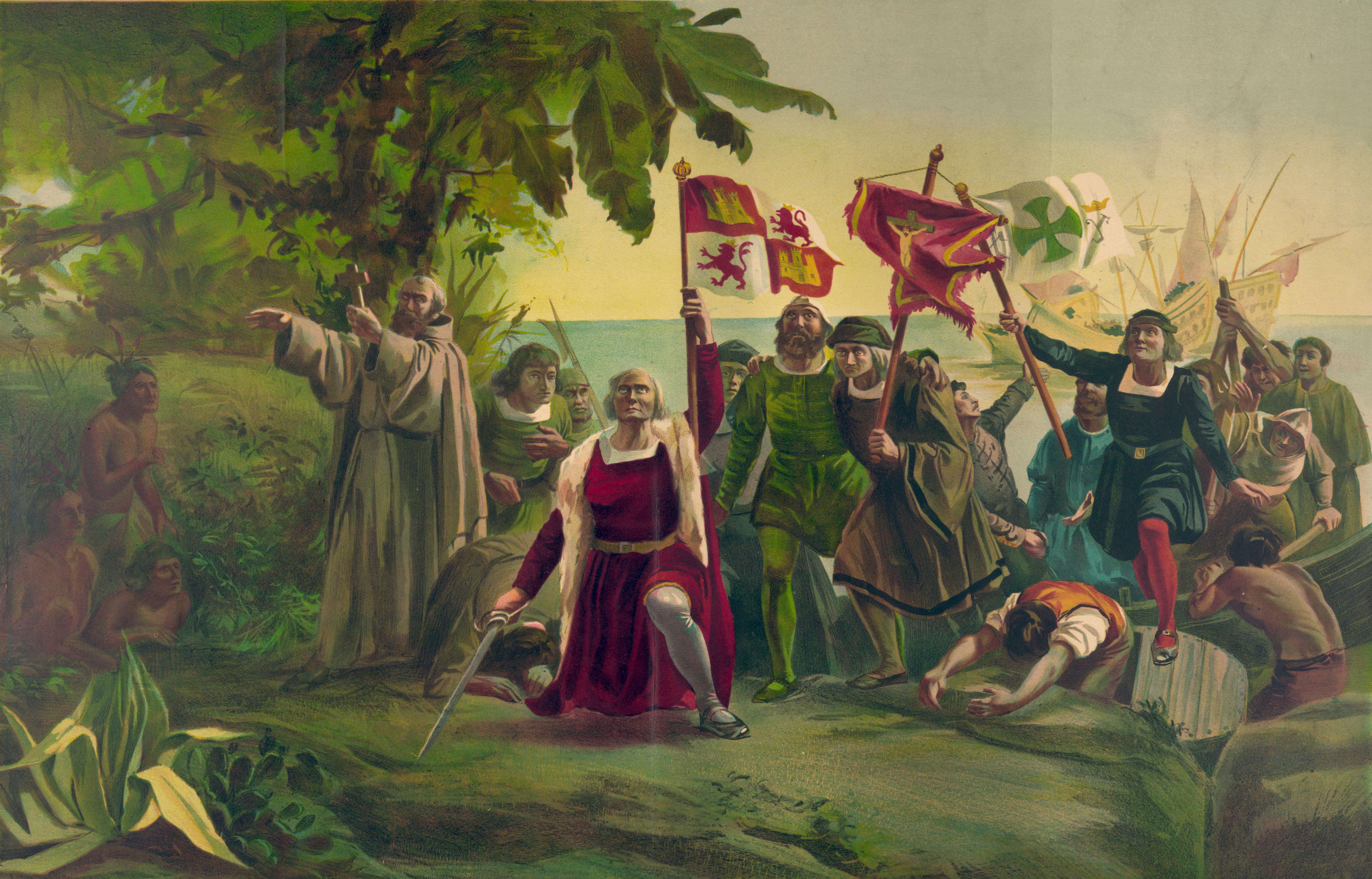
Credit: Dióscoro Puebla · Public domain
The Columbus voyages were four trips across the Atlantic Ocean made by an Italian sailor named Christopher Columbus between 1492 and 1504. Columbus sailed for the king and queen of Spain. He was looking for a sea route to Asia. Instead, he reached islands in the Americas, lands that Europeans had not known about. His voyages started a long chain of events that changed the world.
In the 1400s, European traders wanted spices, silk, and gold from Asia. The land routes were long and dangerous. Columbus had a bold idea. Since the Earth is round, he could reach Asia by sailing west across the Atlantic. He thought the trip would be short. He was wrong about the size of the Earth. He did not know that two huge continents lay in his way.
After years of asking, Columbus got the support of King Ferdinand and Queen Isabella of Spain. On August 3, 1492, he sailed from Spain with three small ships: the Niña, the Pinta, and the Santa María. About 90 men went with him. After 36 days at sea, a sailor on the Pinta spotted land. It was an island in the Bahamas. Columbus thought he had reached islands near Asia. He called the people he met "Indians." The name stuck for centuries, even though Columbus had been wrong.
Columbus made three more voyages. He explored other Caribbean islands, including Cuba and Hispaniola. On his third trip, he reached the coast of South America. He died in 1506 still believing he had found a new route to Asia. He never set foot on the mainland of North America.
The voyages changed both sides of the ocean forever. Europeans sent ships, settlers, and soldiers across the Atlantic. They claimed land that was already home to millions of Native people. Plants, animals, and foods moved between the continents. So did diseases. Smallpox and other illnesses, brought by Europeans, killed huge numbers of Native Americans who had no protection against them. Within 100 years, some Native populations had dropped by more than 80 percent.
For a long time, Columbus was treated as a hero in the United States. Schools taught that he "discovered" America. Today historians and many communities tell the story differently. The lands Columbus reached were not empty. People had lived there for more than 15,000 years. Columbus also enslaved Native people and ruled with great cruelty. Some places now celebrate Indigenous Peoples' Day on the second Monday of October instead of, or alongside, Columbus Day. The voyages still matter, but how we remember them keeps changing.
Related
Last updated 2026-04-26