
Colonialism
Credit: ArdadN at English Wikipedia · Public domain
Colonialism is the practice of one country taking control of land in another part of the world and ruling the people who live there. The country in charge is called the colonial power. The land it rules is called a colony. Colonialism has happened in many times and places, but it shaped the modern world most strongly between about 1500 and 1960.
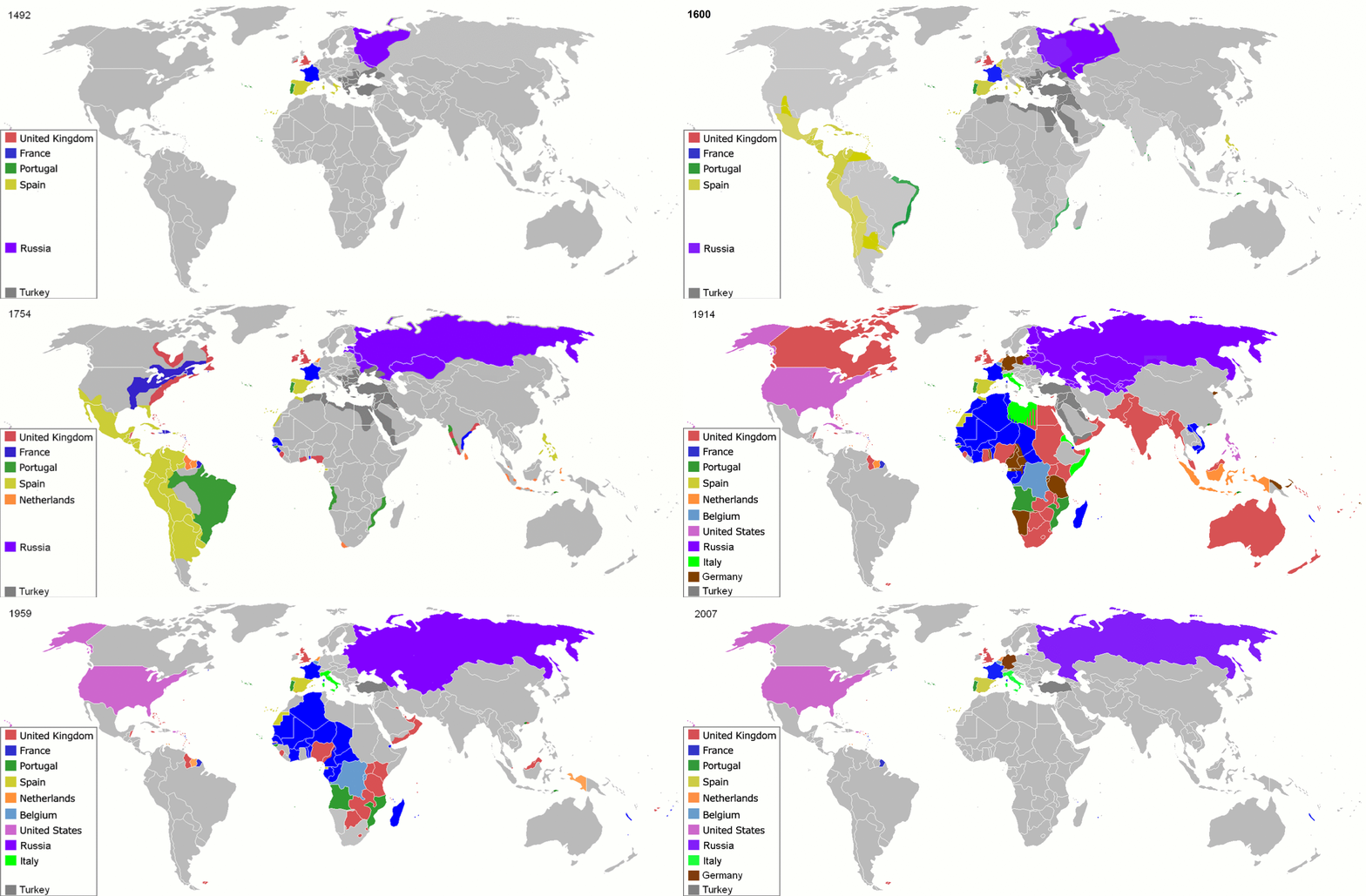
The big wave of European colonialism began with the Age of Exploration. Starting in the late 1400s, ships from Spain, Portugal, England, France, and the Netherlands sailed across the oceans. They claimed land in the Americas, Africa, and Asia for their kings and queens. Often the people who already lived on that land had been there for thousands of years. The Europeans took the land anyway.
Colonial powers wanted three main things: resources, markets, and power. They took gold, silver, sugar, cotton, rubber, spices, and tea back home. They forced colonies to buy goods made in the home country. And ruling far-away land made a country look strong compared to its rivals.
Colonialism caused enormous harm. European diseases like smallpox killed millions of Native Americans who had no protection against them. Colonial powers seized farmland and forced local people to work on it. The trans-Atlantic slave trade carried about 12 million enslaved Africans to colonies in the Americas. Borders drawn by European rulers cut through old kingdoms and tribal lands. Many of those borders still exist today and still cause conflict.
By the early 1900s, European countries controlled most of Africa and large parts of Asia. The British Empire alone ruled about a quarter of the world's land and people. That is more land than any empire in history.
After World War II, colonies began winning their independence. India became free from Britain in 1947. Most African colonies became independent countries between 1957 and 1975. This worldwide change is called decolonization.
Historians still debate how to measure the full effects of colonialism. Some point to railroads, schools, and hospitals that colonial powers built. Others point out that those things mostly served the colonizers, while local people lost their land, languages, and lives. Most historians today agree that the costs to colonized people were far greater than the benefits.
The effects of colonialism are not just history. They shape today's borders, languages, wealth gaps, and tensions between countries.
Related
Last updated 2026-04-26