
Trans-Atlantic Slave Trade
Credit: Unknown author · Public domain
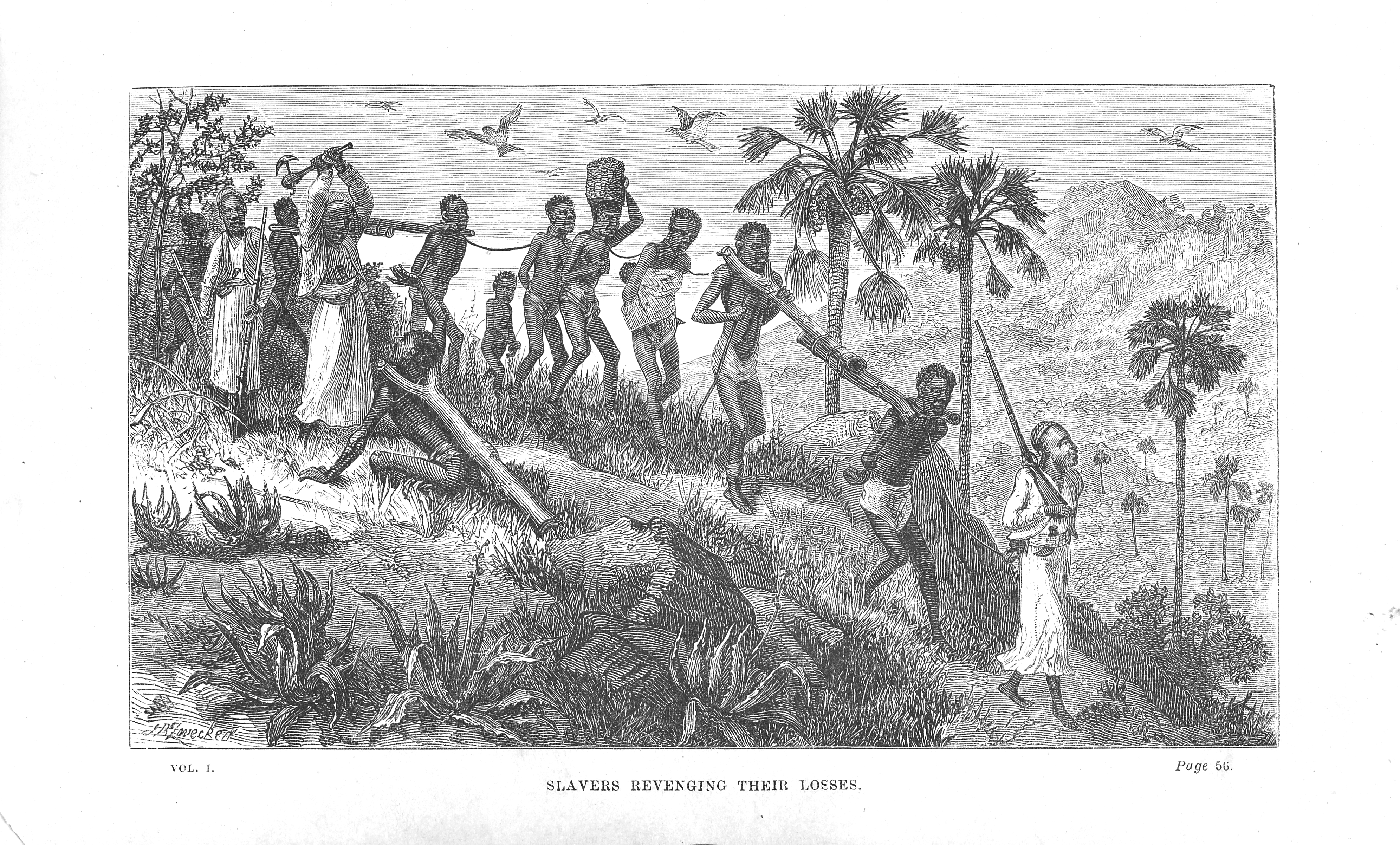
The Trans-Atlantic Slave Trade was the forced movement of millions of African people across the Atlantic Ocean to the Americas. It lasted from the early 1500s to the late 1800s. European traders captured or bought African people, packed them onto ships, and sold them as enslaved workers in North America, South America, and the Caribbean. Historians believe about 12.5 million Africans were taken. Almost two million died during the ocean crossing. It was the largest forced migration in human history.
How it began
The trade started after Europeans began building colonies in the Americas in the 1500s. The colonies needed huge numbers of workers to grow sugar, tobacco, cotton, coffee, and rice. At first, Europeans forced Native American people to do this work. But many Native people died from European diseases like smallpox. Europeans then turned to Africa.
Portugal began the trade. Spain, Britain, France, the Netherlands, and other countries soon joined in. By the 1700s, Britain was the largest slave-trading country in the world.
The triangle trade
Many slave ships followed a pattern called the triangle trade. It had three legs.
On the first leg, ships sailed from Europe to West Africa carrying guns, cloth, iron tools, and rum. European traders gave these goods to African kings and merchants in exchange for captured people. Most of these captives had been seized in wars or raids by other African groups.
On the second leg, the ships crossed the Atlantic to the Americas. This crossing was called the Middle Passage. The ships sold the enslaved people to plantation owners.
On the third leg, the ships carried sugar, cotton, tobacco, and other crops back to Europe. Then the cycle started again.
The Middle Passage
The Middle Passage was a horror. The voyage usually lasted six to ten weeks. Captives were chained together below deck in spaces so low they could not stand up. They were packed in tight, sometimes only 18 inches apart, the width of a kid's school desk. Disease spread quickly. Many people died from sickness, from lack of food and water, or from being beaten. Some chose to jump overboard rather than continue. About one out of every seven Africans on these ships did not survive the trip.
A man named Olaudah Equiano was kidnapped from his village in West Africa as a boy. He later bought his freedom and wrote a famous book about what he saw on the slave ships. His writing helped people in Europe and America understand how cruel the trade really was.
Who profited
Slavery and the slave trade made many people rich. Plantation owners in the Americas got free labor and grew huge fortunes. European merchants got cheap sugar, coffee, and cotton to sell. Banks and shipping companies in cities like London, Liverpool, Bristol, and Boston earned money from every part of the trade. Some African kingdoms also grew rich and powerful by selling captives to the Europeans.
The cost was paid by the enslaved people and their families. Whole regions of West and Central Africa lost much of their population. Families were torn apart. People who had been farmers, weavers, healers, and parents in Africa spent the rest of their lives working under the whip on plantations far from home.
Resistance
Enslaved people fought back in many ways. They slowed down their work, broke tools, and ran away. Some led full uprisings. The most successful was the Haitian Revolution, which began in 1791. Enslaved people in the French colony of Haiti rose up, fought for years, and in 1804 created the first country in the Americas to be ruled by formerly enslaved people. It was the only successful large-scale slave revolt in history.
How it ended
People had argued against slavery for a long time. By the late 1700s, a movement to end the trade grew strong in Britain and the United States. Former slaves like Equiano, religious groups like the Quakers, and writers and politicians made the case in books, speeches, and laws.
Britain made the slave trade illegal in 1807. The United States banned it in 1808. Britain then used its navy to chase down slave ships at sea. But slavery itself, the practice of owning people, lasted longer. Britain ended slavery in its colonies in 1833. The United States ended it in 1865, after the Civil War. Brazil was the last country in the Americas to end slavery, in 1888.
Lasting effects
The Trans-Atlantic Slave Trade shaped the modern world. It built much of the wealth of Europe and the Americas. It also created the deep racial divides that still affect countries like the United States, Brazil, and Haiti today. Historians often call it one of the greatest crimes in human history, and one whose effects have not gone away.
Related
Last updated 2026-04-26