
Fall of Constantinople
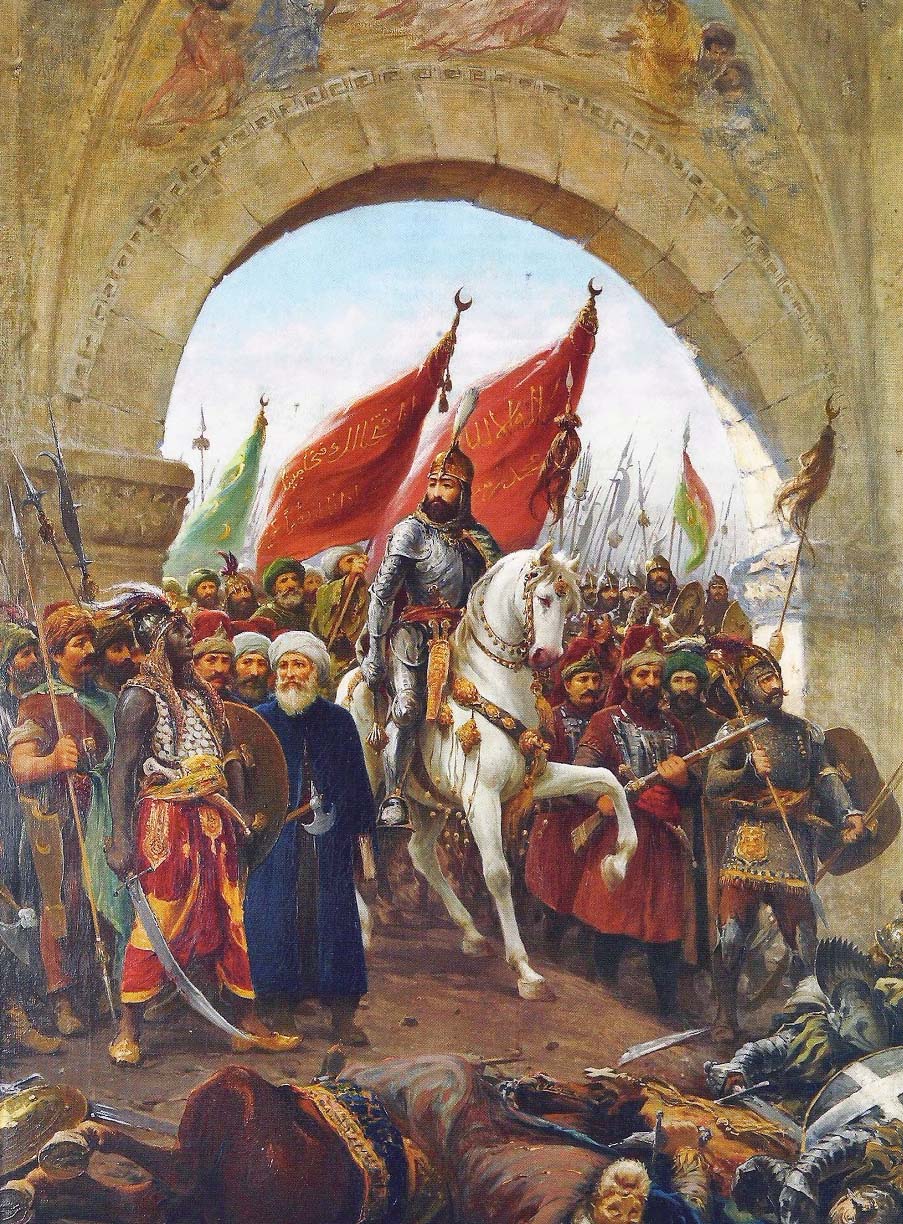
Credit: Fausto Zonaro · Public domain
The Fall of Constantinople was the capture of the city of Constantinople by the Ottoman Empire in 1453. Constantinople was the capital of the Byzantine Empire, the eastern half of the old Roman Empire. The siege lasted 53 days, from April 6 to May 29. When the city fell, the Byzantine Empire ended after more than 1,000 years.
Constantinople sat on a narrow strip of land between Europe and Asia, in what is now Turkey. The Roman emperor Constantine had founded the city in 330 CE and named it after himself. For centuries it was the richest and best-defended city in Europe. Three rings of stone walls surrounded it on the land side. Water protected the other sides. Many armies had tried to take Constantinople and failed.
By 1453, the Byzantine Empire was very weak. It had shrunk to little more than the city itself. The young Ottoman sultan, Mehmed II, was 21 years old and determined to capture it. He gathered an army of about 80,000 soldiers. The defenders, led by Emperor Constantine XI, had only about 7,000 men.
Mehmed brought a new weapon that changed everything: huge cannons. The biggest one was 27 feet long and fired stone balls weighing over 1,000 pounds, as much as a small horse. These cannons could break through walls that had stood for a thousand years. Day after day, they pounded the city.
The defenders fought hard. They patched the walls at night with wood, dirt, and stones. The Byzantines also stretched a giant chain across their harbor to block enemy ships. Mehmed had a clever answer. He ordered his men to drag 70 ships overland on greased logs, around the chain, and into the harbor from behind. It took just one night.
On May 29, the Ottomans launched their final attack. After hours of fighting, they broke through a small gate that had been left open by mistake. Emperor Constantine XI threw off his royal clothes and died fighting in the streets. By morning, the city was Mehmed's.
Mehmed was just 21, and he became known as Mehmed the Conqueror. He made Constantinople the new capital of the Ottoman Empire and turned the great church of Hagia Sophia into a mosque. The city's name slowly changed to Istanbul, which is what people call it today.
Historians often use 1453 to mark the end of the Middle Ages. Greek scholars fled west and brought ancient books with them, helping spark the Renaissance. The old land routes to Asia were now blocked, so European kings began searching for sea routes, which led to the voyages of Columbus and others just 40 years later.
Related
Last updated 2026-04-26