
Korean War
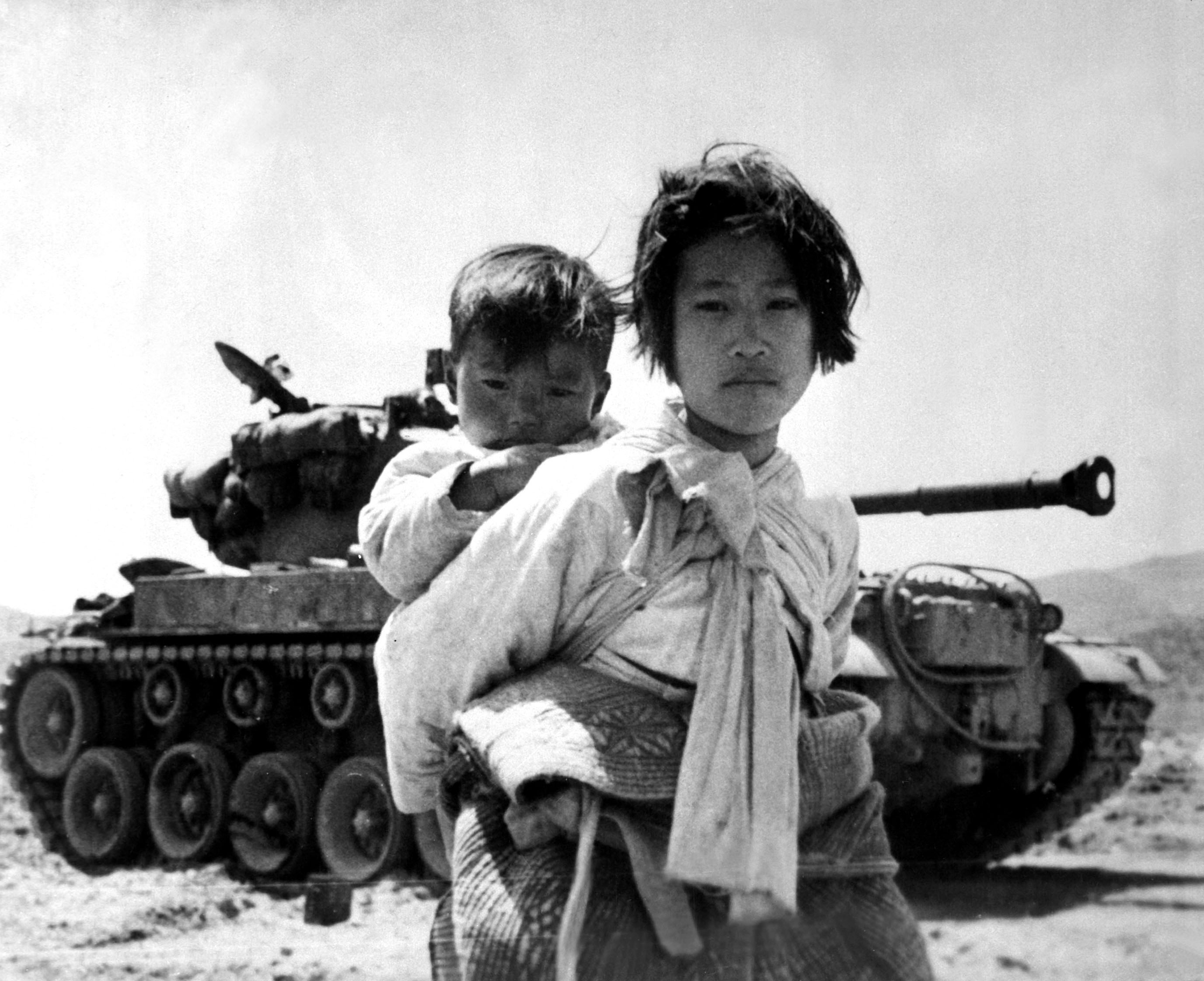
Credit: Maj. R.V. Spencer, UAF (Navy). U.S. Army Korea - Installation Management Command. · Public domain
The Korean War was a war fought on the Korean Peninsula in East Asia between 1950 and 1953. North Korea and its allies fought against South Korea and its allies. It was the first major fighting war of the Cold War, the long struggle between communist countries and democratic countries.
To understand the war, you need to know how Korea got split in two. For many years, Japan ruled Korea. When Japan lost World War II in 1945, the Soviet Union and the United States divided Korea between them. The Soviets took the north. The Americans took the south. The line between them was called the 38th parallel. The north became a communist country led by Kim Il-sung. The south became a non-communist country led by Syngman Rhee. Both leaders wanted to rule the whole peninsula.
On June 25, 1950, North Korean soldiers crossed the 38th parallel and invaded the south. They moved fast. Within weeks, they had pushed South Korean forces into a small corner of the peninsula.
The United Nations voted to send troops to help South Korea. About 20 countries sent soldiers, but most of the foreign troops were American. General Douglas MacArthur led them. In September 1950, MacArthur landed troops behind enemy lines at the port city of Incheon. The surprise worked. UN forces pushed the North Koreans back across the 38th parallel and kept going, all the way toward the border with China.
That worried China. In late 1950, hundreds of thousands of Chinese soldiers poured across the border to help North Korea. They drove the UN forces back south. For the next two and a half years, the two sides fought back and forth near the 38th parallel without either side winning much ground.
The two sides finally signed a ceasefire on July 27, 1953. The new border was almost exactly where the old one had been. Around the border, the countries set up a thin strip of land called the Demilitarized Zone, or DMZ, where no soldiers are supposed to fight. The DMZ still exists today.
About 5 million people died in the Korean War, and more than half of them were civilians. That is more deaths than the United States lost in all of World War II.
Here is a strange fact about the Korean War: it never officially ended. The 1953 agreement was a ceasefire, not a peace treaty. North Korea and South Korea are still technically at war more than 70 years later. The DMZ remains one of the most heavily guarded borders on Earth.
Related
Last updated 2026-04-26