
Vietnam War
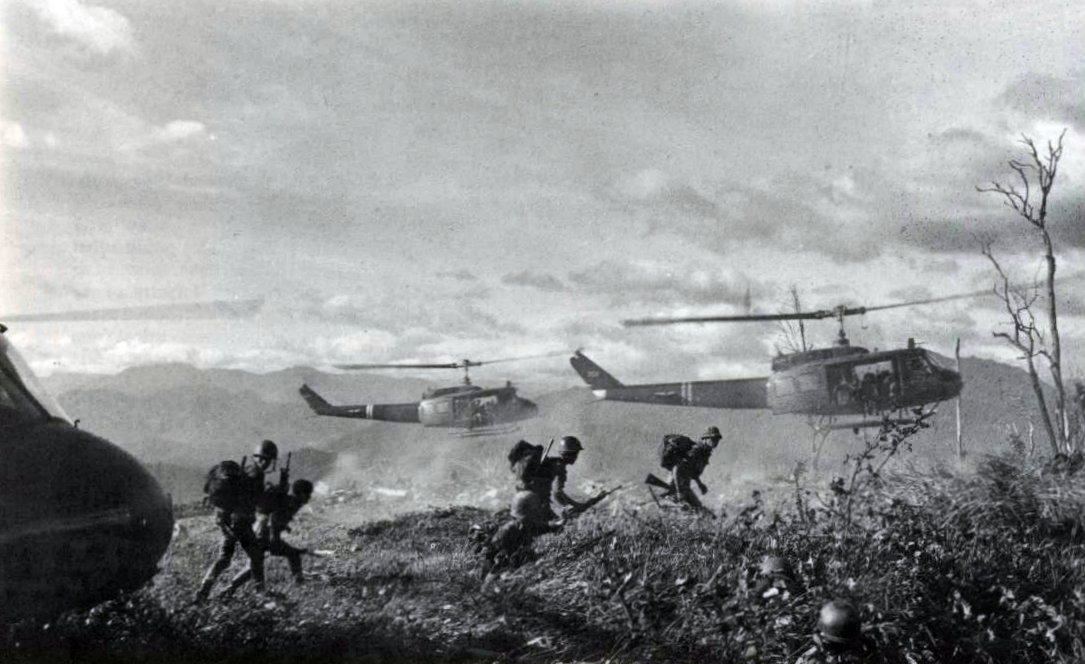
Credit: U.S. Air Force (Operation Holly 1970 (Folder 13 of 15), sheet 182) · Public domain
The Vietnam War was a long conflict in Southeast Asia that lasted from 1955 to 1975. It was fought between North Vietnam, which had a communist government, and South Vietnam, which was supported by the United States. The war took place mostly in Vietnam, but fighting also spread into the nearby countries of Laos and Cambodia. It was one of the longest and most painful wars the United States ever fought.
To understand the war, you have to go back further. For about 70 years, Vietnam had been ruled by France as a colony. After World War II, a Vietnamese leader named Ho Chi Minh fought to push the French out. He won in 1954. But Vietnam was then split into two countries. The north was communist, led by Ho Chi Minh. The south had a separate government supported by the United States and other Western nations.
This split happened during the Cold War. The United States and the Soviet Union were not fighting each other directly, but they were competing all over the world. American leaders worried that if South Vietnam fell to communism, other countries in Asia would fall too. They called this the "domino theory."
The United States started by sending money and military advisors. By 1965, President Lyndon Johnson was sending hundreds of thousands of soldiers. At its peak, more than 500,000 American troops were in Vietnam. They fought against the North Vietnamese army and a group of fighters in the south called the Viet Cong, who used hidden tunnels and surprise attacks.
The fighting was brutal. American planes dropped more bombs on Vietnam than were used in all of World War II. Whole forests were sprayed with a chemical called Agent Orange to kill the leaves so soldiers could see through the jungle. Millions of Vietnamese civilians, soldiers on both sides, and about 58,000 American troops died.
Back home, many Americans turned against the war. Television showed the fighting in living rooms every night, which had never happened in any earlier war. College students held huge protests. Songs, films, and marches asked why young Americans were dying so far from home. Trust in the government dropped sharply.
The United States slowly pulled its troops out, finishing in 1973. Two years later, in 1975, North Vietnamese forces captured the southern capital of Saigon. Vietnam became one country under communist rule. The "domino theory" turned out to be wrong. Most of Asia did not fall to communism.
Historians still debate why the United States lost, even with far more weapons and money. Some say the war could not be won by outsiders. Others blame poor decisions by leaders. The Vietnam War changed how Americans think about war, government, and the limits of power.
Related
Last updated 2026-04-26