
Sparta
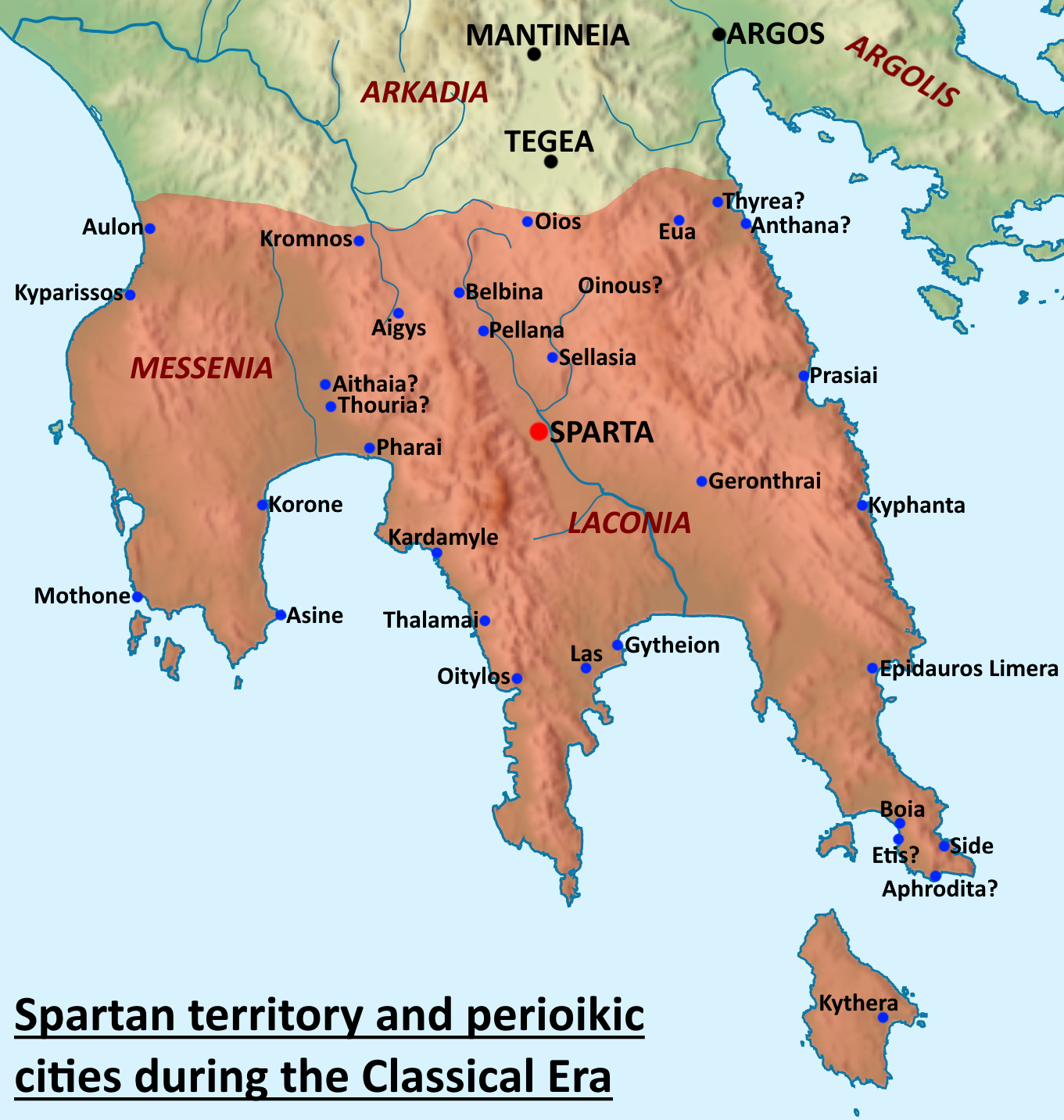
Credit: T8612 · CC BY-SA 4.0
Sparta was a powerful city-state in ancient Greece. It sat in a valley in the southern part of Greece called the Peloponnese. Sparta rose to power around 900 BCE and stayed strong for hundreds of years. It was famous for one thing above all: its army. Spartan soldiers were the most feared warriors in the ancient Greek world.
Sparta was very different from other Greek cities, especially Athens. Athens loved art, theater, and new ideas. Sparta cared about strength, discipline, and battle. While Athenian boys studied math and poetry, Spartan boys trained to fight.
Spartan life was organized around the army. At age seven, boys left home and entered a tough school called the agoge. They learned to fight, hunt, and survive. They were given little food, so many had to steal to eat. If they got caught stealing, they were punished, not for stealing, but for being clumsy enough to be caught. Boys slept on hard beds of reeds. They went barefoot to toughen their feet. This training lasted until they were 20. Men stayed in the army until age 60.
Spartan girls also trained their bodies, which was unusual in ancient Greece. They ran races, wrestled, and threw the javelin. Spartans believed strong mothers would have strong sons. Spartan women had more freedom than women in most other Greek cities. They could own property and speak their minds in public.
Most of the work in Sparta was done by enslaved people called helots. Helots were the original people of the land that Sparta had conquered. There were many more helots than Spartans, and the Spartans were always afraid of an uprising. This fear is one reason Sparta kept such a huge army.
Sparta is most famous for the Battle of Thermopylae in 480 BCE. A massive Persian army, said to number in the hundreds of thousands, invaded Greece. King Leonidas of Sparta led 300 Spartans and a few thousand other Greeks to a narrow mountain pass. They held off the Persians for three days before being killed almost to the last man. The story of the 300 has been told ever since. It became a symbol of bravery against impossible odds.
Sparta later defeated Athens in a long war called the Peloponnesian War, which ended in 404 BCE. But Sparta could not hold its power for long. Its army shrank as fewer Spartan boys were born. By the time of Alexander the Great, Sparta was no longer a major power. The ruins of the city are still visible in Greece today, much smaller and quieter than the legend.
Related
Last updated 2026-04-26