
Stonehenge
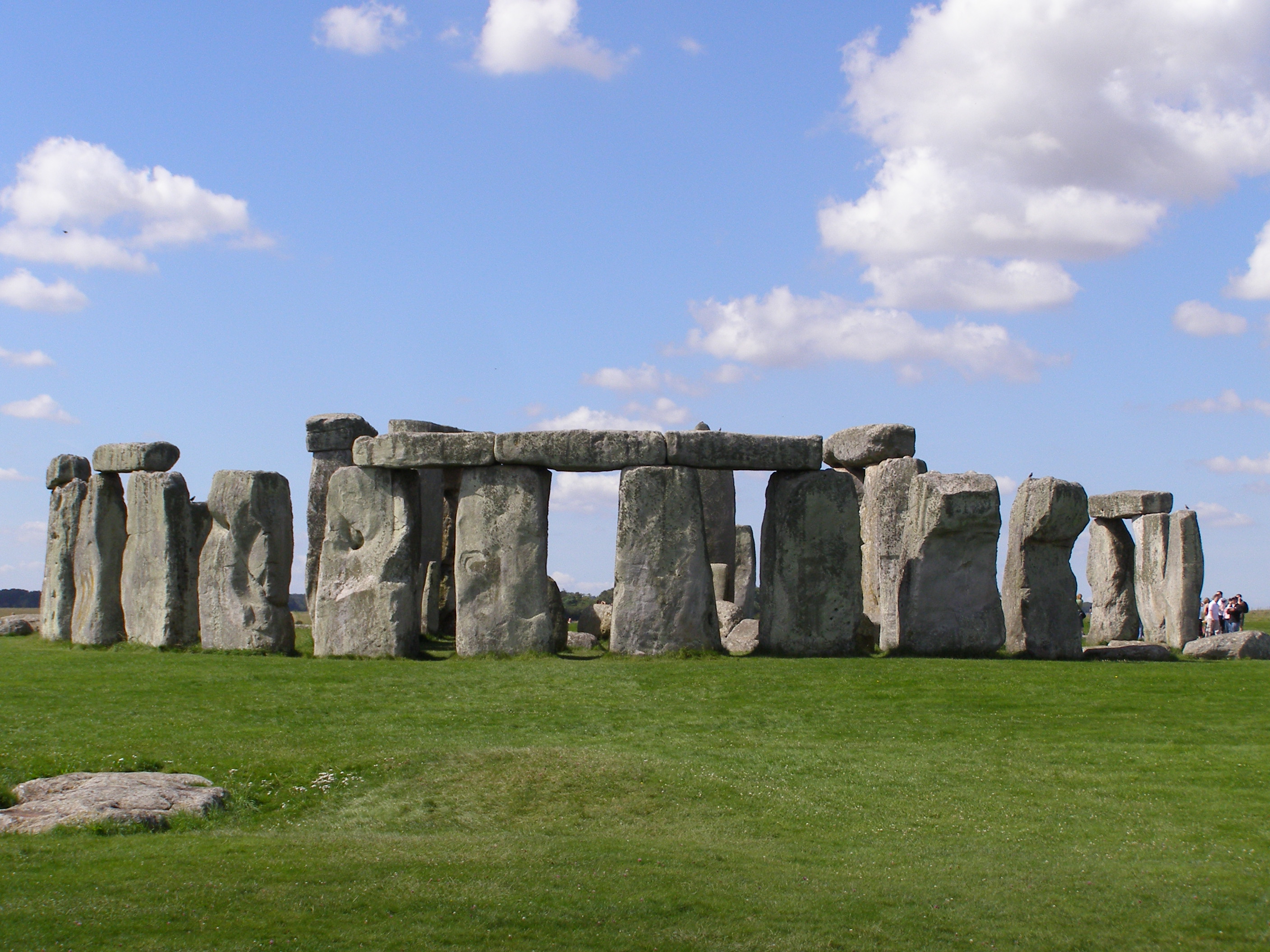
Credit: garethwiscombe · CC BY 2.0
Stonehenge is an ancient stone monument in southern England. It sits on a grassy plain called Salisbury Plain, about 90 miles southwest of London. The monument is made of huge standing stones arranged in a circle. People started building it around 5,000 years ago, in the late Stone Age. They kept adding to it for more than 1,500 years. Stonehenge is one of the most famous and most studied prehistoric sites in the world.
The biggest stones at Stonehenge are called sarsens. Some weigh up to 25 tons, about as much as four elephants. The smaller stones are called bluestones, and they weigh two to four tons each. The sarsens stand in a ring, with flat stones laid across the top to make a circle of stone gateways. Inside the ring is a horseshoe of even taller sarsens. The whole site is surrounded by a circular ditch and bank.
The sarsens came from about 15 miles away. Moving them was hard enough. The bluestones came from the Preseli Hills in Wales, about 180 miles away. Builders had no wheels, no metal tools, and no horses for heavy hauling. Most scientists think workers dragged the stones on wooden sleds, with logs as rollers, and floated them on rafts across rivers. Each big stone may have taken hundreds of people months to move.
Why was Stonehenge built? That is still a real mystery. Archaeologists have found human bones buried at the site, so it was probably a graveyard for important people. The stones also line up with the sun. On the longest day of the year, the sun rises right over a stone called the Heel Stone. On the shortest day, the sun sets between the tallest stones. So Stonehenge may also have been a kind of giant calendar, or a place for ceremonies linked to the seasons. Some experts think it was a place of healing, since many bones found nearby show signs of injury or illness.
Who built it? Not the Druids, even though that idea is popular. The Druids were Celtic priests who lived thousands of years after Stonehenge was finished. The real builders were Stone Age and Bronze Age farmers whose names and language are lost.
Today, Stonehenge is protected as a World Heritage Site. About a million people visit each year. On the morning of the summer solstice, thousands gather to watch the sun rise over stones that have stood there longer than the pyramids of Egypt.
Related
Last updated 2026-04-26