
Chimpanzee
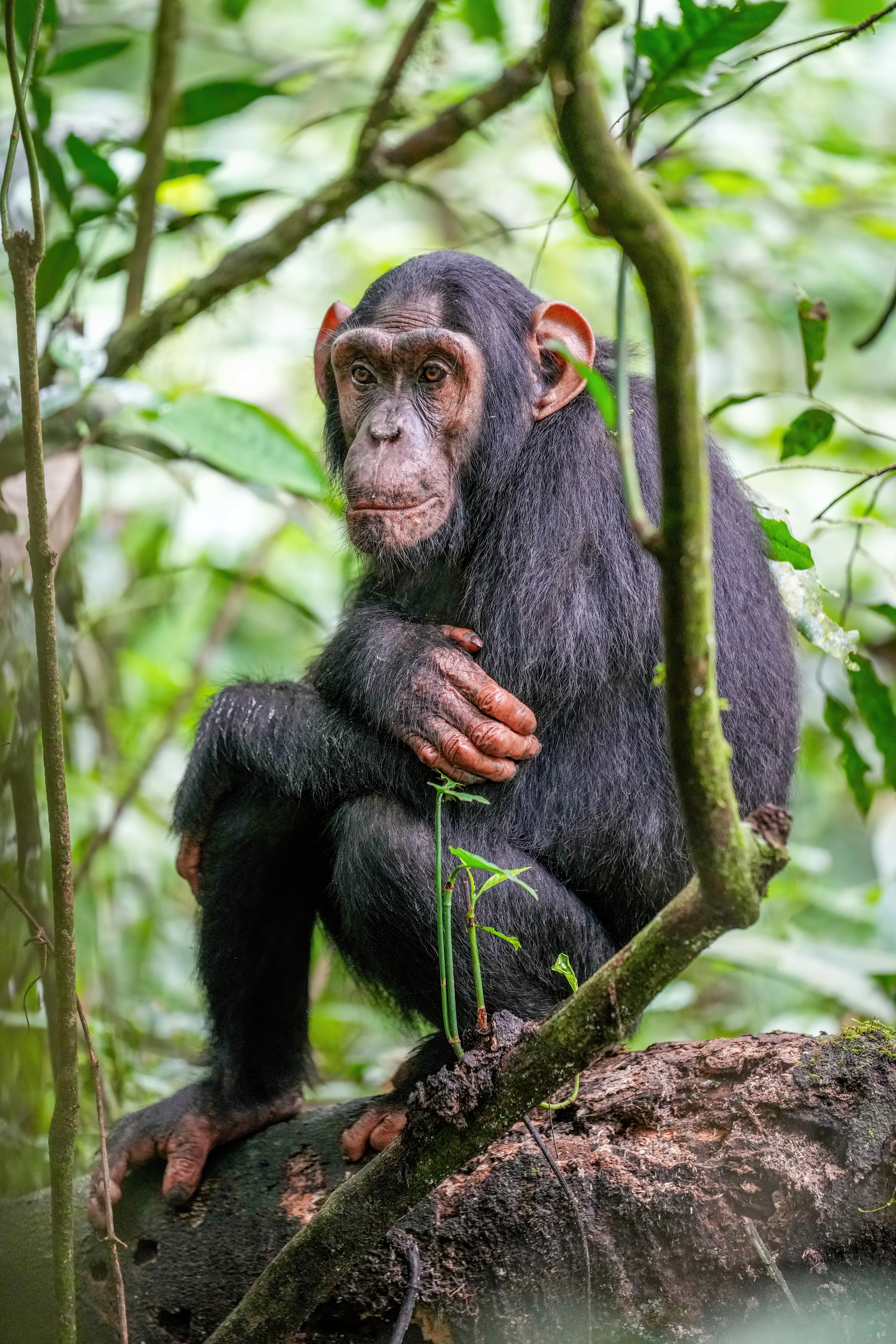
Credit: Giles Laurent · CC BY-SA 4.0
The chimpanzee is a great ape that lives in the forests and grasslands of central and west Africa. Chimps are our closest living relatives. They share almost 99 percent of their DNA with humans. Adult chimpanzees stand about four feet tall when upright. They weigh between 70 and 130 pounds, with males larger than females.
Chimps have black hair over most of their bodies, with bare pink or brown skin on their faces, hands, and feet. Their arms are longer than their legs. This helps them swing through tree branches, a way of moving called brachiating. On the ground, they usually walk on all fours, pressing the knuckles of their hands against the dirt. This is called knuckle-walking.
Chimpanzees live in groups called communities. A community can have 20 to 150 members. Within it, smaller groups split off and come back together during the day. Chimps eat mostly fruit, but they also eat leaves, seeds, insects, eggs, and sometimes meat. A group of chimps will hunt monkeys together, working as a team to surround their prey.
One of the most surprising things about chimps is that they make and use tools. They strip leaves off sticks to fish termites out of mounds. They crack nuts open with stones, using a flat rock as an anvil. They chew leaves into sponges to soak up water from hollow trees. Different communities use different tools, and young chimps learn by watching the adults. Scientists call this chimpanzee culture, because the knowledge passes from one generation to the next.
For a long time, people thought only humans used tools. In 1960, a young British scientist named Jane Goodall watched chimps at Gombe, in Tanzania, making termite-fishing sticks. Her discovery changed science. Her mentor sent a famous telegram in reply: "Now we must redefine tool, redefine man, or accept chimpanzees as humans."
Chimps are very smart. They can learn sign language, solve puzzles, and recognize themselves in mirrors. They also have a darker side. Chimpanzee communities sometimes fight long, violent wars with neighboring communities. Scientists who study them are still working out what this tells us about the roots of human behavior.
Chimpanzees are endangered. Fewer than 300,000 are left in the wild. Their forests are being cut down for farms and roads. Hunters kill adults for meat and capture babies for the pet trade. Diseases that pass between humans and chimps, including Ebola, have killed thousands. Protected parks and sanctuaries now help chimps survive, but their future depends on what humans, their closest relatives, choose to do next.
Related
Last updated 2026-04-22