
Gorilla
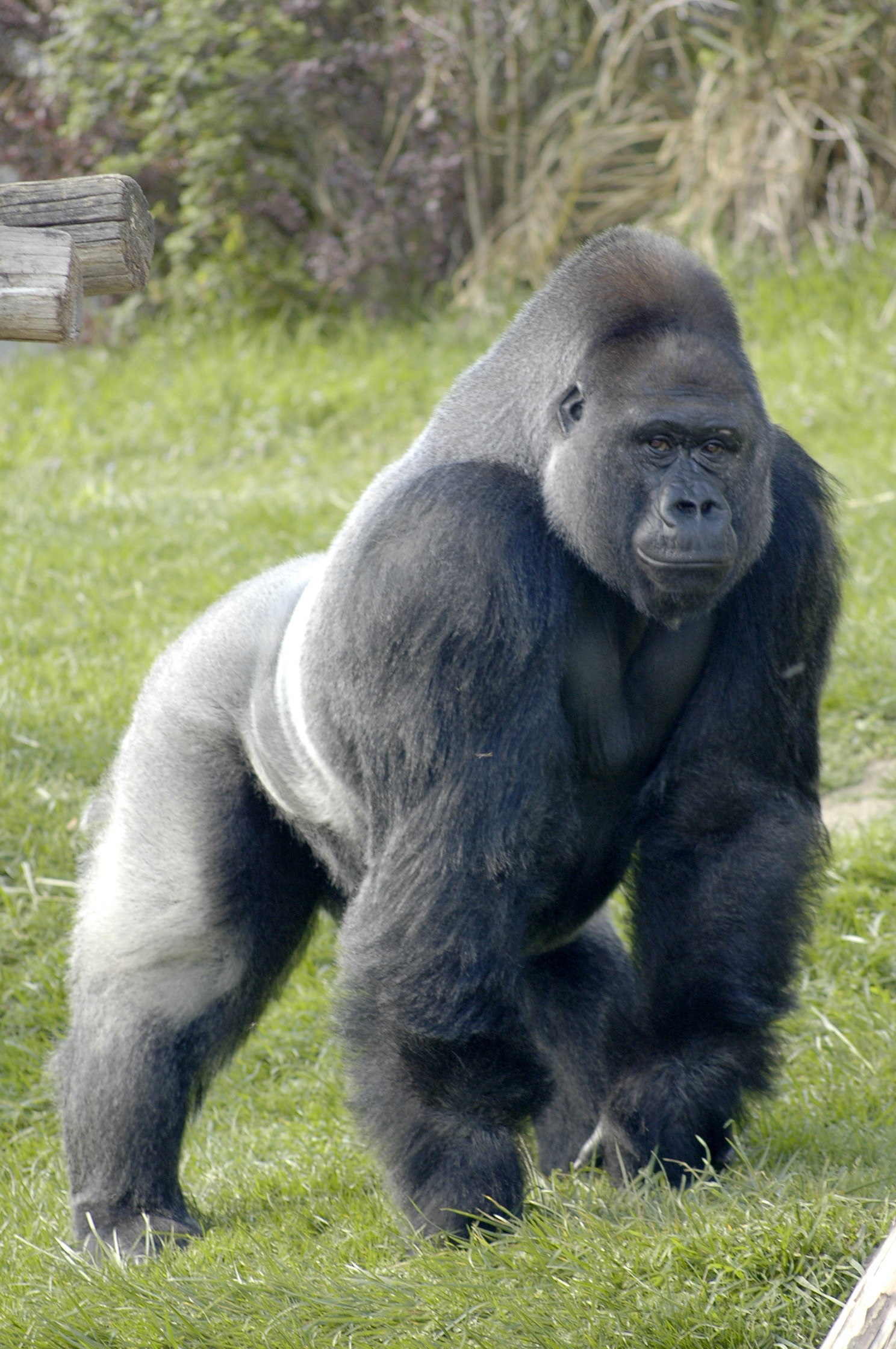
Credit: Thurundir · CC BY-SA 4.0
The gorilla is the largest ape in the world. Gorillas live in the forests of central Africa. They are great apes, which means they belong to the same family as chimpanzees, orangutans, and humans. A full-grown male gorilla can stand about six feet tall and weigh up to 400 pounds, as much as two adult humans combined. Females are about half that size.
There are two main kinds of gorillas. Western gorillas live in the rainforests of west-central Africa. Eastern gorillas live farther east, in countries like Rwanda, Uganda, and the Democratic Republic of the Congo. Inside each kind are smaller groups, including the famous mountain gorillas. Mountain gorillas have thick, shaggy fur that keeps them warm in the cool, foggy forests high on the sides of volcanoes.
Gorillas live in family groups called troops. A troop usually has one adult male, several adult females, and their babies. The adult male is called a silverback because the hair on his back turns silver-gray when he grows up. The silverback is the leader. He decides where the troop travels, finds the best food, and protects everyone from danger. A troop might have as few as five members or as many as 30.
Gorillas are almost completely plant-eaters. They spend most of the day munching on leaves, stems, shoots, bark, and fruit. A big male can eat more than 40 pounds of plants in a single day. They sometimes eat bugs too, but meat is not part of their diet. At night, each gorilla builds a fresh nest of leaves and branches to sleep in, usually on the ground.
Scientist Dian Fossey spent nearly 20 years living among mountain gorillas in Rwanda starting in 1967. She showed the world that gorillas are gentle, smart, and deeply social. They hug, play, and grieve when a family member dies. One gorilla named Koko was taught more than 1,000 signs of American Sign Language. Some researchers believe she truly understood the signs. Others argue she was mostly copying her trainers. The debate about how much language great apes can learn is still going on.
Gorillas are endangered. Their forests are being cut down for farms and mines. Hunters kill them for meat, and diseases spread from humans can sweep through a troop. In the 1980s, only about 250 mountain gorillas were left. Thanks to hard work by scientists, park rangers, and local communities, their numbers have climbed back over 1,000. It is a fragile success, but it shows that endangered animals can come back when people protect them.
Related
Last updated 2026-04-22