
Horse
Credit: Amada44 · Public domain
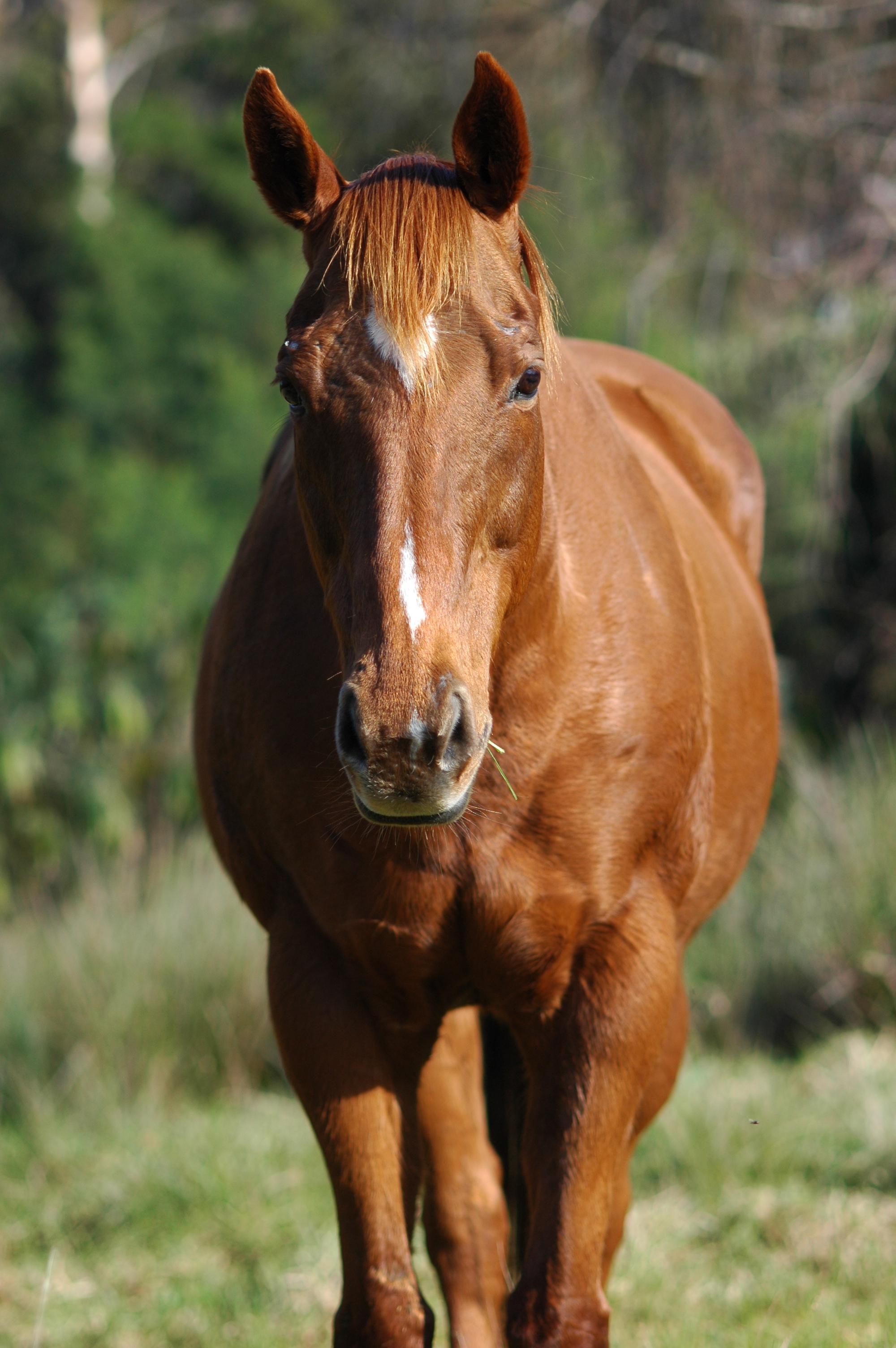
The horse is a large mammal with hooves, a long tail, and a flowing mane. Horses live on every continent except Antarctica. Most horses today are domesticated, which means people raise and care for them. A few small groups still live in the wild. An adult horse usually weighs 900 to 2,000 pounds and stands four to six feet tall at the shoulder.
Horses are built to run. Their long legs end in a single hard hoof, which is really one giant toenail. A healthy horse can gallop at about 30 miles per hour, and the fastest racehorses can hit 45. Horses can also sleep standing up. Special locks in their leg joints hold them upright, so they can rest without falling over. This helped wild horses stay ready to flee from predators at any moment.
A horse's eyes sit on the sides of its head. This gives horses a huge field of view, almost a full circle, so they can spot danger from nearly any direction. But they have two blind spots: directly in front of their nose and right behind their tail. That is why a horse may startle if you walk up behind it without making noise.
People first tamed horses around 4000 BCE on the grasslands of Central Asia. That single change reshaped human history. Suddenly people could travel farther, carry heavier loads, plow bigger fields, and fight from horseback. Armies on horses, like the Mongols under Genghis Khan, built some of the largest empires the world has ever seen. For thousands of years, until cars and tractors arrived in the early 1900s, horses were the main way people moved themselves and their goods.
There are more than 300 breeds of horse today. Clydesdales and Shires are huge draft breeds that can weigh a ton and pull heavy wagons. Arabians are smaller and famous for their endurance. Thoroughbreds are bred for racing. Tiny Shetland ponies, from islands off Scotland, stand only about three feet tall.
A baby horse is called a foal. Foals can stand and walk within an hour of being born, which is remarkable for such a large animal. Horses usually live 25 to 30 years, though some reach 40.
Wild horses have almost disappeared. The last truly wild species, Przewalski's horse of Mongolia, went extinct in the wild in the 1960s. Scientists saved the breed using zoo animals and slowly released their offspring back onto the Mongolian steppe. Today, a few thousand roam free again. The mustangs of the American West are not truly wild. They are the descendants of horses that escaped from Spanish settlers hundreds of years ago.
Related
Last updated 2026-04-22