
Hummingbird
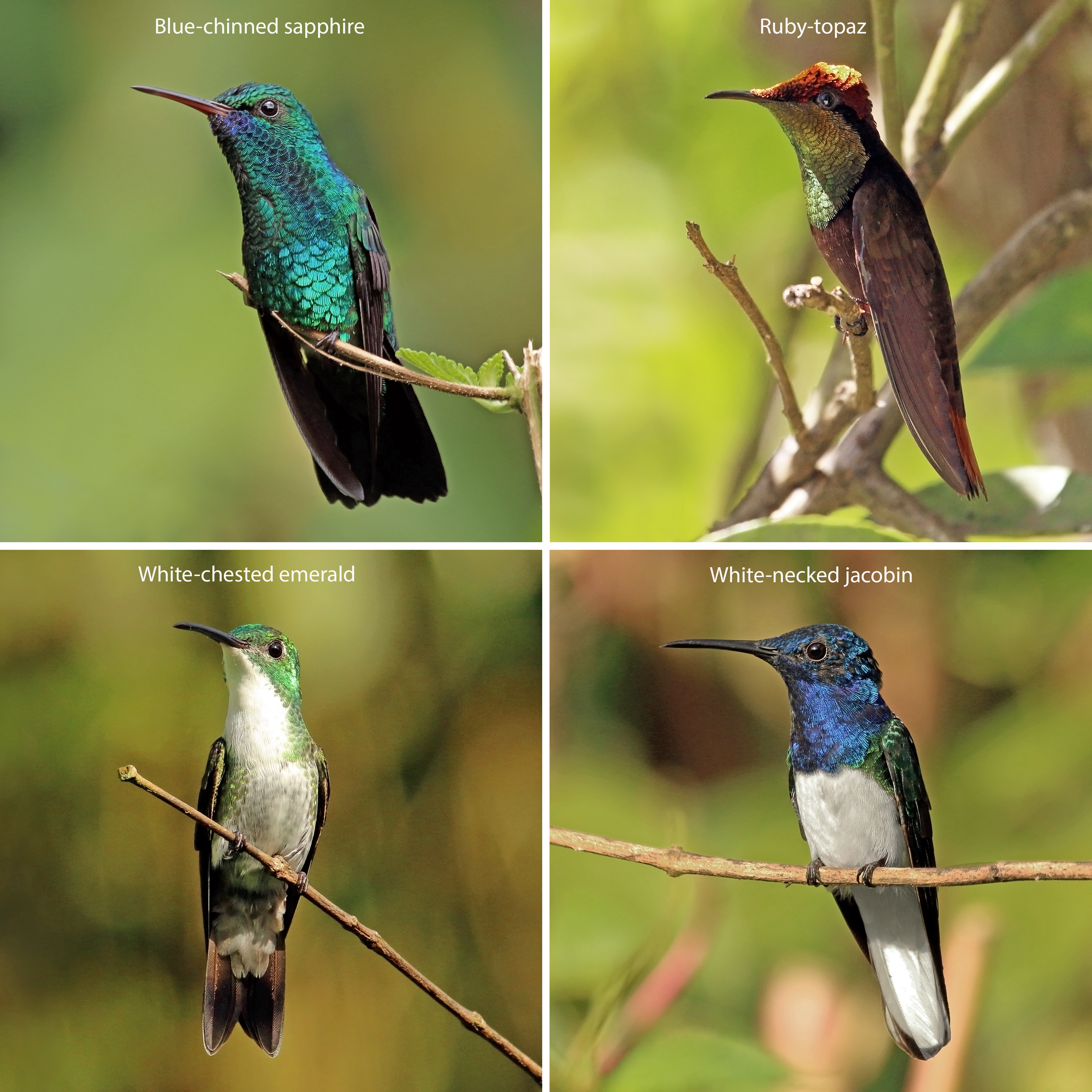
Credit: Charles J. Sharp · CC BY-SA 4.0
The hummingbird is a tiny bird found only in the Americas. It is famous for its blurred wings, its fast flying, and its love of flower nectar. There are more than 360 kinds of hummingbirds. They live from Alaska all the way down to the southern tip of South America. Most kinds live in Central and South America, where the weather stays warm all year.
Hummingbirds are the smallest birds in the world. The bee hummingbird of Cuba is the smallest of all. It is only about 2 inches long and weighs less than a penny. Even the biggest hummingbird, the giant hummingbird of the Andes, is only about 9 inches long.
What makes hummingbirds special is how they fly. Their wings beat so fast that human eyes see only a blur. A ruby-throated hummingbird beats its wings about 50 times every second. This fast beating makes the humming sound that gives the bird its name. Hummingbirds are also the only birds that can truly hover in one spot. They can fly up, down, sideways, and even backward. No other bird can do that.
All that flying takes huge amounts of energy. A hummingbird has the fastest heartbeat and the fastest breathing of any bird. To fuel its body, it drinks sugary nectar from flowers. It sips the nectar with a long, thin tongue that flicks in and out about 15 times a second. A hummingbird eats about half its body weight in sugar every day. It also catches small insects and spiders for protein.
At night, hummingbirds face a problem. Their tiny bodies lose heat fast, and they cannot eat while they sleep. To survive, they go into a deep rest called torpor. Their heartbeat slows way down, and their body gets cold. Torpor saves energy until the sun comes up and flowers open again.
Some hummingbirds travel amazing distances. The ruby-throated hummingbird flies across the Gulf of Mexico twice a year, a trip of about 500 miles without stopping. Scientists were puzzled by this for a long time. How could a bird that small store enough fuel? The hummingbirds nearly double their weight before the trip, then burn it all on the way across.
Hummingbirds are also important helpers for plants. When they dip into flowers, pollen sticks to their heads and feathers. They carry it to the next flower, helping the plants make seeds. Many flowers in the Americas have long, narrow shapes that only a hummingbird's beak can reach.
Last updated 2026-04-22