
Pollen
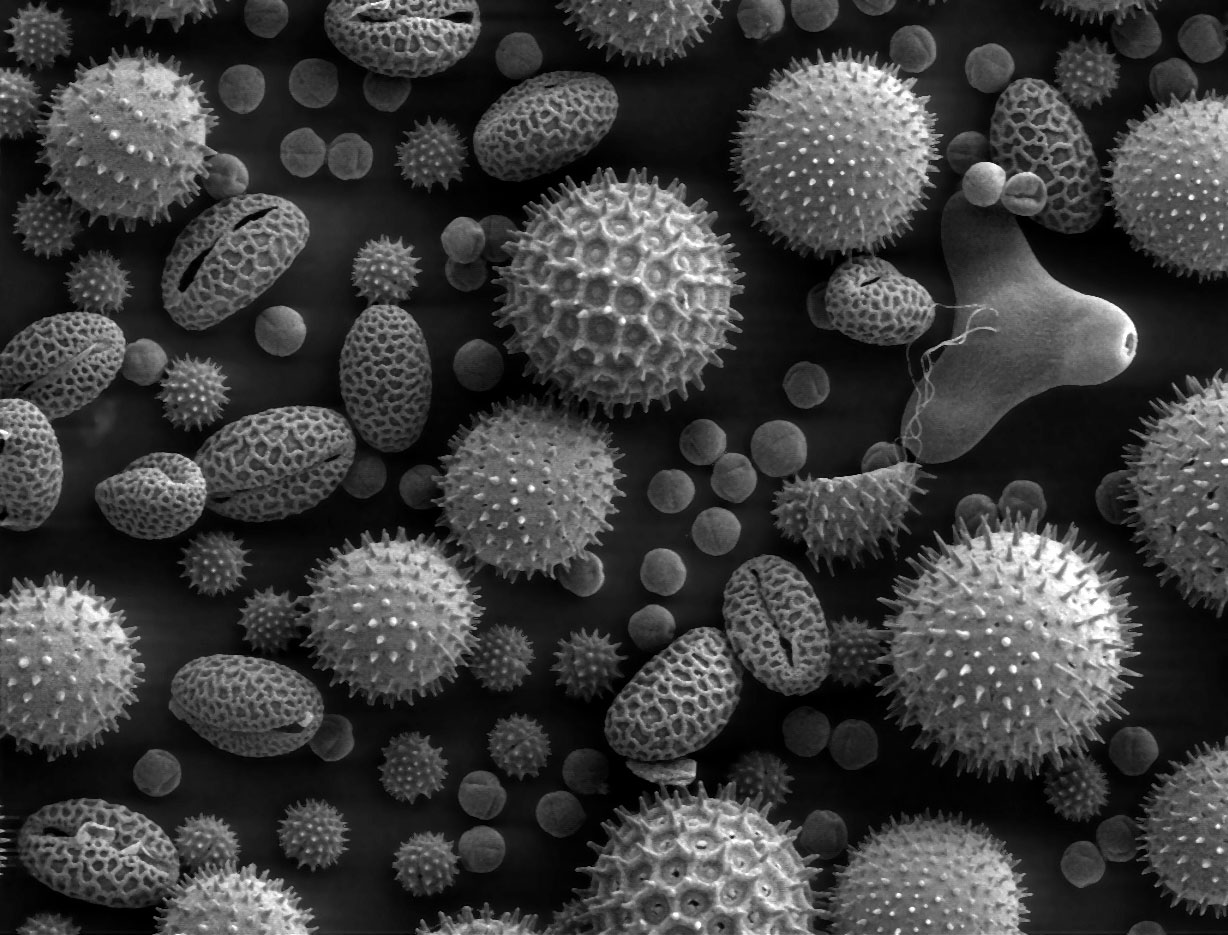
Credit: Dartmouth College Electron Microscope Facility · Public domain
Pollen is a fine powder made by flowering plants and cone-bearing trees. Each tiny grain carries the male cells a plant needs to make seeds. Pollen is how most plants on land have babies. Without it, most of the food you eat would not exist.
A grain of pollen is much smaller than you might think. Most grains are about 25 micrometers wide. That means you could line up 1,000 grains across an inch. Under a microscope, pollen looks amazing. Some grains are smooth balls. Others are spiky like sea urchins, or covered in tiny holes, or shaped like little footballs. Each kind of plant makes pollen with its own special shape.
For a plant to make a seed, pollen has to travel from one flower to another flower of the same kind. This trip is called pollination. The pollen lands on a sticky part of the flower called the stigma. From there, it grows a tiny tube down to the plant's eggs and joins with them. A seed forms, and a new plant can grow.
Pollen cannot walk, so plants need help moving it. Some plants use the wind. Pine trees, grasses, and oak trees release huge clouds of light pollen that float through the air. This is the kind that makes cars look yellow in spring. Other plants use animals. Bees, butterflies, hummingbirds, beetles, and even bats carry pollen from flower to flower while they drink nectar. About one out of every three bites of food you eat depends on a pollinator doing this job.
Pollen is also why so many people sneeze in spring and fall. When a pollen grain lands in some people's noses or eyes, the body wrongly treats it as an attacker. The body fights back with sneezing, runny noses, and itchy eyes. This reaction is called hay fever, even though hay does not cause it. About one in four adults in the United States deals with pollen allergies.
Pollen lasts a long time after a plant dies. Its tough outer shell can stay buried in mud and ice for thousands of years. Scientists dig up old pollen and study it under microscopes to learn what kinds of plants once grew in a place. This work has helped researchers map ancient forests, track ice ages, and even figure out what people in the past were eating. The dust on a flower turns out to be a record of the world.
Last updated 2026-04-25