
Lynx
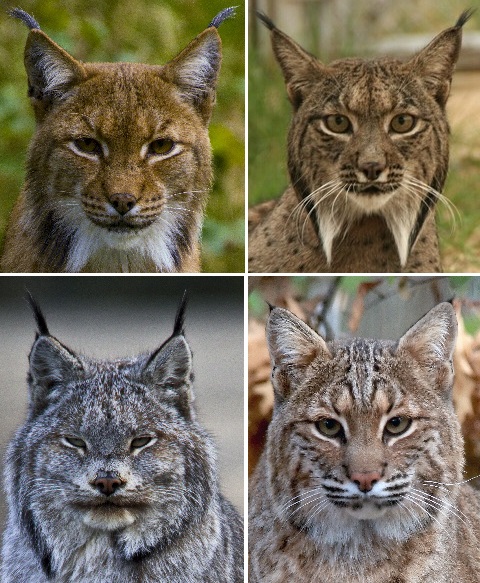
Credit: Jan Czeczotka (c)"Programa de Conservación Ex-situ del Lince Ibérico www.lynxexsitu.es" Denali National Park and Preserve Becker1999 (Paul and Cathy) · CC BY 2.5
The lynx is a medium-sized wild cat that lives in the cold forests of North America, Europe, and Asia. A lynx has long legs, a short tail with a black tip, and thick fur that keeps it warm in the snow. Its most famous features are the black tufts of hair on the tips of its ears and the wide patch of fur around its face that looks like a beard.
There are four kinds of lynx. The Eurasian lynx is the biggest, weighing up to 65 pounds. It lives across Europe and Asia. The Canada lynx lives in the forests of Canada and the northern United States. The bobcat lives all across North America and is the one most Americans might see. The Iberian lynx lives only in Spain and Portugal, and it is one of the rarest cats on Earth.
A lynx is built for snow. Its back legs are longer than its front legs, which gives it power to leap. Its huge paws spread out like snowshoes when it steps down. This lets a lynx walk on top of snow that would sink most other animals. The thick fur on the bottom of its paws grips slippery ice.
Lynx hunt alone, usually at dawn or dusk. A Canada lynx eats almost nothing but snowshoe hares. When there are lots of hares, there are lots of lynx. When the hare population crashes, the lynx population crashes a few years later. Scientists have tracked this cycle for more than 100 years, and it repeats about every 10 years.
Nobody is sure what the ear tufts are for. Some scientists think the tufts work like a hearing aid, helping the lynx catch faint sounds. Others think they help lynx send silent signals to each other by moving their ears. The question is still open.
The Iberian lynx almost went extinct. By 2002, fewer than 100 were left in the wild. Spain and Portugal worked together to save it. They protected its forests, raised lynx in special centers, and brought back the rabbits it eats. Today more than 2,000 Iberian lynx roam the wild again. It is one of the biggest comeback stories in the history of wildlife conservation.
Most lynx do not roar like lions or tigers. Instead they yowl, hiss, and make a loud, wailing call that echoes through the woods at night. People who have heard it in the wild say it sounds almost like a person shouting far away in the dark.
Last updated 2026-04-22