
Sloth
Credit: Daniella Maraschiello · CC BY-SA 4.0
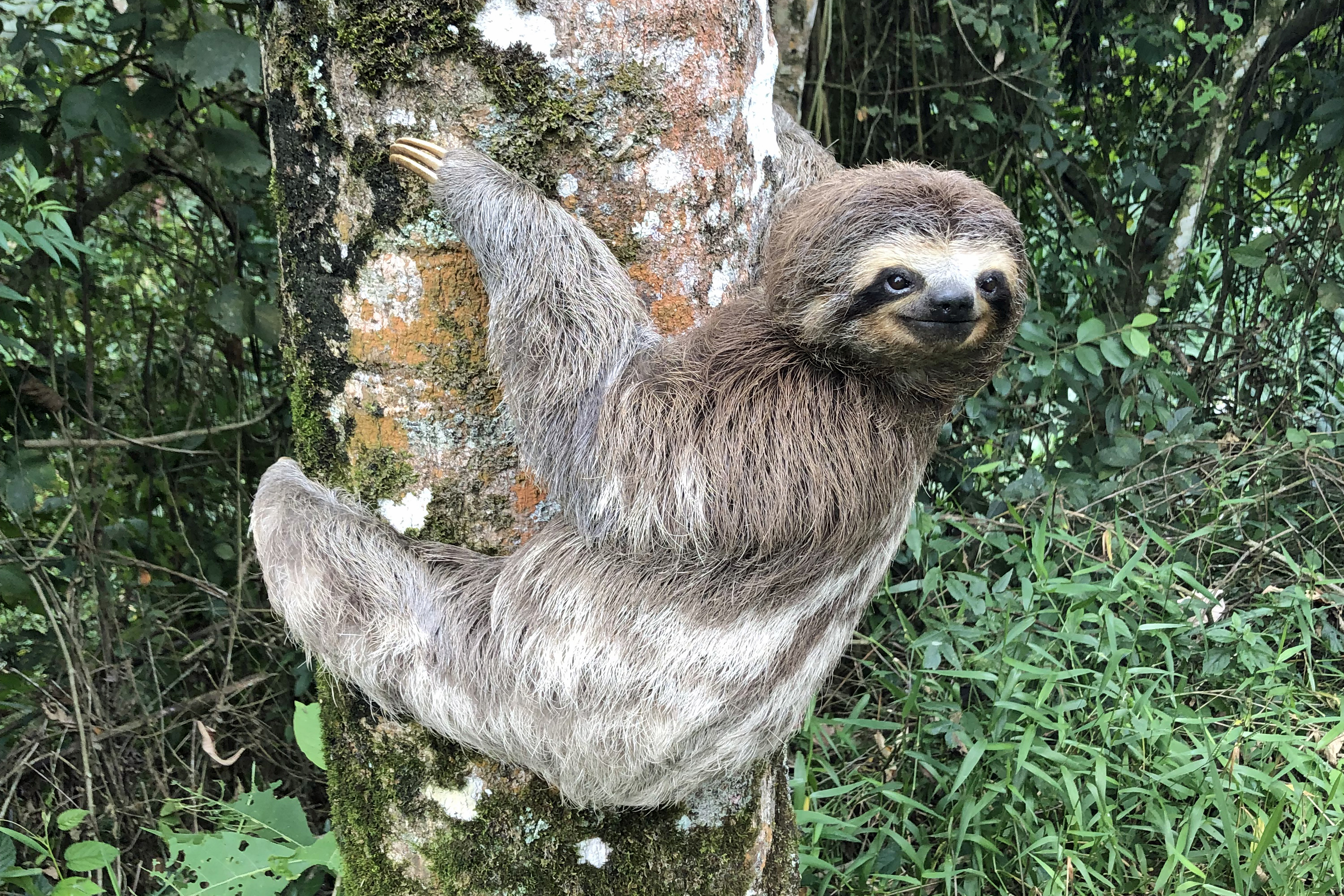
The sloth is a slow-moving mammal that lives in the rainforests of Central and South America. Sloths spend almost all of their lives hanging upside down in trees. They use their long, curved claws like hooks to grip branches. There are two main groups of sloths alive today: two-toed sloths and three-toed sloths. An adult sloth is about the size of a medium dog and weighs 8 to 17 pounds.
Sloths move more slowly than almost any other mammal on Earth. On the ground, a sloth travels about 7 feet per minute. Even in the trees, where they are more at home, they rarely move faster than a slow walk. A sloth can take a whole minute to lift one arm to the next branch.
The reason for this slow pace is their diet. Sloths mostly eat leaves, which have very little energy in them. To survive on leaves, a sloth has to save every bit of energy it can. Its body temperature is lower than most mammals, and its muscles are built for holding on rather than moving fast. A sloth's stomach has several chambers, like a cow's, and food can stay inside for weeks before it is fully digested.
Slowness is also a way to stay safe. Jaguars, eagles, and big snakes all hunt sloths, but these hunters mostly spot prey by watching for movement. A sloth hanging still in the treetops is hard to see. Tiny green algae actually grow in a sloth's fur, giving it a greenish color that blends in with the leaves. Whole tiny ecosystems live in that fur, including moths, beetles, and fungi found nowhere else.
Sloths are surprisingly good swimmers. When a river floods part of the forest, a sloth can drop from a branch into the water and paddle across. In water, they move about three times faster than they do on land.
One strange sloth habit puzzled scientists for a long time. About once a week, a sloth climbs all the way down to the ground to poop, then climbs back up. This trip is risky, since more than half of sloth deaths happen on the ground. Scientists still debate why sloths take the risk. One idea is that it helps the moths living in their fur lay eggs. Another is that it fertilizes the sloth's favorite trees.
Ancient relatives of sloths were not small or slow. Giant ground sloths once walked across the Americas. Some stood taller than an elephant and weighed several tons. They died out about 10,000 years ago, leaving only the small tree-dwelling sloths we know today.
Last updated 2026-04-22