
Food Chain
Credit: LadyofHats · CC0
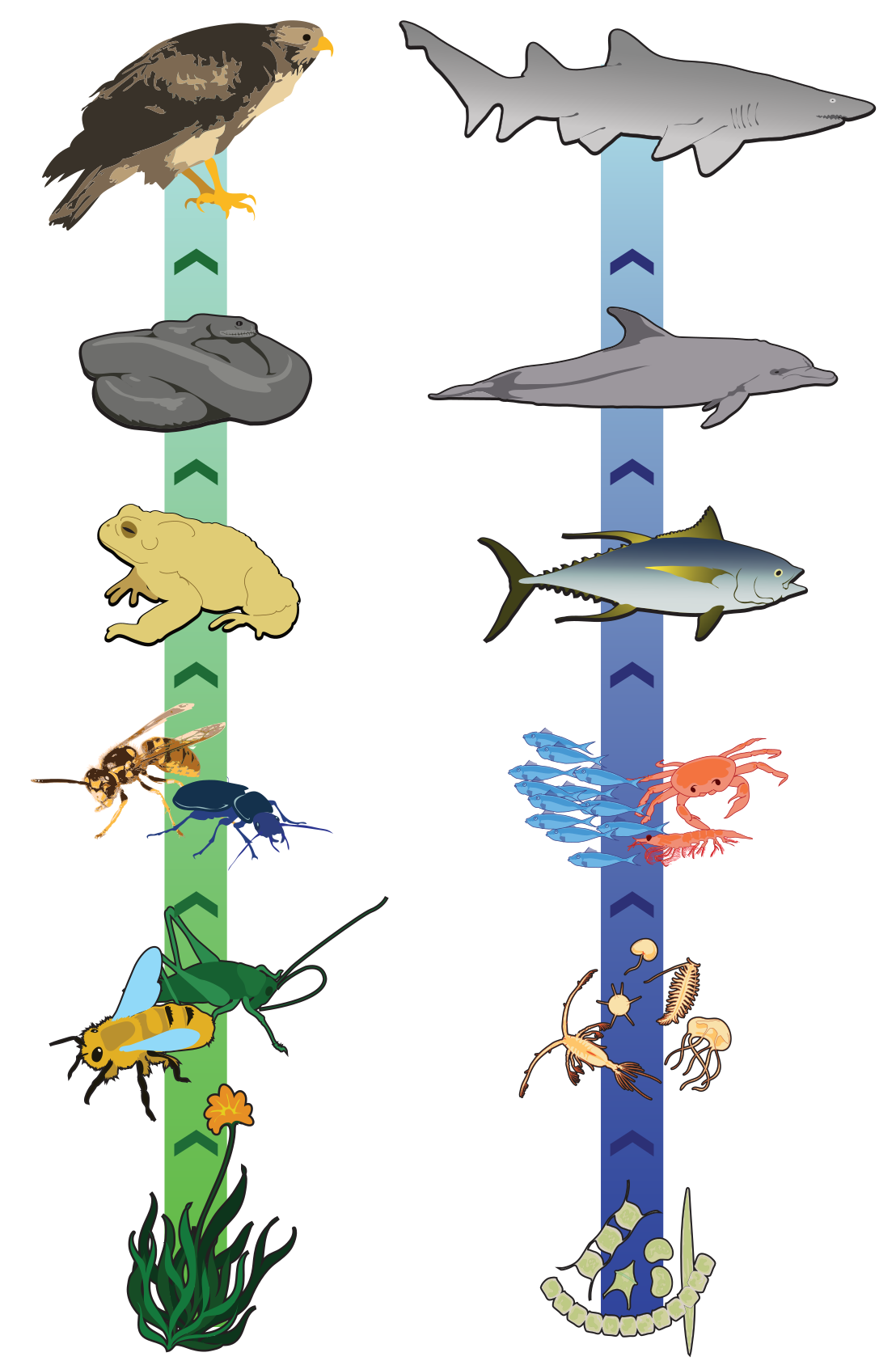
A food chain is the path that energy and food take through living things in an ecosystem. It shows who eats what. Every food chain starts with a plant or another living thing that can make its own food. It ends with an animal that eats other animals. In between, energy moves from one creature to the next, one bite at a time.
The first link in almost every food chain is a producer. Producers are usually plants, but they can also be algae or certain kinds of bacteria. Producers make their own food using sunlight, water, and air. This process is called photosynthesis. Because producers catch the sun's energy and turn it into food, they are the start of nearly all the energy on Earth's surface.
The next links are consumers. Consumers cannot make their own food, so they have to eat other living things. Scientists sort them into groups. Herbivores eat only plants. A rabbit nibbling grass is a herbivore. Carnivores eat only other animals. A hawk eating a mouse is a carnivore. Omnivores eat both. Humans, bears, and raccoons are omnivores.
Here is a simple food chain from a forest. Grass grows using sunlight. A grasshopper eats the grass. A shrew eats the grasshopper. A hawk swoops down and eats the shrew. Four links, one path, and all the energy traces back to the sun.
There is one more group that often gets forgotten: decomposers. Decomposers are living things like fungi, bacteria, and earthworms that break down dead plants and animals. They turn dead stuff back into soil. Without decomposers, nutrients would stay trapped in dead bodies forever, and plants would have nothing to grow in.
Real life is messier than a single chain. Most animals eat more than one kind of food, and most are eaten by more than one kind of predator. When you connect many food chains together, you get a food web. A food web shows the bigger picture of how everything in an ecosystem is tied together.
That connection matters. If one link in a chain disappears, every animal above it loses food, and every plant below it may grow out of control. Wolves, bees, and tiny shrimp in the ocean may seem small on their own, but each one holds up the creatures that depend on them.
Last updated 2026-04-23