
Wasp
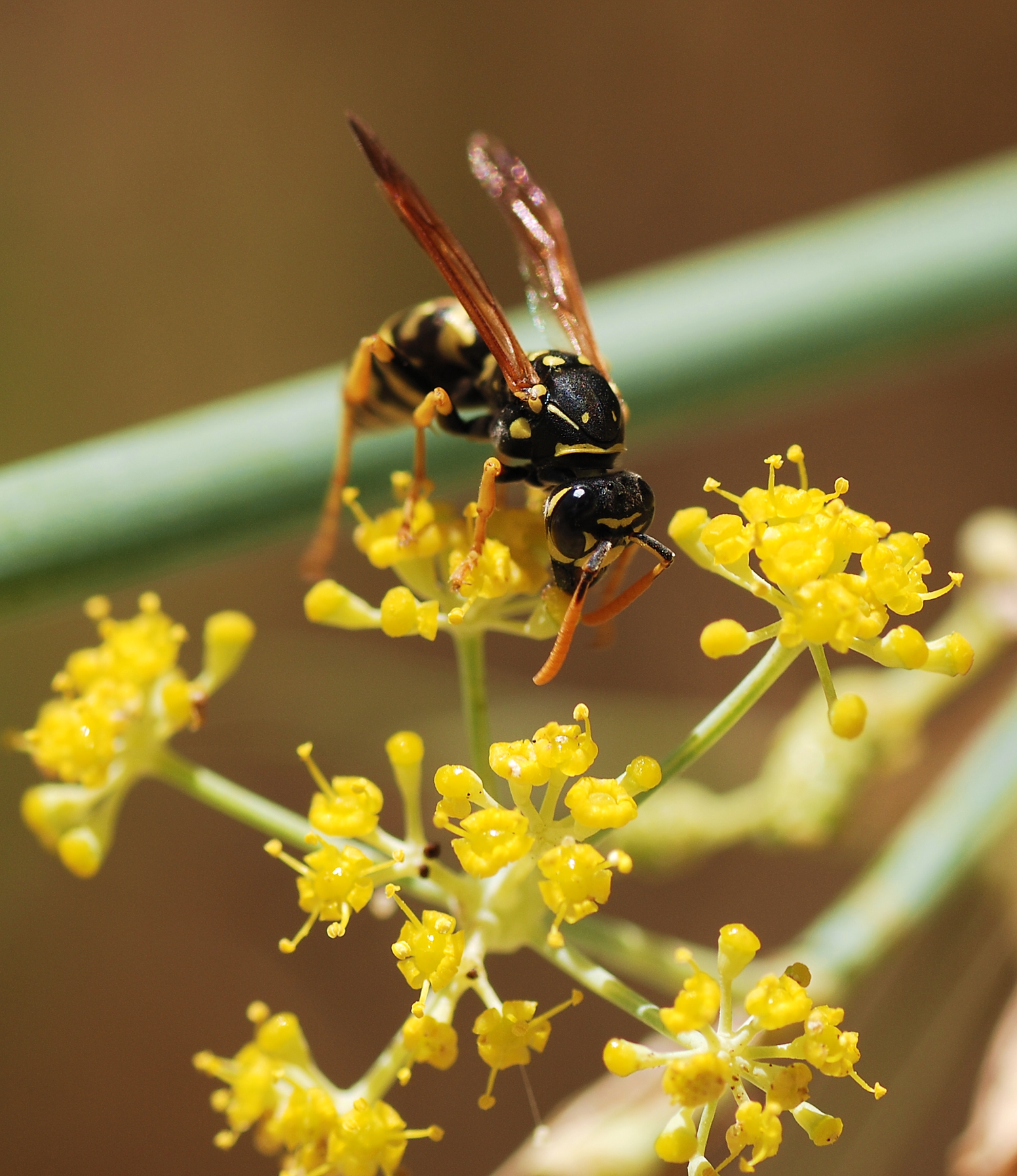
Credit: Alvesgaspar · CC BY 2.5
A wasp is a flying insect with a narrow waist, two pairs of thin wings, and often a stinger. Wasps live on every continent except Antarctica. Scientists have named about 30,000 kinds of wasps, but the real number is probably much higher. Bees and ants are close relatives, and all three belong to the same insect group, called Hymenoptera.
Most wasps have a body split into three parts: head, thorax, and abdomen. The waist between the thorax and abdomen is so thin that it looks like a thread. Many wasps are black and yellow, which warns other animals to stay away. Others are brown, red, or even metallic blue-green.
There are two main kinds of wasps: social wasps and solitary wasps. Social wasps live in colonies. Yellowjackets, hornets, and paper wasps are the ones people see most often. A queen starts the nest in spring. She lays eggs that grow into worker wasps, and the workers build the nest bigger and care for new young. By late summer, a single paper wasp nest can hold hundreds of workers.
Solitary wasps live alone. A female solitary wasp digs a burrow or builds a small mud chamber. She hunts a spider or caterpillar, stings it to paralyze it, and seals it inside with a single egg. When the egg hatches, the young wasp eats the still-living prey. That sounds cruel, but it keeps many pest insects in check.
Only female wasps can sting. The stinger is actually a modified egg-laying tube, which is why males do not have one. Unlike a honeybee, a wasp can sting over and over without dying. Most stings are painful but not dangerous. Some people are allergic, though, and for them a sting can be a medical emergency.
Wasps are easy to dislike, but they do important work. They hunt caterpillars, flies, and aphids that eat crops. Fig wasps are the only insects that pollinate fig trees, and without them there would be no figs. Many wasps also visit flowers and help move pollen from plant to plant, just like bees do.
Wasps behave differently in different seasons. In late summer, the colony starts to break down and workers grow hungry and cranky. That is when they show up at picnics looking for sweet drinks and meat. By the first hard frost, most of the colony dies. Only new queens survive the winter, hiding under bark or in attics until spring.
Last updated 2026-04-22