
Sign Language
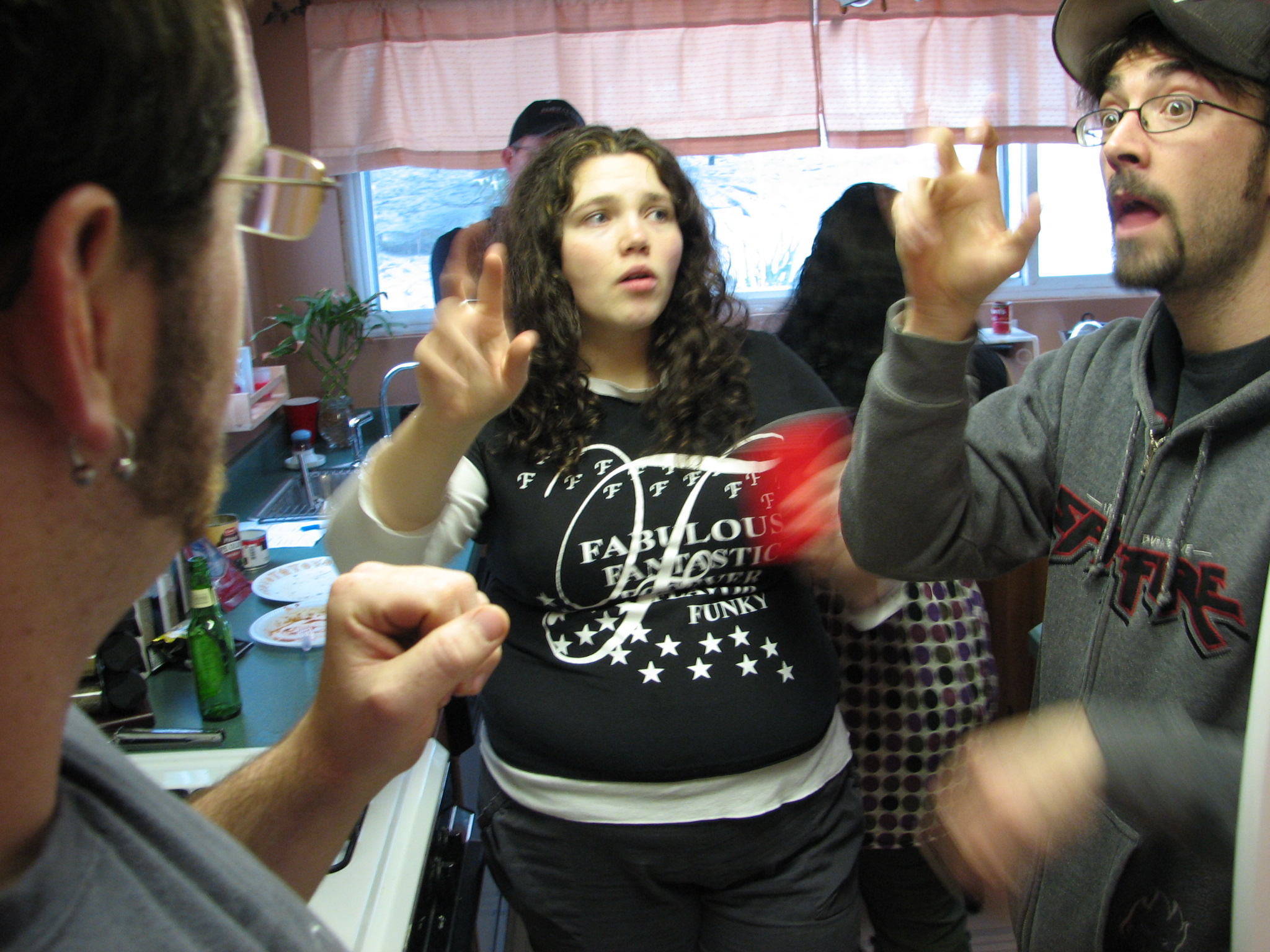
Credit: David Fulmer from Pittsburgh · CC BY 2.0
Sign language is a kind of language that uses hand shapes, body movements, and facial expressions instead of sound. It is used mostly by people who are deaf or hard of hearing, and by their families and friends. Sign languages are full, real languages. They have their own grammar, their own vocabulary, and their own jokes and poetry.
Many people think there is one universal sign language. There is not. Each country or region has its own. American Sign Language, called ASL, is used in the United States and most of Canada. British Sign Language is different and uses a different hand alphabet. There is also French Sign Language, Japanese Sign Language, Auslan in Australia, and many more. Experts count more than 300 sign languages used around the world today.
ASL is not just English with hand signs. It has its own word order and its own way of building sentences. For example, in spoken English you might say "I am going to the store." In ASL you might sign "STORE I GO." The grammar is its own thing.
Faces matter as much as hands. A signer raises her eyebrows to ask a yes-or-no question. She furrows them for a "what" or "why" question. A puffed cheek can show that something is huge. Without facial expression, signing looks flat and can be hard to understand, kind of like speaking in a robot voice.
Sign language has a long history. In the 1750s, a French priest named Charles-Michel de l'Épée opened a free school for deaf children in Paris. He learned the signs his students already used and helped build them into a full school language. In 1817, a deaf French teacher named Laurent Clerc came to the United States with Thomas Gallaudet. Together they started the first school for the deaf in America. The signs they brought, mixed with signs deaf Americans were already using, grew into ASL.
Scientists once thought sign languages were not "real" languages. Brain scans have proved them wrong. When a deaf person signs, the same parts of the brain light up that light up when a hearing person speaks. Babies who grow up with sign language even babble with their hands before they learn full signs.
Today, ASL is one of the most studied languages in U.S. schools and colleges. Many hearing people learn it to talk with deaf friends, family members, or coworkers. Some hearing parents also teach simple signs to their babies, who can sign words like "milk" and "more" months before they can speak them.
Related
Last updated 2026-04-26