
Rocks
Credit: Yogendra Joshi · CC BY 2.0
A rock is a solid piece of natural material made from one or more minerals. Rocks make up the outer layer of Earth, called the crust. They also make up the deeper layer below it, called the mantle. Every mountain, every cliff, and every pebble on a beach is a rock or a piece of one. Even the soil under your feet is partly broken-down rock.
Scientists sort rocks into three main groups based on how they form.
The first group is igneous rock. The word "igneous" comes from a Latin word for fire. Igneous rocks form when hot melted rock cools down and hardens. If the melted rock cools deep underground, it forms rocks like granite. If it erupts from a volcano and cools on the surface, it forms rocks like basalt or pumice. Pumice has so many tiny gas bubbles trapped inside that some pieces can actually float on water.
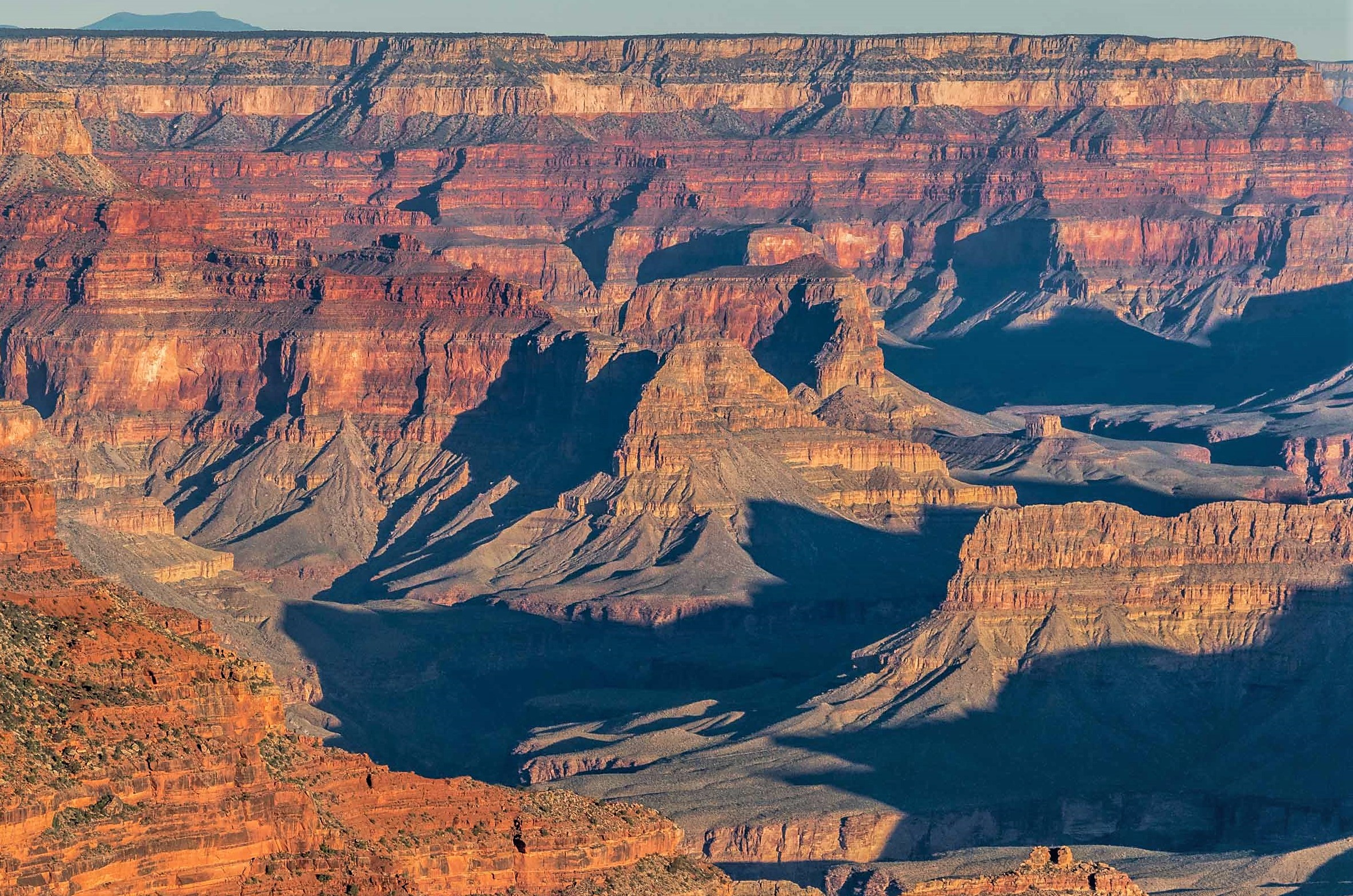
The second group is sedimentary rock. These rocks form when tiny bits of sand, mud, shells, or dead plants pile up in layers, usually at the bottom of a lake, river, or sea. Over millions of years, the weight of new layers above squeezes the older layers into solid rock. Sandstone, limestone, and shale are common examples. Almost all fossils are found in sedimentary rock, because soft bodies could be buried in mud before they rotted away.
The third group is metamorphic rock. The word "metamorphic" means changed. These rocks start out as one kind of rock and then get changed by heat and pressure deep inside Earth. Limestone slowly turns into marble. Shale turns into slate. The rock does not melt all the way, but its minerals rearrange into new patterns.
Rocks are not stuck as one type forever. Over millions of years, an igneous rock can break down into bits of sand, become a sedimentary rock, get pushed deep underground, and turn into a metamorphic rock. This slow journey is called the rock cycle.
Humans have used rocks for almost everything. Early people made tools and weapons from flint and obsidian. Builders used granite and marble for temples, statues, and skyscrapers. Slate became roof tiles and chalkboards. Even concrete is made by crushing and heating rock.
The next time you pick up a rock from the ground, you are holding a small piece of Earth's long story.
Related
Last updated 2026-04-25