
Supreme Court
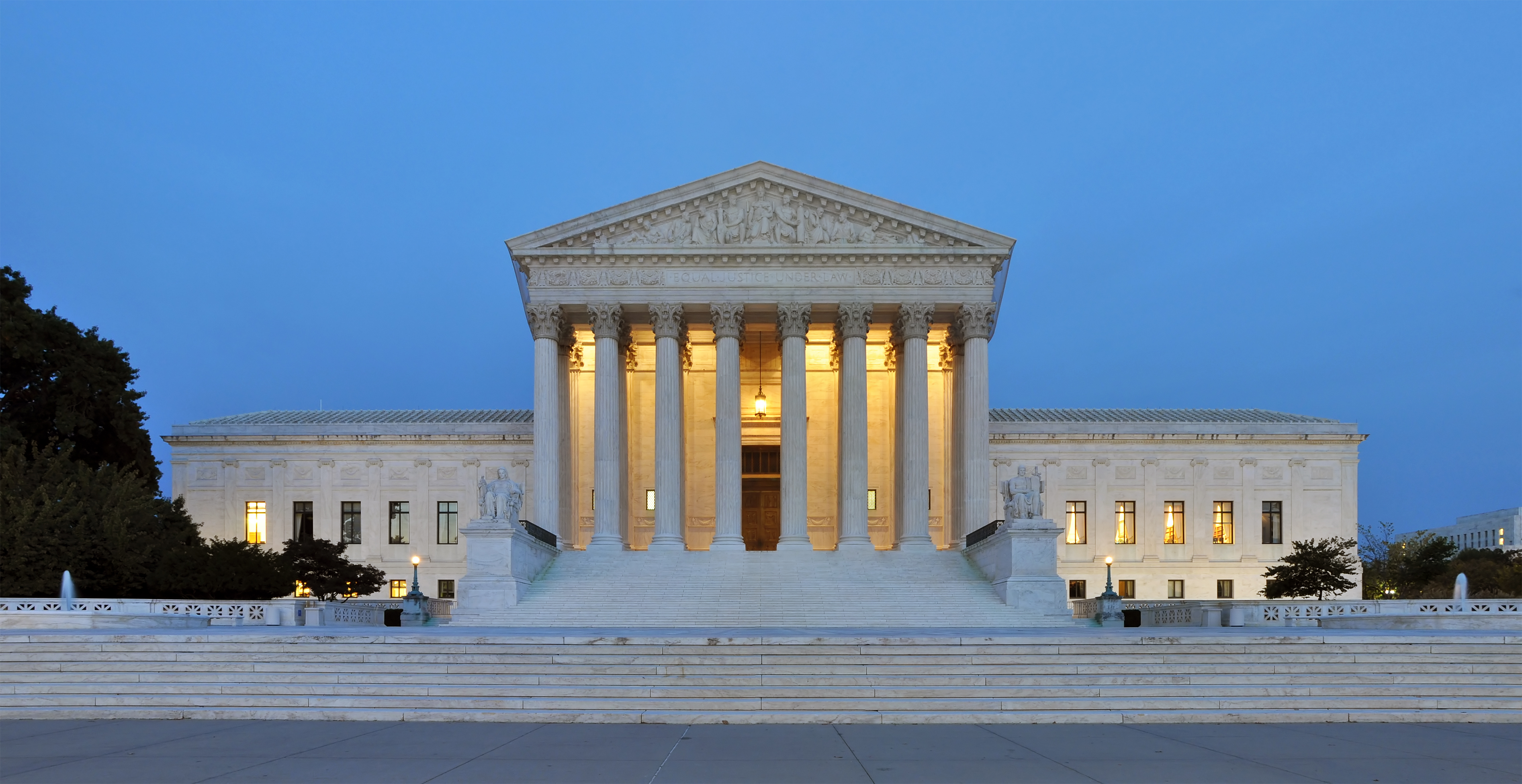
Credit: Joe Ravi · CC BY-SA 3.0
The Supreme Court is the highest court in the United States. It is the top of the country's judicial branch, which is the part of government that decides what the law means. The court has nine judges, called justices. They meet in a large marble building in Washington, D.C., across the street from the U.S. Capitol.
The U.S. Constitution created the Supreme Court in 1789. The Constitution did not say how many justices there should be. Congress decided that. The number has changed over the years, from six justices at first to nine since 1869.
One justice is the Chief Justice. The other eight are called Associate Justices. The President picks each new justice when an old one retires or dies. Then the Senate votes on whether to approve the choice. Once a justice is approved, the job is for life. They can stay until they choose to retire. This is meant to keep them free from political pressure.
The Supreme Court's main job is to decide what laws mean. Thousands of cases ask for its attention each year, but the justices only take about 70 of them. They pick cases that raise big questions about the Constitution. After lawyers argue each case, the justices vote. The side with at least five votes wins. One justice then writes an opinion explaining the decision. Justices who disagree can write their own opinions, called dissents.
Supreme Court rulings can change the country. In 1954, the court decided Brown v. Board of Education. The ruling said that separating Black and white children in public schools was against the Constitution. This decision helped end legal segregation across the South. In 1803, an earlier case called Marbury v. Madison gave the court a huge power: the right to strike down laws it judges to be unconstitutional. That power is the reason the court matters so much today.
Not every ruling has aged well. In 1857, the court ruled in Dred Scott v. Sandford that Black Americans could not be citizens. Most historians today call that decision one of the worst in American history. It helped push the country toward the Civil War. The Constitution was later changed to undo it.
People often disagree about Supreme Court decisions, and they argue about the justices too. Some Americans think the court has too much power. Others think the lifetime job rule should change. The justices themselves often split into groups, with some voting one way and some another. Behind the marble walls, nine people are still arguing about what the country's oldest rules really mean.
Related
Last updated 2026-04-26