
Caribbean Sea
Credit: Kmusser · CC BY-SA 3.0
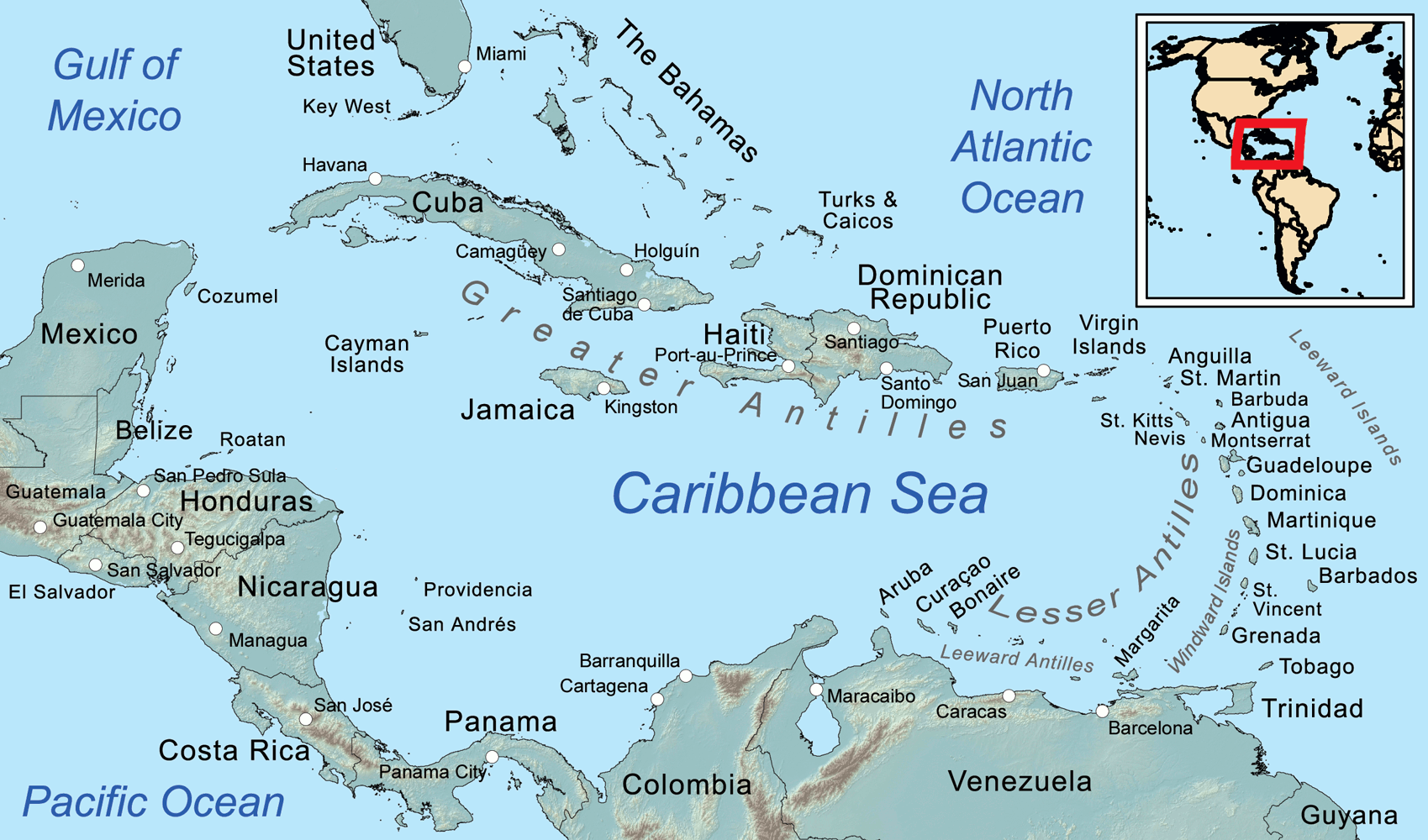
The Caribbean Sea is a large tropical sea in the western part of the Atlantic Ocean. It sits south of the Gulf of Mexico and touches the coasts of Central America, northern South America, and a long chain of islands. The sea covers about 1 million square miles. That makes it bigger than the entire country of Mexico. Warm water, bright coral reefs, and thousands of islands fill this part of the world.
More than 7,000 islands, islets, and reefs dot the Caribbean. The biggest islands are Cuba, Hispaniola, Jamaica, and Puerto Rico. Together, these are called the Greater Antilles. A curving chain of smaller islands stretches to the southeast. People call those the Lesser Antilles. Some islands are the tops of underwater mountains. Others are made from coral built up over thousands of years.
The sea is famous for its coral reefs. The Mesoamerican Barrier Reef runs along the coasts of Mexico, Belize, Guatemala, and Honduras. It is the second-largest coral reef in the world, after Australia's Great Barrier Reef. More than 500 kinds of fish live there, along with sea turtles, dolphins, and manatees. Coral reefs grow slowly, sometimes less than an inch per year, which means a large reef can be thousands of years old.
The Caribbean has a warm, tropical climate. Water temperatures stay near 80 degrees Fahrenheit all year. This warm water helps feed hurricanes. Hurricane season runs from June through November. The storms form over the open sea and sometimes grow into huge, spinning systems that crash into islands and coasts. Countries like Cuba, Haiti, and the Dominican Republic have been hit by some of the strongest storms ever recorded.
People have lived around the Caribbean for thousands of years. The Taíno, Kalinago, and other Indigenous peoples fished its waters and traded between islands long before Europeans arrived. In 1492, Christopher Columbus sailed into the sea and claimed land for Spain. What followed changed the region forever. European countries fought for control, forced millions of enslaved Africans to work on sugar plantations, and wiped out much of the Indigenous population through disease and war.
The sea also earned a reputation as a pirate haven. In the 1600s and 1700s, pirates like Blackbeard attacked treasure ships carrying gold and silver back to Europe. Today, the Caribbean is home to more than 40 million people across dozens of countries and territories, and its beaches, music, and food draw visitors from around the world.
Related
Last updated 2026-04-23