
Pirates
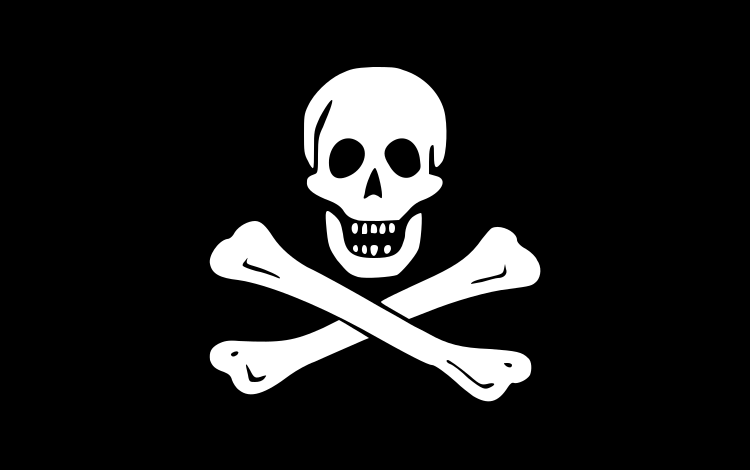
Credit: WarX, edited by Manuel Strehl · CC BY-SA 3.0
Pirates are people who attack and rob ships at sea. Pirates have existed for as long as ships have carried valuable cargo, going back more than 3,000 years. The most famous pirates lived in the Caribbean Sea between about 1650 and 1730. Historians call this stretch of time the Golden Age of Piracy.
During the Golden Age, Spanish ships carried gold, silver, and other treasures from the Americas back to Europe. Pirates lay in wait among the islands of the Caribbean. They sailed fast, lightly armed ships and attacked merchant vessels that were heavy with cargo. A pirate crew could become rich from a single capture.
Pirate life was not glamorous. Sailors slept in cramped, smelly ships. Food spoiled quickly, and fresh water ran out. Many pirates died from disease, shipwrecks, or wounds long before they were caught and hanged. Most piracy careers lasted only a year or two.
Some pirates worked for governments. They were called privateers. A king or queen would give a privateer a paper called a letter of marque. The paper made it legal to attack ships from enemy countries. Sir Francis Drake of England raided Spanish ships in the 1500s with the blessing of Queen Elizabeth I. To the English he was a hero. To the Spanish he was a criminal. The line between pirate and privateer was often just a piece of paper.
A few pirates became legends. Blackbeard, whose real name was Edward Teach, tied lit fuses into his beard during battle to look terrifying. Anne Bonny and Mary Read were two women who fought as pirates in men's clothing in the early 1700s. Bartholomew Roberts captured more than 400 ships in his short career, more than any other pirate of his time.
Pirate ships sometimes ran by surprising rules. Many crews voted on their captains and shared treasure equally. Some had written agreements that promised payment to crew members who lost an arm or a leg in battle. At a time when ordinary sailors had almost no rights, pirate ships could feel oddly democratic.
Much of what people picture when they think of pirates comes from stories, not history. Treasure maps with X marking the spot, walking the plank, parrots on shoulders, and "pirate accents" mostly come from books and movies, especially Robert Louis Stevenson's Treasure Island from 1883. Real pirates rarely buried treasure. They spent it.
Piracy never fully ended. Today, modern pirates still attack ships off the coasts of Somalia, in parts of Southeast Asia, and elsewhere. They use speedboats and rifles instead of cannons, but the basic crime is the same.
Related
Last updated 2026-04-26