
Southern Ocean
Credit: Wikimedia Commons · Public domain
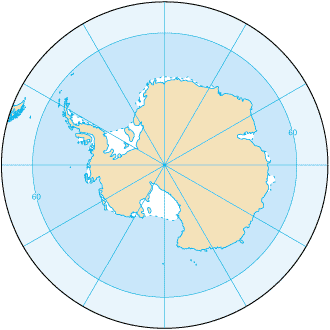
The Southern Ocean is the body of water that surrounds the continent of Antarctica. It is the fourth-largest of Earth's five oceans. It stretches from the coast of Antarctica north to 60 degrees south latitude, where it meets the Pacific, Atlantic, and Indian Oceans. The Southern Ocean covers about 7.8 million square miles, which is more than twice the size of the United States.
For a long time, mapmakers did not agree that the Southern Ocean was a real ocean. Some called the waters around Antarctica the southern ends of the other three big oceans. Then in 2000, a group called the International Hydrographic Organization said the Southern Ocean should count as its own ocean. The National Geographic Society agreed in 2021. So the Southern Ocean is the youngest ocean on official world maps, even though the water itself has been there for millions of years.
What makes it its own ocean is a powerful current called the Antarctic Circumpolar Current. This current flows all the way around Antarctica, always moving east. It is the strongest ocean current in the world. It moves more water than all the rivers on Earth combined. The current keeps the cold water near Antarctica separate from the warmer water farther north. That separation is why scientists now treat the Southern Ocean as its own thing.
The Southern Ocean is cold. Water temperatures range from about 28 to 50 degrees Fahrenheit. Much of its surface freezes into sea ice during the long Antarctic winter. The ice doubles the size of Antarctica each year, then melts back each summer. Giant chunks of ice, called icebergs, break off the glaciers and drift through the water. Some icebergs are bigger than small countries.
Even in such cold water, life thrives. Tiny shrimp-like animals called krill swim in huge swarms, sometimes millions of tons of them at once. Krill feed almost everything else: penguins, seals, squid, fish, and whales. Blue whales, the largest animals that have ever lived on Earth, travel to the Southern Ocean every summer to feast on krill. Emperor penguins raise their chicks on the sea ice. Leopard seals hunt among the ice floes.
The Southern Ocean plays a huge role in Earth's climate. Its cold water absorbs a large share of the heat and carbon dioxide that humans add to the atmosphere. Scientists watch it closely, because changes here ripple through weather and sea levels around the whole planet.
Related
Last updated 2026-04-23