
Food Web
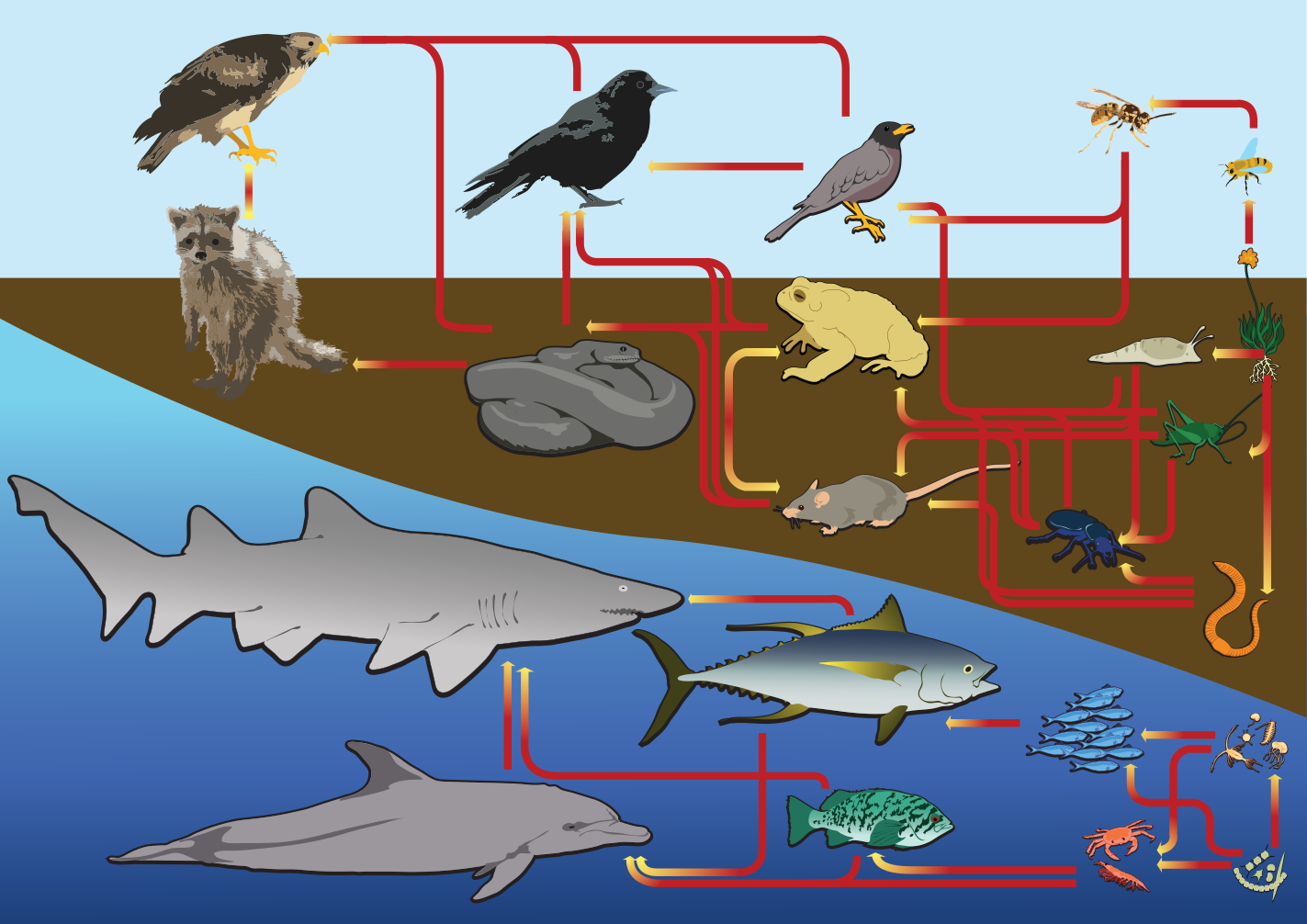
Credit: LadyofHats · CC0
A food web is a map of who eats whom in an ecosystem. It shows how energy and food move from one living thing to another. A food web is made of many food chains linked together. Most animals eat more than one kind of food, so food chains cross and overlap. Scientists draw food webs with arrows that point from the food to the eater.
Every food web starts with the sun. Plants, algae, and some kinds of bacteria catch sunlight and turn it into food through photosynthesis. Scientists call these living things producers, because they produce their own food. Producers are the base of almost every food web on Earth.
Animals that eat producers or other animals are called consumers. There are different types. Herbivores eat only plants. A deer eating grass is a herbivore. Carnivores eat only other animals. A wolf eating a deer is a carnivore. Omnivores eat both plants and animals. A bear eating berries one day and fish the next is an omnivore. Humans are omnivores too.
At the end of the web are decomposers. These are living things like mushrooms, worms, and bacteria. They break down dead plants and animals. Decomposers return the nutrients to the soil, where new plants can use them. Without decomposers, dead stuff would pile up forever and plants would run out of food.
Here is one small piece of a forest food web. Grass grows using sunlight. A grasshopper eats the grass. A frog eats the grasshopper. A snake eats the frog. A hawk eats the snake. When the hawk dies, fungi and bacteria break its body down into soil. The soil feeds new grass, and the web starts over.
Food webs can fall apart if one piece goes missing. When gray wolves were wiped out of Yellowstone National Park in the 1920s, elk herds grew huge and ate too many young trees. Beavers lost the trees they needed. Songbirds lost their shelter. When wolves were brought back in 1995, the whole web slowly healed.
Food webs in the ocean work the same way, but with different players. Tiny floating plants called phytoplankton are the producers. Small animals called zooplankton eat them. Small fish eat the zooplankton, bigger fish eat the small fish, and sharks or whales sit near the top. Even blue whales, the biggest animals alive, trace their food right back to sunlight and phytoplankton.
Related
Last updated 2026-04-23