
Electric Vehicle
Credit: Vauxford · CC BY-SA 4.0
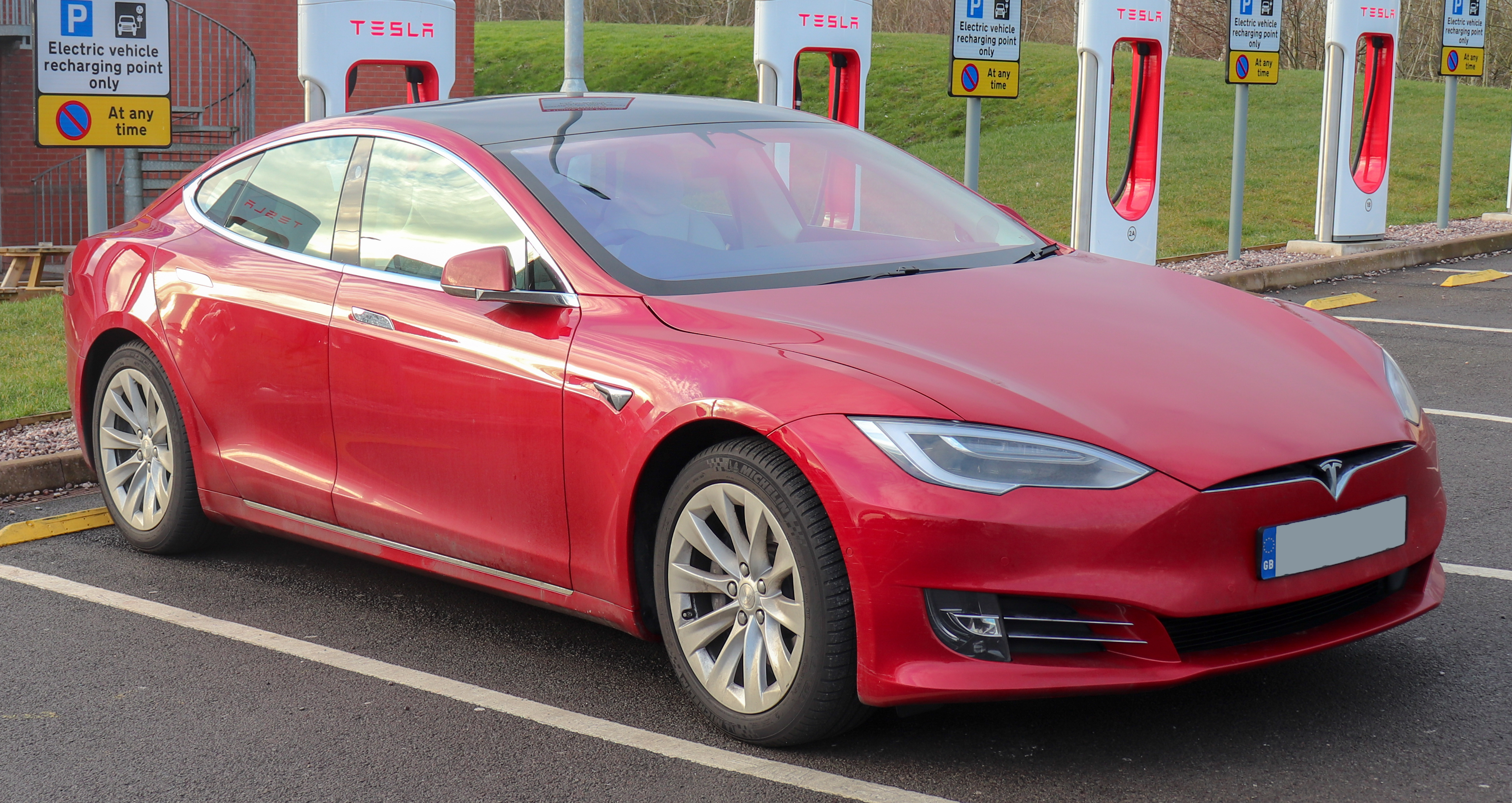
An electric vehicle, often called an EV, is a car, truck, bus, or other vehicle that runs on electricity instead of gasoline or diesel fuel. Instead of an engine that burns fuel, an EV has an electric motor. Instead of a fuel tank, it has a large battery pack. The driver plugs the vehicle into a charger to fill the battery, the same way you plug in a phone.
The battery is the most important part of an EV. Most modern electric cars use lithium-ion batteries, the same kind found in phones and laptops, just much bigger. A car battery pack can weigh more than 1,000 pounds, about as much as a grand piano. The battery sends power to an electric motor, and the motor turns the wheels.
Electric vehicles drive differently from gas cars. They are very quiet because there is no engine roaring. They also speed up faster, because an electric motor can deliver full power the instant you press the pedal. EVs have fewer moving parts than gas cars, so they tend to need less repair. Many EVs can also slow themselves down using a trick called regenerative braking, which sends some energy back into the battery instead of wasting it as heat.
Electric vehicles are not actually new. In the early 1900s, electric cars were popular in cities. Then gasoline became cheap, and gas cars could drive much farther on one fill-up. EVs nearly disappeared for almost 100 years. They came back in the 2000s as battery technology improved and people grew worried about pollution and climate change.
EVs do not release exhaust from a tailpipe. That makes the air around them cleaner. But the electricity that charges them has to come from somewhere. If a power plant burns coal to make that electricity, the pollution still happens, just at the plant instead of the car. As more electricity comes from solar, wind, and other clean sources, EVs get cleaner too.
Range is the biggest worry for many EV drivers. Most new electric cars can travel 200 to 300 miles on a full charge, which is enough for most daily driving. A fast charger can refill a battery most of the way in about 30 minutes. A regular home outlet takes much longer, sometimes a whole night. Engineers are working on batteries that charge faster, last longer, and cost less.
Related
Last updated 2026-04-25