
Engine
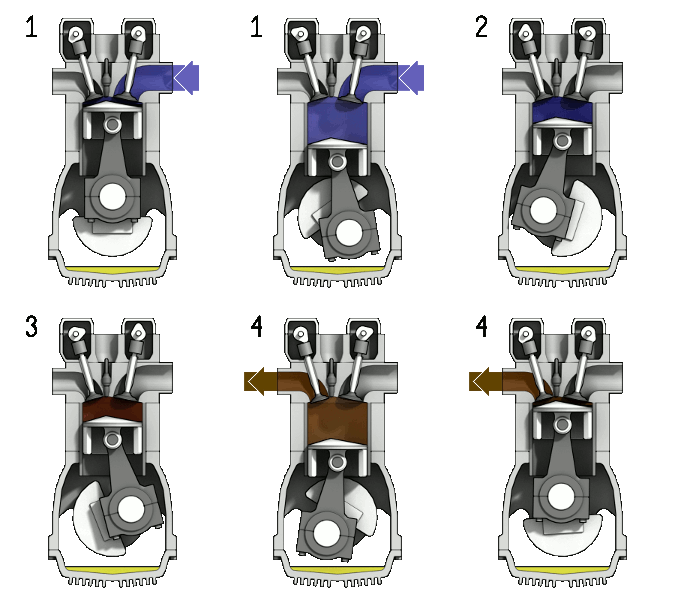
Credit: Zephyris · CC BY-SA 3.0
An engine is a machine that turns one kind of energy into motion. Most engines burn fuel or use steam, electricity, or pressurized gas to make parts move. That motion is then used to push a car forward, spin a propeller, lift water from a well, or do almost any other heavy job people need done. Engines are the muscles of the modern world.
The first useful engines were steam engines. In the early 1700s, an English inventor named Thomas Newcomen built one to pump water out of coal mines. Later, James Watt made a much better version. By the 1800s, steam engines were powering trains, ships, and factories. They started the Industrial Revolution and changed how people lived and worked.
Most engines today are called internal combustion engines. The word "combustion" means burning. Inside the engine, a small amount of fuel mixes with air and burns inside a closed space called a cylinder. The burning gases push hard on a piston, which is a metal plug that slides up and down. The piston turns a rod, the rod turns a shaft, and the shaft turns the wheels. A typical car engine fires its cylinders thousands of times every minute.
Different jobs need different engines. A diesel engine, found in trucks and trains, squeezes air so hard that the fuel ignites without a spark. A jet engine, used on most airplanes, pulls in air at the front, mixes it with fuel, burns it, and shoots the hot gases out the back. A rocket engine works in empty space because it carries its own oxygen. Without oxygen, fuel cannot burn.
Electric motors are a different family of engine. Instead of burning fuel, they use electricity and magnets to spin a shaft. Electric motors are quiet, simple, and clean at the point of use. Many cars, scooters, and trains now run on them. Engineers and scientists still argue about the best way to power the future. Some bet on better batteries. Others think hydrogen fuel cells or new kinds of biofuel will win out.
Engines have a hidden cost. Burning gasoline, diesel, coal, and jet fuel releases carbon dioxide, which warms the planet. That is one reason so much research is going into electric and other clean engines. The next time you hear a car start up, you are listening to thousands of tiny explosions, all working together to move you down the road.
Related
Last updated 2026-04-25