
GPS
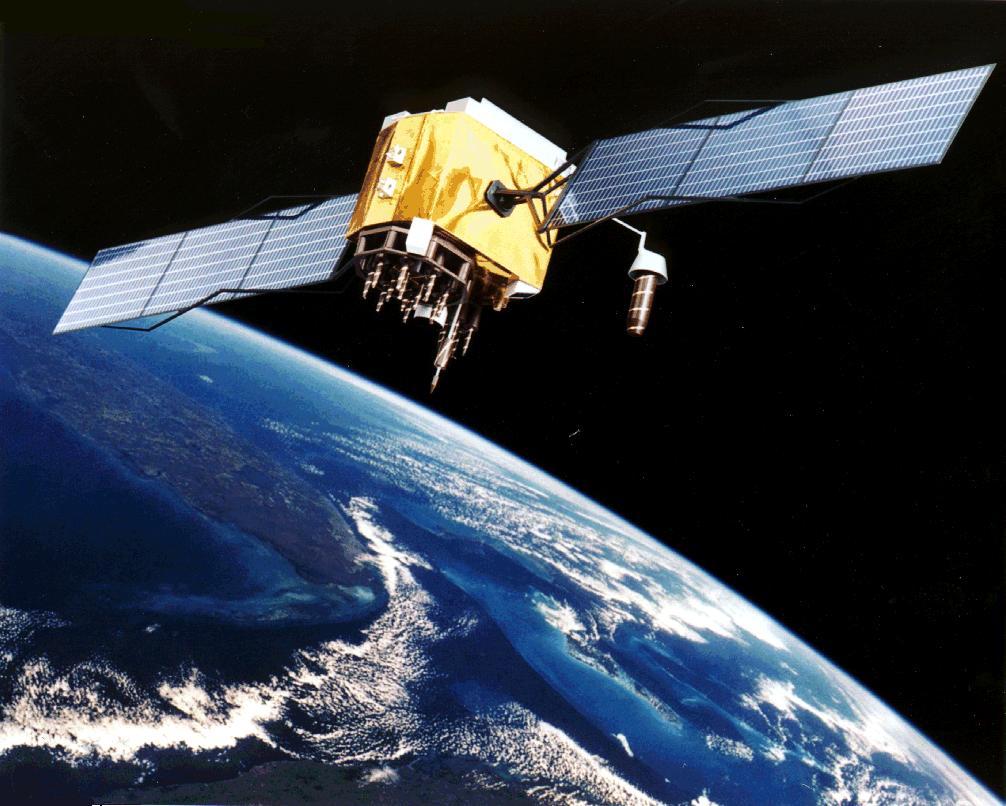
Credit: NASA · Public domain
GPS is a system that uses satellites in space to tell people exactly where they are on Earth. The letters stand for Global Positioning System. The United States military built GPS in the 1970s and 1980s. In the year 2000, the government opened it up for everyone to use for free. Today, GPS is built into phones, cars, watches, ships, planes, and even some pet collars.
The system works because of a group of about 30 satellites circling the Earth. They orbit roughly 12,500 miles above the ground. That is far higher than the International Space Station, which orbits only about 250 miles up. The satellites are spaced out so that from any spot on Earth, at least four of them are always overhead.
Each satellite carries a very accurate clock and constantly sends out a radio signal. The signal includes the time it was sent and the satellite's location. A GPS receiver, like the chip inside your phone, listens for these signals. It measures how long each signal took to arrive. Radio signals travel at the speed of light, so even tiny differences in arrival time mean different distances.
By comparing signals from at least four satellites, the receiver can figure out its position. This trick is called trilateration. It can pin down where you are on Earth to within about 15 feet, and sometimes much closer.
GPS does more than help drivers find pizza places. Farmers use it to steer tractors in straight lines across huge fields. Pilots use it to land planes in fog. Scientists use it to track endangered animals, study earthquakes, and watch glaciers melt. Emergency workers use it to find lost hikers. Banks even use the timing signals from GPS satellites to stamp the exact moment of money transfers.
GPS is not the only system of its kind anymore. Russia runs one called GLONASS. Europe runs Galileo. China runs BeiDou. Most modern phones can listen to several systems at once, which makes their location even more accurate.
The system has weak spots. GPS signals are faint by the time they reach the ground, about as strong as a light bulb seen from 12,000 miles away. Tall buildings, thick forests, tunnels, and deep canyons can block them. Bad weather in space, like a strong solar flare, can mess them up too.
Before GPS, travelers had to read paper maps, ask for directions, or steer by the stars. In the span of a single generation, getting lost has become much harder than it used to be.
Related
Last updated 2026-04-25