
Imperialism
Credit: The Red Hat of Pat Ferrick · Public domain
Imperialism is the policy of one country building power over other lands and people. An empire is what gets built. The country in charge takes control of faraway places and uses them for its own benefit. It might want their land, their workers, their crops, their minerals, or just the pride of being big and powerful.
Imperialism is very old. The Roman Empire spread across Europe, North Africa, and the Middle East two thousand years ago. The Mongol Empire of the 1200s grew so fast that it covered most of Asia in less than a hundred years. The Ottoman, Chinese, and Persian empires each ruled millions of people for centuries. Empires rise and fall, but the basic idea keeps coming back.
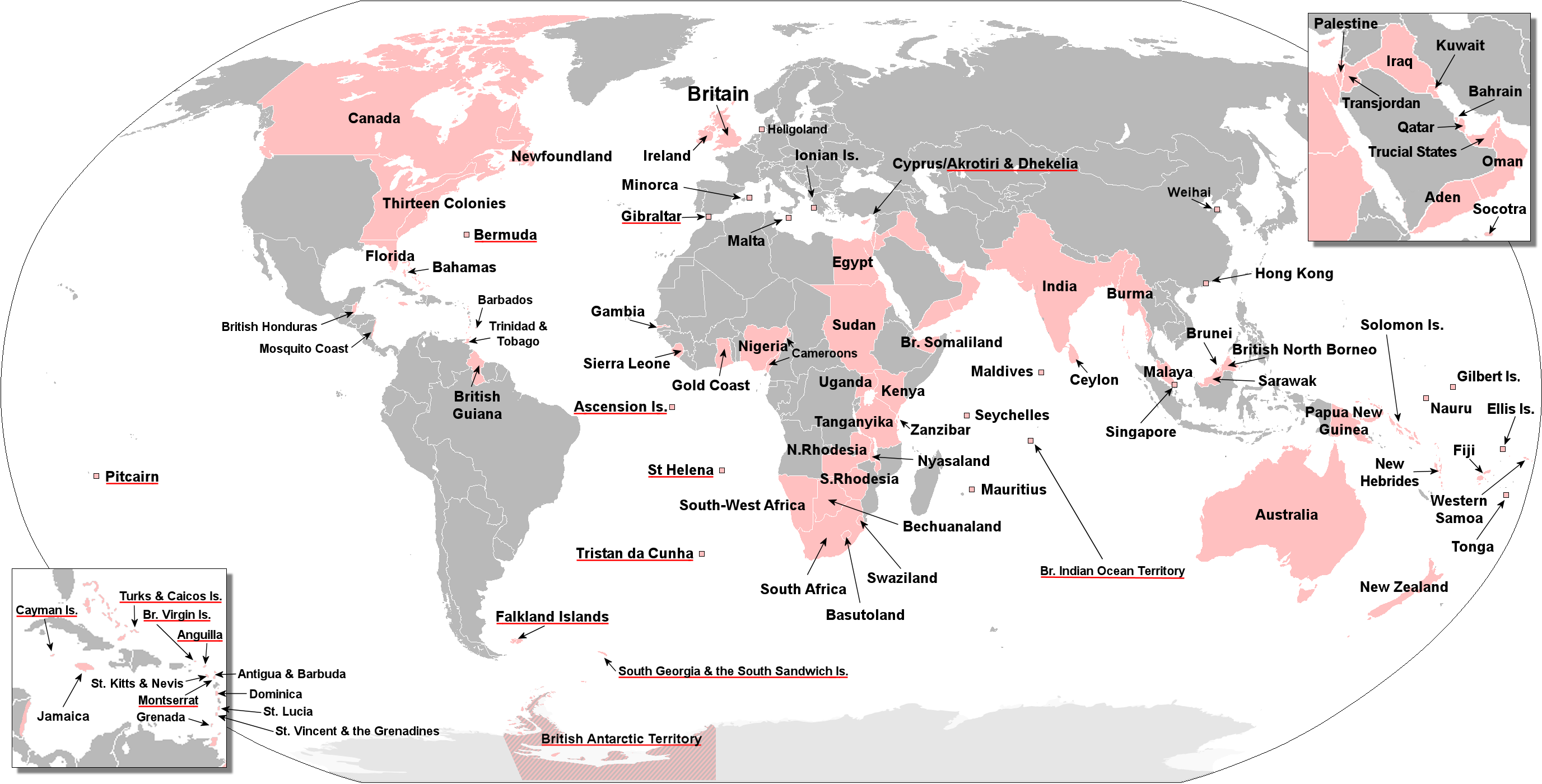
The most famous wave of imperialism happened between about 1500 and 1950. European countries used new ships, guns, and maps to take over lands across the world. Spain and Portugal seized much of the Americas. Britain, France, the Netherlands, and others followed. By 1900, European countries controlled most of Africa and large parts of Asia. The British Empire alone covered about a quarter of the planet, more land than any empire in history.
Why did countries do this? Some leaders wanted natural resources, like gold, sugar, rubber, or oil. Some wanted new markets where they could sell their factory goods. Some wanted military bases. Some claimed they were "civilizing" other people, an excuse used to cover up the taking of land. The United States, Japan, and Russia also built empires during this time.
Imperialism caused great harm. Local rulers were pushed aside. Borders were drawn by foreigners who had never visited the land. Millions of people were forced to work on plantations or in mines. Languages, religions, and ways of life were attacked. The Atlantic slave trade, which carried more than 12 million Africans across the ocean in chains, was tied directly to European empires in the Americas.
In the 1900s, people fought back. Mahatma Gandhi led India to independence from Britain in 1947. Across Africa, dozens of countries won their freedom in the 1950s and 1960s. Vietnam, Indonesia, Algeria, and many others did the same.
Historians still argue about imperialism's full effects. Most agree it brought huge wealth to a few countries while causing lasting damage to many others. The borders drawn by old empires still shape today's maps, and many of today's conflicts have roots in choices made by rulers who lived far away.
Related
Last updated 2026-04-26